

More news on this day
Travel risk across the Middle East intensified this week as the United Arab Emirates was added to a growing list of Gulf and Levant states under high-risk amber travel warnings, while Hong Kong elevated Iran and Israel to its maximum black alert level amid escalating military confrontation and widespread transport disruption.
Get the latest news straight to your inbox!
Coordinated Alerts Mark New Phase in Regional Crisis
Publicly available government notices and travel-security briefings issued in recent days show a rapid tightening of official guidance on movement across the Middle East. The latest shift came as the United Arab Emirates joined Saudi Arabia, Qatar, Oman, Jordan and Bahrain in an unprecedented cluster of high-risk amber travel advisories, reflecting mounting concern over missile and drone activity, energy infrastructure strikes and the potential for further escalation.
According to summaries of Hong Kong’s Outbound Travel Alert system circulated on Monday 23 March 2026, the territory raised its alert for Iran and Israel to black, its highest warning, while simultaneously assigning amber status to the six Gulf and Levant states. The move aligns those destinations in a single elevated-risk category for Hong Kong residents, signalling that non-essential travel is strongly discouraged and that travellers on essential business should prepare for fast-changing operational conditions.
The tightening of guidance follows weeks of intensifying conflict triggered by coordinated United States and Israeli strikes on Iranian targets beginning on 28 February 2026 and subsequent Iranian missile and drone attacks across the region. United Nations deliberations earlier this month underscored the severity of the situation, with recent resolutions condemning repeated strikes on Bahrain, Kuwait, Oman, Qatar, Saudi Arabia, the UAE and Jordan and warning of broader regional destabilisation.
Risk consultancies tracking the situation note that the clustering of amber advisories for multiple states is unusual in scale. While individual Gulf countries have periodically appeared on higher-risk lists in previous crises, the current pattern of overlapping alerts and route suspensions across several major transit hubs is being described in industry analysis as the most far-reaching travel disruption linked to a single regional conflict since the height of the pandemic.
Energy and Infrastructure Strikes Drive Safety Concerns
Open-source reporting over the past three weeks points to a series of high-impact strikes on critical infrastructure as a key driver of the escalated warnings. Iranian attacks have targeted ports, desalination plants and facilities connected to Gulf energy exports, while Israeli operations have hit major Iranian gas and oil sites including the South Pars field and associated refineries. The cumulative effect has been to focus government risk assessments not only on direct conflict zones but also on neighbouring states that host energy assets and foreign military installations.
Summaries of recent incident timelines indicate that Saudi Arabia, Qatar and the UAE have all reported missile or drone activity directed at or near oil and gas infrastructure since early March. Additional reporting describes strikes and attempted attacks in Bahrain, Oman and Jordan, with damage ranging from limited material impacts to more serious disruptions at specific facilities. While many of these attacks have been intercepted or contained, security analysts observe that even partially successful strikes raise the risk profile for commercial aviation, maritime traffic and road travel in affected areas.
Regional risk evaluations now frequently reference heightened military alert levels around key ports, refineries and export terminals, as well as reinforced air and missile defence coverage. For travellers, this translates into a more volatile operating environment, with increased chances of perimeter lockdowns, temporary curfews or rapid changes in airport and seaport access. Insurers and corporate security teams are re-examining assumptions about safe routing, contingency planning and staff duty of care across the Gulf and eastern Mediterranean.
Observers also highlight the symbolic weight of attacks on desalination plants and other water infrastructure in states such as Bahrain and Iran. Experts quoted across multiple analyses warn that damage to such assets in one country can have knock-on humanitarian and economic effects across a region already facing acute water stress, compounding the indirect risks for both residents and visiting travellers.
Airspace Closures and Flight Cancellations Reshape Business Travel
The sharp escalation in official travel warnings coincides with what airline-watchers describe as the most disruptive period for Middle East aviation in years. Data collated by aviation tracking services and industry media suggest that tens of thousands of flights to, from and within the broader region have been cancelled or rerouted since late February, following widespread airspace closures by Iran, Israel, Iraq, Syria, Kuwait and parts of the Gulf.
Major carriers in Europe, Asia and the Middle East have suspended or sharply reduced services to key hubs including Dubai, Abu Dhabi, Doha, Riyadh, Jeddah, Manama and Amman on various days in March, citing airspace restrictions and safety considerations. Some airlines have announced temporary halts to operations involving Iranian and Israeli airports altogether, while others have diverted long-haul routes around the Gulf, adding significant time and cost to Europe–Asia journeys and straining crewing patterns.
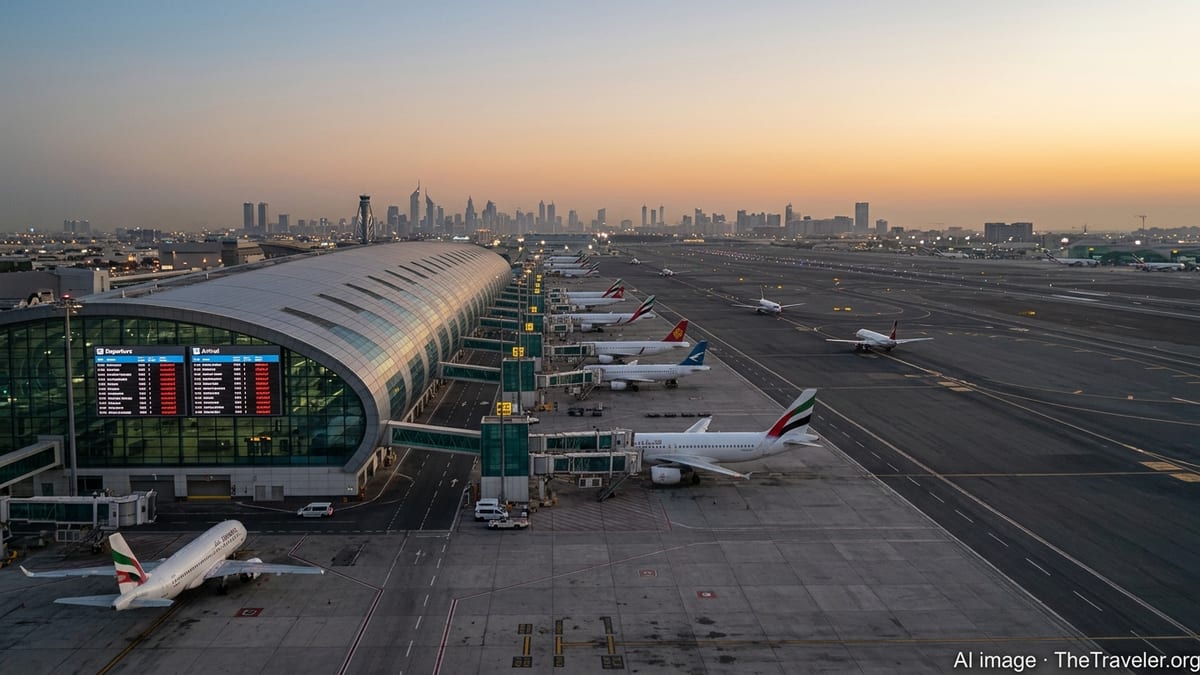
Several regional airports, including Hamad International in Qatar and Bahrain International, have seen commercial operations largely suspended or severely reduced at times, according to published advisory documents. In the UAE, capacity constraints, precautionary suspensions and rolling schedule changes have produced congested terminals, extended layovers and a rise in involuntary rerouting through alternative hubs in Turkey, Egypt and southern Europe.
Business travel managers report that these conditions have complicated corporate mobility planning. Internal advisories shared by multinationals with a presence in the UAE, Saudi Arabia, Qatar, Israel and Jordan recommend avoiding non-essential travel, building in additional travel days for essential trips, and preparing for last-minute itinerary changes. Companies with critical operations in the region are leaning more heavily on remote-working arrangements and regional offices outside the highest-risk zones.
Corporate Risk Appetite Tested Across the Gulf
The escalation in travel alerts is testing corporate risk tolerance at a time when many multinational firms have embedded supply chains and regional headquarters across the Gulf. Open-source datasets mapping foreign corporate footprints show dense clusters of US, European and Asian companies in sectors including energy, technology, finance, logistics and hospitality located in the UAE, Qatar, Saudi Arabia, Bahrain and Oman, as well as in Israel and Jordan.
Industry commentary suggests that while few firms are yet pursuing large-scale permanent relocations, many have activated contingency plans drafted during earlier periods of tension. These include temporarily relocating expatriate staff to secondary offices, pausing non-essential site visits, and shifting some client meetings and conferences to venues in Europe or East Asia. Travel departments are under pressure to continuously update route assessments, preferred carrier lists and approved hotel rosters as security profiles and operating conditions evolve.
Business events and trade shows scheduled for major Gulf and Levant hubs in March and April are also being reassessed. Event organisers citing the latest amber warnings and black alerts are weighing postponement, hybrid formats or relocation in response to rising insurance costs and concerns about participant safety and travel reliability. Analysts note that although many venues remain physically open, confidence-sensitive sectors such as corporate conferences and incentive travel are often the first to feel the chill of elevated risk ratings.
For small and medium-sized enterprises with limited security and risk management infrastructure, the changing landscape is particularly challenging. Specialist advisories recommend that such firms rely on up-to-date government travel advice, airline alerts and reputable security briefings, and avoid ad hoc routing through conflict-adjacent airspace, even when cheaper fares become available at short notice.
Travellers Navigate Complex and Fragmented Guidance
The convergence of national advisories, private security bulletins and airline communications has created a complex information environment for individual travellers. Different governments currently apply varying terminology and thresholds for warning levels, meaning that the same destination may be classified as high-risk by one system and medium-risk by another. The black alert applied by Hong Kong to Iran and Israel, for example, represents a prohibition-level warning for its residents, while other jurisdictions frame similar conditions under strongly worded “do not travel” advisories.
In contrast, the amber warnings affecting the UAE, Saudi Arabia, Qatar, Oman, Jordan and Bahrain sit one or two steps below outright bans in most systems, signalling that travel may still be possible but is subject to heightened security concerns and potential disruption. Travel medicine and risk specialists note that travellers passing through regional hubs on connecting itineraries, even without leaving the airport, may still face knock-on effects including missed connections, unplanned overnight stays and difficulties in rebooking during peak disruption.
Insurance policies are also emerging as a crucial variable. Several travel insurers and airline-linked underwriters have clarified that the current conflict is treated as a known event from late February 2026, with coverage for trip cancellation, delay or medical evacuation subject to specific policy terms and dates of purchase. Travellers are being urged in public advisories to review policy wording carefully and to document any disruption, given that airlines, hotels and tour operators are themselves navigating unprecedented operational strain.
Despite the elevated alerts, some flights and limited tourism activity continue across parts of the region, particularly in areas distant from direct conflict and critical infrastructure. Analysts emphasise, however, that the risk environment remains fluid and that sudden changes in military posture or airspace status can move individual destinations up or down alert scales with little notice, requiring a level of flexibility and preparedness that many leisure and business travellers have not needed since the most acute phases of the global pandemic.