

More news on this day
UAE residents planning Eid Al Fitr getaways are confronting sharply higher airfares, with ticket prices to popular destinations nearly doubling from February levels and aligning the Emirates with a wider global trend of holiday season price surges in Saudi Arabia, Europe, Japan and Thailand.
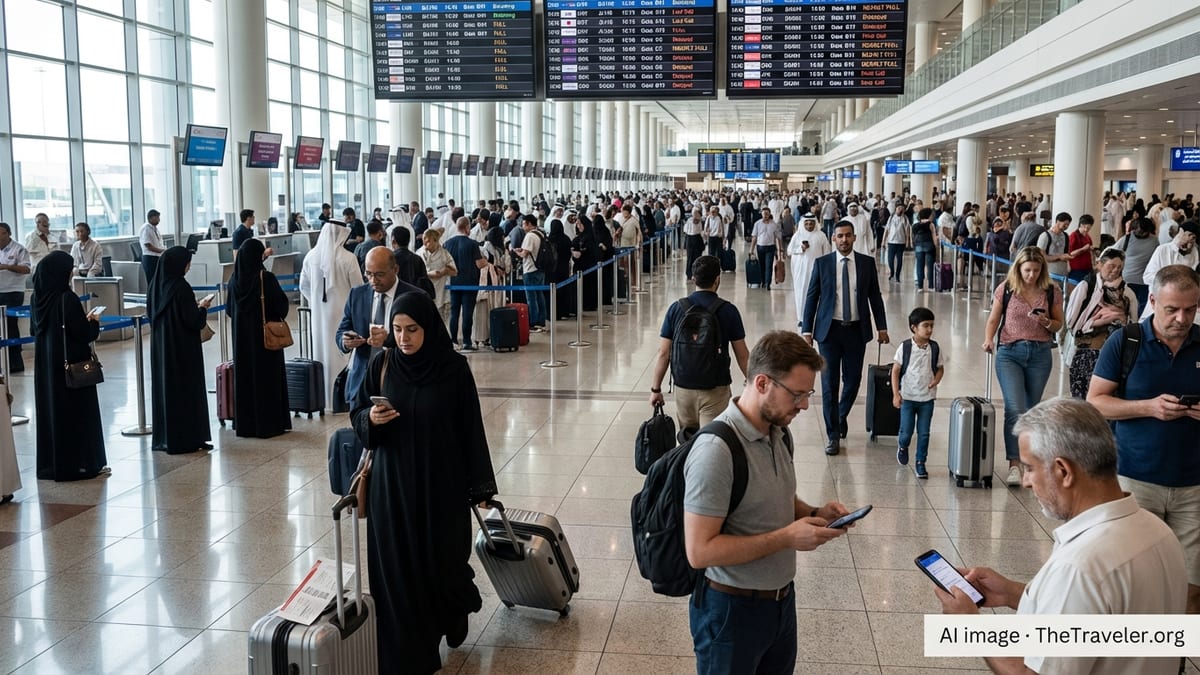
Eid Holiday Demand Pushes UAE Airfares to New Highs
With Eid Al Fitr expected to fall in late March, travel agents across the UAE report that return economy tickets for travel between roughly March 19 and 30 have climbed steeply compared with off-peak February fares. Routes to key leisure markets, from London and Paris to Tokyo and Bangkok, are showing some of the sharpest jumps, with many tickets pricing 15 to 20 per cent higher than last year’s Eid peak and close to double current shoulder-season levels.
Industry sources say the surge began in early January as residents moved quickly to secure flights that would make the most of the long Eid break. The combination of pent-up travel appetite, school holidays and a relatively short booking window has concentrated demand into a narrow period, giving airlines little incentive to discount remaining seats and pushing average fares higher across cabins.
Agents describe a familiar pattern repeating itself in 2026: families who hesitated through January now discovering that fares to traditional hotspots in Europe and Asia have leapt within a matter of weeks. Some are choosing to adjust travel dates slightly away from the Eid period, but for many tied to school calendars and limited annual leave, options are constrained and higher fares are being reluctantly absorbed.
Global Trend: Saudi Arabia, Europe, Japan and Thailand Lead the Rise
The spike in UAE fares is unfolding against a broader backdrop of higher ticket prices on key international corridors. In Saudi Arabia, where Eid travel patterns closely mirror those of the Emirates, outbound fares to regional leisure destinations and religious hubs have been climbing as airlines capitalize on strong Gulf demand, constrained aircraft capacity and robust load factors.
Across Europe, airfares into and within the continent have been edging higher as carriers contend with sustained demand and elevated operating costs. Major European airlines have reported strong passenger volumes through 2025, with healthy load factors on routes linking the region to the Middle East and Asia. For Gulf travelers, this means fewer low-fare deals on popular city-break destinations such as London, Paris, Amsterdam and Rome during peak holiday windows.
Japan has emerged as one of the most sought-after destinations for UAE and wider GCC travelers, particularly around the spring cherry blossom season that overlaps this year with Eid Al Fitr. Strong international arrivals in 2024 and 2025, underpinned in part by a weak yen and strong global interest in Japan, have helped push fares higher on long-haul routes from the Middle East. Travel specialists say flights to Tokyo and Osaka are among the first to sell out in the Eid period, with remaining seats commanding premium prices.
Thailand, meanwhile, continues to consolidate its position as a leading outbound market for Gulf residents. Recent industry data show GCC visitors to Thailand increasing at double-digit rates, supported by extensive air connectivity via carriers in both regions. As a result, fares from the UAE and Saudi Arabia to Bangkok and Phuket have been climbing ahead of the holiday, reflecting both booming demand and airlines’ confidence that premium pricing will be accepted by leisure travelers.
Capacity Constraints and Higher Costs Keep Fares Elevated
Behind the eye-catching ticket prices lies a structural story of stubborn capacity constraints and cost pressures. Global aviation has largely recovered in terms of passenger demand, with 2025 traffic growth returning to historic trends, yet airline fleets have not expanded as quickly as many had hoped. Manufacturers are grappling with delayed aircraft and engine deliveries, while maintenance bottlenecks are keeping some jets grounded longer than planned.
According to recent industry figures, worldwide passenger demand rose by more than five per cent in 2025 compared with the previous year, while capacity grew at a slightly slower rate. Load factors have held near record highs above 80 per cent, particularly on international routes linking Europe, the Middle East and Asia. In practice, that leaves fewer empty seats for airlines to fill at discounted prices, especially during compressed holiday periods such as Eid.
Operating costs are also feeding into higher fares. Airlines in the Gulf and beyond continue to manage volatile fuel prices, higher financing costs and steeper wage bills amid fierce competition for skilled crews and engineers. While many carriers hedge a portion of their fuel exposure, the broader picture is one in which unit costs are higher than pre-pandemic norms. That creates pressure to sustain or raise average fares, especially when demand is clearly resilient.
For UAE travelers, these dynamics translate into higher baseline prices even before the usual Eid premium is added. Analysts note that in past years, early-booking customers could secure comparatively modest increases over off-peak fares. This year, by contrast, the gap between February and Eid-period pricing is wider, reflecting both the tightness in global capacity and airlines’ efforts to protect margins.
How Much More UAE Travelers Are Paying This Eid
Travel agencies in Dubai and Abu Dhabi report that fares on some of the most popular routes have nearly doubled from February to the peak Eid window. Return economy tickets from the UAE to major European cities such as London and Amsterdam, for instance, are quoted at up to 80 to 100 per cent above early-year benchmarks on the busiest departure dates surrounding the holiday.
Long-haul flights to Japan are seeing some of the largest absolute increases in outlay. Agents say that while limited promotional fares were available in January, these sold out quickly, leaving only higher fare buckets for late bookers. With cherry blossom season in full swing during Eid and strong inbound tourism from around the world, airlines have little incentive to release additional discounted inventory, and the result is elevated pricing on nearly all remaining seats.
Closer to home, regional trips to destinations such as Jeddah, Riyadh and popular coastal cities in Saudi Arabia are also commanding notable premiums. In addition to Eid leisure traffic, these routes are buoyed by visiting friends and relatives travel and, in some cases, religious tourism. Even on shorter sectors, the combination of robust point-to-point demand and connecting traffic through Gulf hubs has contributed to firmer yields.
For budget-conscious residents, the contrast with more moderate fare levels seen during some off-peak 2024 and early 2025 periods has been striking. Several agents describe customers revising plans after discovering the total cost of family travel for Eid, with some choosing to shorten their trips, switch to nearer destinations or defer international holidays to later in the year when prices may ease.
Role of Gulf Carriers and Regional Hubs in Shaping Prices
Major Gulf airlines based in the UAE and Saudi Arabia are central to the way Eid travel pricing unfolds. Dubai and Abu Dhabi function as key hubs that channel traffic between Europe, Asia and Africa, while Riyadh and Jeddah are steadily expanding their own hub roles. During peak periods such as Eid, high connecting volumes through these airports augment strong local demand, enabling carriers to optimize revenue management across networks.
In anticipation of the 2025 and 2026 Eid seasons, some carriers have announced additional flights to high-demand destinations, including extra services to cities in the Middle East, South Asia and Southeast Asia. While these added frequencies marginally expand capacity, they have not been sufficient to fully offset the combined pull of Eid, school holidays and, in some cases, overlapping events that spur travel demand.
Airlines are also increasingly segmenting their products, offering a wider range of branded fares and ancillary services. During high-demand periods, entry-level economy fares are limited in number, and once sold, the next available options often come with significantly higher price tags. Travelers who delay booking may therefore find not only higher base fares, but also fewer opportunities to trade up to premium cabins at attractive surcharges.
Regional low-cost carriers play a complex role in this environment. On some shorter routes, their presence has historically moderated prices. However, when planes are flying full, even budget operators adjust fares upwards, narrowing the gap with full-service competitors during peak dates. The result is a market in which bargain hunters must be both flexible and early to secure meaningful savings.
Thailand and Asia-Pacific Remain Magnet Destinations Despite Costs
Higher airfares have done little to dampen enthusiasm for Asia-Pacific destinations among UAE residents. Thailand continues to rank among the most popular choices, with recent travel industry analyses highlighting double-digit growth in visitors from the Gulf. Bangkok and Phuket, in particular, attract families and younger travelers drawn by a mix of beaches, shopping, food and value-for-money once on the ground.
Travel trade data suggest that by 2030 Thailand could see millions of additional tourism nights from Middle East travelers compared with current levels, underscoring the depth of regional demand. This structural trend helps explain why flights between Gulf hubs and Thai gateways are so heavily booked during Eid and why fares on these routes have been climbing in line with, or even above, broader market averages.
Beyond Thailand, other Asian countries including Malaysia, Singapore, Vietnam and Japan are capturing a growing share of the Gulf outbound market. As more direct and one-stop connections are launched, choice has expanded, but demand has tended to grow even faster than capacity. For airlines serving these routes, Eid periods provide an opportunity to consolidate yields, reinforcing the broader pattern of higher seasonal pricing.
For UAE travelers, this means that even as long-haul fares rise, Asia-Pacific remains compelling thanks to favorable exchange rates in some markets, diverse experiences and competitive pricing for accommodation and on-the-ground activities. Many residents view the higher cost of getting there as a trade-off against comparatively affordable spending once they arrive.
Household Budgets Under Strain as Festive Travel Priorities Shift
The latest round of Eid airfare increases is landing hardest on middle-income households, especially those looking to travel as extended families. Surveys by local agencies indicate that some UAE residents now allocate a larger share of annual disposable income to a single major holiday trip, with air tickets accounting for a growing proportion of total travel spend.
In 2025, similar dynamics during the Eid Al Adha and summer period saw some families reporting flight bills that approached two months of salary, particularly on routes to South Asian countries where strong seasonal demand intersected with constrained capacity. While not all itineraries this Eid are as extreme, the underlying pressures remain, prompting many households to reassess how often and how far they travel during peak seasons.
Travel consultants say behavior is beginning to shift. More residents are considering shorter-haul alternatives within the Middle East, North Africa or Caucasus regions, where flying times are lower and competition between carriers can sometimes mitigate peak pricing. Others are opting to travel outside of Eid altogether, taking advantage of softer weekday fares in April or May rather than absorbing the premium embedded in Eid week departures.
At the same time, there is a strong cultural and social pull to travel over Eid, when schools are closed and many workplaces slow down. For a significant segment of the UAE population, the holiday is seen as the ideal moment to reconnect with families abroad or explore bucket-list destinations. That tension between budget realities and lifestyle aspirations is at the heart of the current debate over rising airfares.
What Travelers Can Do Now as Prices Climb
With Eid Al Fitr fast approaching and published fares already elevated, experts recommend that UAE residents still planning trips move quickly to secure remaining inventory. Flexibility on travel dates and times can help, with departures a day or two before the peak weekend or returns slightly after the main holiday window sometimes offering modest savings compared with the absolute busiest days.
Travel agents also advise exploring secondary airports and alternate routings where feasible. For example, flying into a less congested European hub and connecting by rail, or choosing a nearby Asian city and adding a short regional flight, can occasionally reduce overall costs, though travelers must weigh this against added time and complexity. In some cases, however, demand is so broad-based that even these workarounds are pricing higher than in previous years.
For those willing to postpone their plans, monitoring post-Eid fare trends may be worthwhile. Historically, prices on many leisure routes ease once the holiday surge passes and capacity becomes more readily available. Residents with flexible leave schedules could find better value by shifting major trips to late spring or early autumn rather than competing for seats during Eid or the peak summer school break.
Looking ahead, analysts expect global aviation to remain capacity-constrained through at least the near term, suggesting that pronounced seasonal spikes in pricing are likely to persist. For UAE travelers, that makes early planning, flexible thinking and realistic budgeting increasingly essential tools for navigating a world in which Eid flights are both more in demand and more expensive than ever.