

More news on this day
Emirates has joined Etihad Airways, flydubai, Air Arabia and other regional and international carriers in implementing sweeping emergency schedule changes on routes serving Dubai, Abu Dhabi, Sharjah, Fujairah and Al Ain, as airspace closures and security concerns continue to disrupt travel across the Gulf in March 2026.
Get the latest news straight to your inbox!
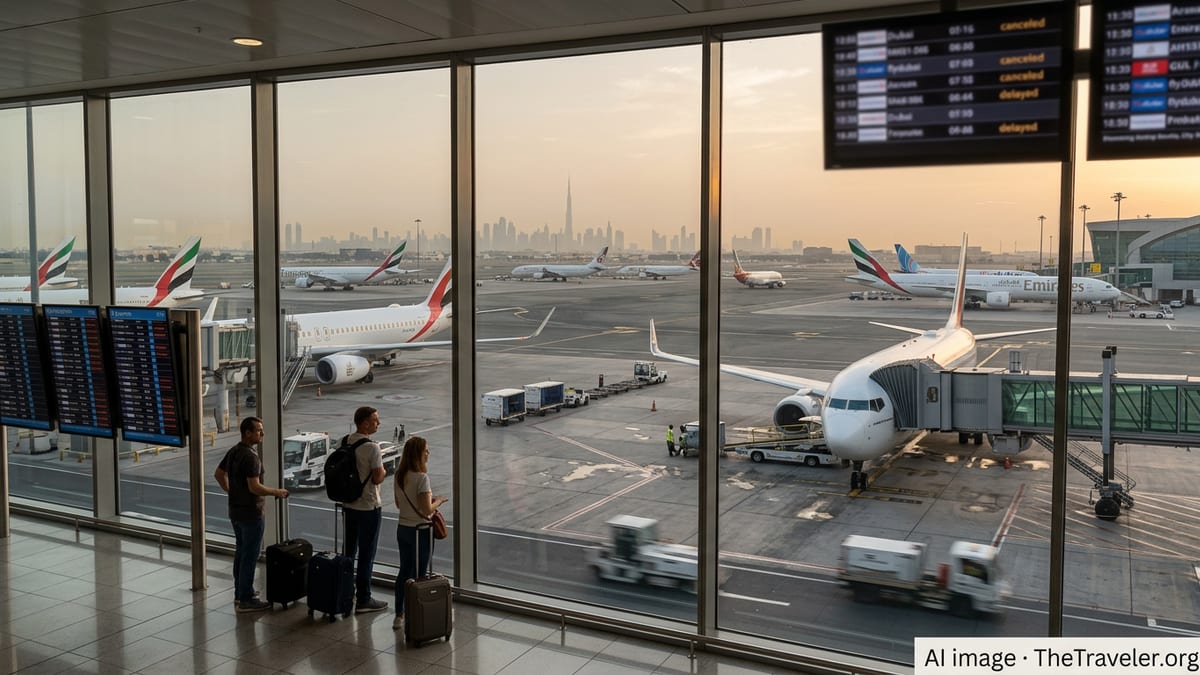
Airspace Closures Trigger Wave of UAE Flight Suspensions
Publicly available advisories show that airspace closures across the Gulf at the end of February and into early March led to unprecedented disruptions at major hubs in the United Arab Emirates. Dubai International, Abu Dhabi International and other airports experienced temporary shutdowns as regional tensions escalated, prompting airlines to halt or severely limit operations.
Documents circulated to corporate clients and travelers on March 2 described a full suspension of Emirates services to and from Dubai during the initial closure window, alongside similar measures at Etihad Airways from Abu Dhabi and cancellations at low cost carriers flydubai and Air Arabia. These suspensions rippled outward to affect feeder services into Sharjah, Fujairah and Al Ain, as carriers struggled to maintain safe corridors in and out of UAE airspace.
Analysis of traffic data compiled by air travel rights platforms indicates that, during the most intense phase of the disruption, Emirates canceled hundreds of flights over just a few days, representing a large majority of its scheduled operations. Etihad, flydubai and other regional airlines reported similarly high levels of cancellation and delay, stranding large numbers of passengers and forcing major rebooking efforts across multiple continents.
Travel risk bulletins issued in early March highlighted that the suspensions were not confined to direct services between the UAE and conflict-affected states. Instead, the airspace restrictions forced broad route adjustments including long haul flights that would typically transit the Gulf, dramatically reducing capacity through Dubai and Abu Dhabi and affecting onward connections to Europe, Asia, Africa and the Americas.
Emirates Joins Peers in Phased Restarts and Reduced Schedules
By the first week of March, Emirates began to rejoin Etihad Airways, flydubai and Air Arabia in cautiously restoring selected flights as authorities allowed partial reopening of airspace and airports. Reports indicate that from March 7 onward Emirates shifted from a near-total halt to a limited schedule from Dubai, prioritizing travelers with existing confirmed bookings and only accepting transit passengers whose onward flights were operating.
Regional coverage notes that Etihad Airways introduced a similar phased approach from Abu Dhabi, restarting a small number of routes under defined safety corridors while keeping many departures suspended. Flydubai and Air Arabia followed with restricted operations from Dubai and Sharjah, with timetables heavily trimmed and frequent short-notice adjustments as routes were reassessed day by day.
Industry updates suggest that, even where flights have resumed, carriers are generally operating reduced frequencies compared with typical March schedules. Some services to nearby Gulf and Middle East destinations remain suspended or rerouted, while long haul flights continue to avoid certain airspace, adding flying time and limiting available capacity.
Travel media tracking airline announcements describe a patchwork of operations in which Emirates, Etihad, flydubai, Air Arabia and foreign carriers are running partial schedules across Europe, India, other parts of Asia, Africa and North America. For many destinations, only a subset of the usual daily or weekly services is currently available, with seat inventory tightening as demand rebounds faster than capacity.
Impact on Dubai, Abu Dhabi, Sharjah, Fujairah and Al Ain Routes
For travelers using the UAE’s main aviation gateways, the disruption has been most visible at Dubai International and Abu Dhabi International, which together handle the bulk of long haul traffic. Flight tracking snapshots from early to mid March show significant gaps in departure boards at both airports, with many flights marked as canceled or rescheduled and others consolidated into fewer frequencies.
Sharjah International, the primary base for Air Arabia, has also seen rolling changes to its route network, particularly on services to countries directly affected by the regional security situation. Reports indicate that certain flights from Sharjah into neighboring states have been suspended for defined periods, while others are operating on irregular or reduced schedules.
Smaller airports including Fujairah and Al Ain have not been immune. Although they handle far fewer international passengers than Dubai or Abu Dhabi, airline statements and travel advisories suggest that services touching these airports have been caught up in wider cancellations and diversions across the national network. In some cases, passengers originally ticketed via Fujairah or Al Ain have been rebooked through Dubai or Abu Dhabi as carriers consolidate operations.
For inbound visitors, the impact is often felt as longer journey times, fewer routing options and a greater risk of last minute changes. Outbound UAE residents and expatriates, meanwhile, have faced difficulties in securing seats on alternative flights when their original services are canceled, especially on already busy corridors to South Asia, Europe and North America.
What Passengers Are Being Advised to Do Now
Across the region, publicly available guidance from airlines and travel management companies consistently urges passengers to monitor their bookings closely, particularly for travel dates in March and the weeks immediately afterward. Rather than relying on printed itineraries or third party apps, travelers are being encouraged to check flight status directly with their operating airline on the day of departure.
Airlines have published flexible rebooking and refund policies for customers whose flights are canceled or significantly delayed during the current disruption. These policies typically allow one or more free date changes, options to reroute journeys via alternative hubs where possible, or full refunds for unused tickets. However, the exact options available vary by carrier, route and fare type.
Travel risk advisories recommend that passengers build extra time into their itineraries if they must connect through Dubai, Abu Dhabi, Sharjah, Fujairah or Al Ain while airspace restrictions remain in flux. Some corporate travel managers are advising employees to avoid nonessential trips through the Gulf for the time being, or to consider alternative routings via other hubs where suitable options exist.
Separate consumer guidance notes that, for journeys starting in regions with strong air passenger protection frameworks, travelers may have specific rights to care, rerouting or compensation when flights are disrupted. The applicability of these rules depends on where the journey originates, the airline involved and local regulations, so passengers are being encouraged to review the conditions that apply to their tickets.
Prospects for UAE Aviation Recovery After the Crisis
Analysts tracking the economic impact of the recent conflict suggest that the UAE’s aviation sector faces a challenging but potentially swift recovery once security conditions stabilize. Previous regional crises have shown that Dubai and Abu Dhabi can regain traffic volumes relatively quickly, thanks to their strategic location and extensive connecting networks.
At the same time, current assessments highlight that the latest wave of missile and drone activity has been unusually intense, directly affecting airports and critical infrastructure. This has raised questions about how airlines based in the UAE, including Emirates, Etihad Airways, flydubai and Air Arabia, will adapt their risk management, route planning and insurance coverage going forward.
Industry commentary points out that some carriers are already diversifying their hubs and building more flexibility into their networks to cope with evolving security conditions. Codeshare arrangements and deeper alliances may also play a greater role in helping passengers bypass temporarily constrained airports in the Gulf while still reaching destinations across Europe, Asia and the Americas.
For now, travelers planning to fly to or through Dubai, Abu Dhabi, Sharjah, Fujairah and Al Ain in the coming weeks are likely to encounter a dynamic and sometimes unpredictable operating environment. While the return of Emirates and its peers to limited service marks a significant step toward normality, airlines and passengers alike remain dependent on how the regional security situation develops over the remainder of March and beyond.