

More news on this day
Air travel across the United Arab Emirates and wider Gulf region remains on edge as UAE-based airlines and India’s IndiGo respond to evolving geopolitical tensions, rolling airspace restrictions and a new wave of last-minute flight changes affecting thousands of passengers.
Get the latest news straight to your inbox!
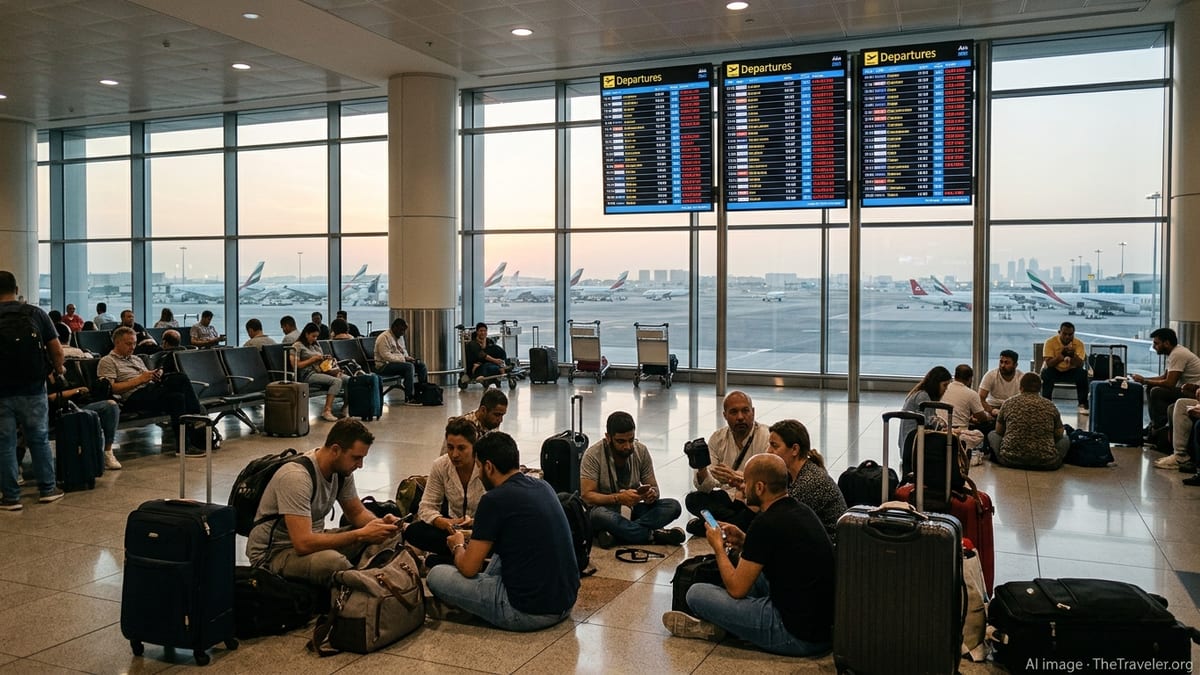
Regional Tensions Keep Gulf Airspace Under Strain
Middle East air traffic has been unsettled since late February 2026, when the conflict involving Iran, the United States and Israel escalated into missile and drone strikes on targets in the United Arab Emirates and other Gulf states. Publicly available information indicates that Dubai International and Abu Dhabi’s main airport both experienced temporary closures and reduced operations after nearby infrastructure was struck and emergency responses were activated.
Travel advisories from corporate travel managers and risk consultancies in early March noted that airspace across the UAE, Bahrain, Qatar, Israel, Iran and Iraq had been subject to intermittent restrictions, with many regional carriers suspending or curtailing services. Some updates described complete pauses in departures from Abu Dhabi and sweeping cancellations on routes linking the Gulf to Europe, South Asia and North America as airlines avoided high-risk corridors.
Although limited services have gradually resumed at major UAE hubs, the broader operating environment remains volatile. Reports indicate that carriers are adjusting routings day by day around conflict zones and missile risk areas, adding time to journeys and compressing aircraft and crew availability across their networks.
UAE Airlines Balance Safety, Capacity and Complex Reroutes
UAE-based airlines have been among the most exposed to the disruption, given their reliance on Dubai and Abu Dhabi as long-haul connection points. Published coverage shows that Emirates temporarily halted operations to and from Dubai for windows of time in early March, later restarting with reduced schedules as assessments of airspace safety evolved. Etihad services from Abu Dhabi were also paused before gradually reappearing in schedules with limited frequencies.
As airspace closures and military activity shifted, carriers based in the UAE and neighboring states began rerouting aircraft around sensitive zones and, in some cases, cancelling services outright when workable alternatives were not available. Travel updates referenced longer flight paths that skirted parts of the Gulf and Iranian airspace, adding fuel burn and tightening turnaround times.
These constraints have had knock-on effects for passengers worldwide connecting through the UAE. Travelers reported last-minute cancellations, rolling delays and involuntary rebookings, particularly on services linking Europe and North America with South and Southeast Asia via Dubai or Abu Dhabi. Industry observers note that the hub-and-spoke model magnifies the impact of a disruption at a single node, with one suspended bank of flights rippling through dozens of onward connections.
IndiGo Issues Fresh Advisory as Constraints Mount
IndiGo, India’s largest airline by market share, has been under particular pressure as it navigates both regional instability and existing structural challenges. Recent reporting highlights that Indian carriers, including IndiGo, have been constrained by ongoing Pakistani airspace restrictions for Indian operators, in place since 2025, which had already lengthened flight times on some western routes before the latest Middle East crisis.
In March 2026, public information and traveler accounts indicate that IndiGo issued updated advisories to customers on its international network, warning of potential cancellations, rescheduling and significant delays on routes touching the Gulf and wider Middle East. Notices have emphasized that schedules remain subject to change at short notice as the airline responds to evolving safety assessments and airspace availability.
Passengers on IndiGo flights between India and destinations such as the United Arab Emirates, Qatar and Turkey have reported cancellations within days or even hours of departure. Some long-haul itineraries operated with leased widebody aircraft between India and Europe have also been affected, with flights pulled from schedules or moved to alternative dates as the carrier rebalances capacity and reroutes around conflict zones.
Last-Minute Changes Frustrate Travelers and Strain Connectivity
The combination of airspace restrictions, rerouting and constrained aircraft availability has translated into unusually short-notice schedule changes for many travelers. Social media posts and forum discussions from early and mid-March describe IndiGo and other airlines cancelling or reshuffling flights with limited lead time, sometimes within 24 hours of departure, particularly on services involving Dubai and other Gulf hubs.
For journeys that rely on tight connections through the UAE, these disruptions can leave passengers stranded or facing extended layovers. With some UAE flights operating only in narrow windows when risk assessments permit, missed connections have become a recurring concern. Travelers have shared experiences of having to rebook at their own expense on alternative carriers, re-route via secondary European or Asian hubs, or delay their trips by several days.
Industry guidance from travel management companies has urged passengers to monitor airline apps and airport departure boards frequently, avoid unnecessary early travel to affected airports and consider flexible or refundable tickets where possible. Some advisories have also recommended allowing longer minimum connection times when itineraries pass through the Gulf, given the elevated chance of rolling delays.
Outlook: Prolonged Uncertainty for UAE–India and Beyond
Aviation analysts suggest that the regional outlook remains uncertain as long as hostilities and missile activity in and around the Gulf continue. Even when immediate attacks subside, conflict-zone advisories from aviation safety bodies and insurers may keep portions of regional airspace effectively closed to civilian traffic for an extended period, limiting the ability of UAE airlines and IndiGo to restore full schedules.
Reports from risk consultancies and travel advisory firms emphasize that airlines are likely to continue using dynamic routings, day-by-day schedule adjustments and targeted cancellations to maintain safety margins. This approach protects crews and passengers but makes it difficult for travelers to plan with confidence, particularly on high-demand corridors between India, the Gulf and Europe.
For now, passengers flying into or through the UAE are being encouraged to build contingency plans, stay alert to airline notifications and consider alternative routings where practical. While limited operations at Dubai and Abu Dhabi have resumed after the most intense phases of the crisis, the pattern of sudden suspensions, incremental resumptions and new advisories suggests that major disruptions across UAE carriers and IndiGo could persist as the geopolitical situation evolves.