

More news on this day
UAE-based airlines are overhauling schedules, waiving change fees and covering hotel costs as widening conflict and airspace closures across the Middle East upend travel plans for passengers connecting through Dubai and Abu Dhabi.
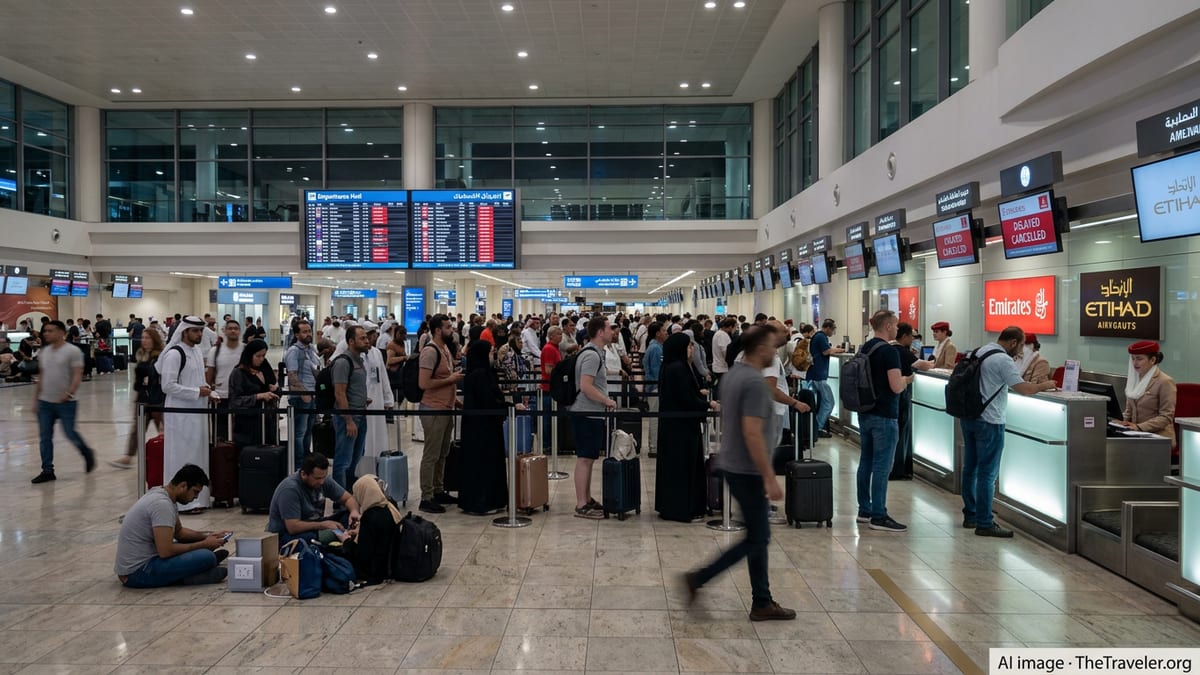
Flight Suspensions, Limited Restarts at Key UAE Hubs
Airspace closures following the latest escalation of hostilities involving Iran, Israel and the United States have triggered unprecedented disruption at the UAE’s major hubs. Emirates and Etihad Airways temporarily halted most operations from Dubai International and Abu Dhabi at the end of February as airlines across the region grappled with missile and drone activity and rapidly changing safety assessments.
Over the past several days, the carriers have begun a phased restart, operating only a fraction of their pre-crisis networks. Industry advisories indicate Emirates is currently serving a reduced list of long-haul destinations from Dubai, while Etihad is focusing on a core schedule of key cities from Abu Dhabi, with capacity at both hubs still significantly below normal levels and subject to change at short notice.
Dubai’s second airport and Sharjah have also seen schedules reshaped as flydubai and Air Arabia navigate reroutes to avoid closed or restricted airspace. While some flights are operating on extended routings that add hours to journey times, many regional services remain suspended, creating bottlenecks for travelers trying to reach or transit the Gulf.
The fluid situation has forced airlines to issue repeated operational bulletins urging passengers to check flight status before leaving for the airport. Travel specialists warn that day-of-departure cancellations and last-minute rebookings are likely to continue as long as the airspace picture remains volatile.
Fee Waivers and Flexible Rebooking for Affected Travelers
In response to the widespread disruption, UAE carriers have moved to relax fare rules and offer more flexible options to stranded customers. Etihad has introduced a special waiver linked to the “Middle East situation” that allows one free date change on newly issued tickets and broader rebooking rights for existing reservations across its network, with change fees suspended during the waiver period.
Emirates has issued its own customer advisory for tickets booked to travel between late February and the end of March, giving passengers the option to rebook travel into April or request refunds if their flights are canceled. Travel agents report that the airline is also considering rerouting some customers via partner carriers where seats are available, although these arrangements are being handled on a case-by-case basis.
Low-cost operator flydubai has updated its operational notices to encourage passengers to manage bookings online, emphasizing that those whose flights are canceled can either opt for a full refund or move travel to later dates without incurring standard penalties. The airline is advising customers to ensure their contact details are up to date so that schedule changes and rebooking options can be communicated quickly.
These policies mirror a broader global trend, with many international airlines publishing temporary waivers for itineraries touching the Gulf and surrounding conflict zones. For travelers, the expanded flexibility offers some relief, but securing suitable alternative flights is increasingly challenging as remaining services fill up and fares on unaffected routes climb sharply.
Government-Backed Support: Hotels, Transport and Terminal Management
UAE aviation authorities have activated contingency plans designed to protect passengers caught up in the crisis. Officials announced that reasonable accommodation and local transportation costs will be covered for travelers stranded in the country due to cancelled or heavily delayed flights, in coordination with national carriers and airport operators.
At Dubai International and Abu Dhabi International, this support has translated into large-scale hotel allocations, dedicated transport between terminals and nearby properties, and expanded on-the-ground teams to help manage queues at check-in and transfer desks. Airport staff have been working with consular officials from multiple countries to prioritize vulnerable travelers, including families with young children and those with medical needs.
Within terminals, operators have reconfigured some departure and arrival areas to cope with prolonged passenger stays. Seating zones have been repurposed as rest areas, additional food and beverage concessions are staying open longer hours, and extra signage is directing passengers to information counters where they can receive updates on both airline and government assistance measures.
The coordinated response is part of a broader effort by the UAE to maintain its reputation as a dependable transit hub even amid severe regional turbulence. Officials have stressed that while flight operations remain constrained, support services for those on the ground are being scaled up to match the extraordinary circumstances.
Knock-On Effects Across the Wider Travel Network
The disruption at UAE hubs is reverberating across global travel corridors, particularly between Europe, Asia and Africa, where Dubai and Abu Dhabi serve as critical connecting points. Aviation data providers estimate that tens of thousands of flights in the wider region have been canceled or rerouted since late February, with Emirates, Etihad and other Gulf carriers bearing a significant share of the impact.
Popular leisure destinations that rely heavily on Gulf connections are already seeing fallout. Tour operators in Southeast Asia and Southern Europe report rising cancellations and rebookings, as travelers whose itineraries relied on transits through the UAE scramble to find alternative routings or postpone trips entirely. Corporate travel managers are similarly reworking schedules for business travelers, often opting to avoid the region altogether for the time being.
The knock-on effects extend to airport and tourism infrastructure in the UAE itself. Hotels near major hubs are experiencing a surge in unplanned overnight stays, while rental car companies and ground transport providers are fielding last-minute requests from passengers whose onward flights have been pushed back or rerouted to other Gulf cities. Local tourism authorities are working closely with airlines and hotels to manage capacity and avoid overbooking during what is normally a busy travel season.
Travel analysts caution that the full economic impact will depend on how long the unrest and associated airspace restrictions persist. Early forecasts suggest a notable downturn in international arrivals to the Middle East this year, with the UAE’s proactive passenger support measures seen as key to mitigating reputational damage and encouraging travelers to return once conditions stabilize.
What Travelers Using UAE Airlines Should Do Now
For passengers booked on Emirates, Etihad, flydubai or other UAE-based carriers in the coming weeks, experts recommend a proactive approach. Travelers are urged to monitor airline advisories closely, confirm whether their routes fall under special waivers, and adjust plans as early as possible to maximize rebooking options before remaining seats are taken.
Those already en route or transiting through the region are advised to build in extra time for connections, carry essential items in hand luggage in case of unexpected overnight stays, and keep digital copies of visas and key documents easily accessible. Travel insurance policies should be reviewed carefully, as coverage for disruptions linked to armed conflict can vary widely between providers.
Airlines and airports in the UAE are also emphasizing the importance of accurate contact information in reservations. With flight schedules shifting hour by hour on some routes, automated text and email notifications have become a primary tool for alerting passengers to cancellations, delays and gate changes, as well as informing them of eligibility for accommodation and transport assistance.
While there is no clear timeline for a full return to normal operations, industry observers say the swift deployment of fee waivers, schedule adjustments and government-backed support underscores the central role UAE hubs play in global travel. For now, flexibility and patience remain essential for anyone flying with or through the country’s carriers as the regional situation continues to evolve.