

More news on this day
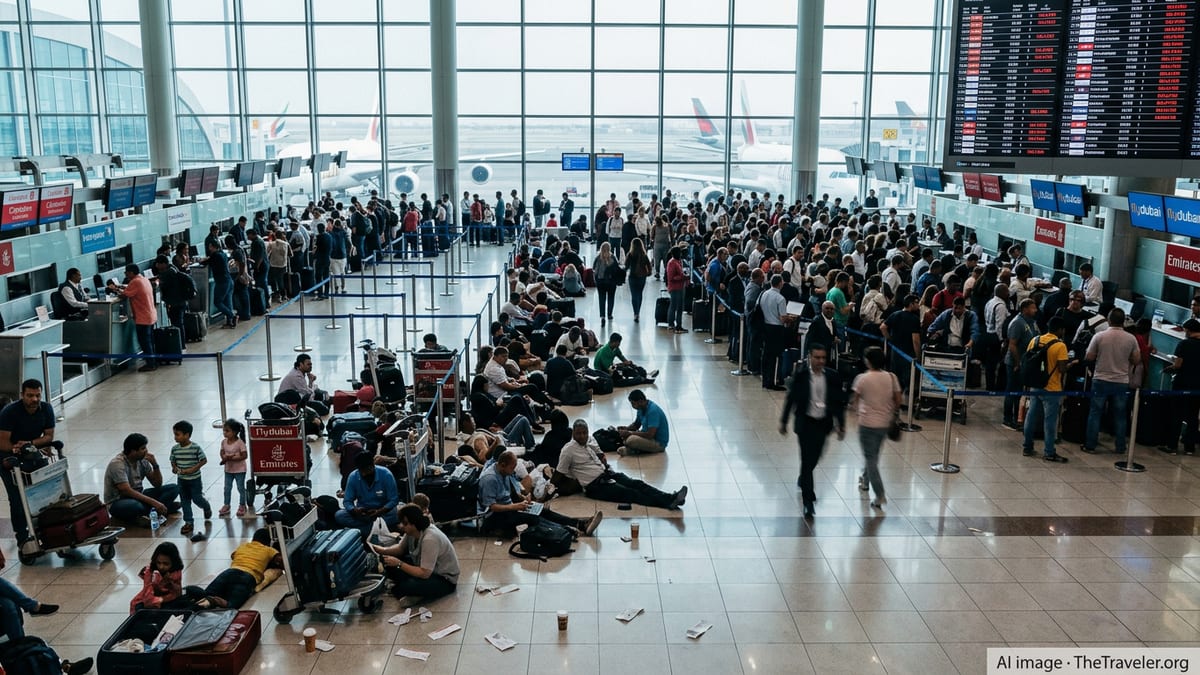
Thousands of passengers were left sleeping in terminal corridors and queuing for hours at Dubai International, Abu Dhabi International, and Sharjah International on Wednesday, as 327 flights were delayed and 198 canceled across the three UAE hubs, disrupting marquee routes for Emirates, Etihad, FlyDubai, and Air Arabia to cities including London, New York, Paris, and Mumbai.
Get the latest news straight to your inbox!
Major Gulf Hubs Struggle Under Mounting Flight Disruptions
Airlines and airport authorities across the United Arab Emirates spent the day battling cascading operational challenges as a fresh wave of delays and cancellations rippled through the country’s busiest terminals. Flight tracking data and airport operations logs indicated that departures and arrivals at Dubai, Abu Dhabi, and Sharjah remained well below normal schedules, with knock-on effects likely to continue into the coming days.
The latest figures, compiled from airport operations and aviation analytics services, point to 327 delayed flights and 198 cancellations in a single 24 hour period across the three airports, underscoring the scale of the disruption hitting one of the world’s most important aviation crossroads. Many of the affected services were long haul connections that normally funnel passengers between Europe, North America, and Asia via UAE hubs.
Dubai International, typically among the world’s busiest international airports by passenger numbers, bore the brunt of the disruption, with waves of arrivals and departures pushed back by several hours. Abu Dhabi International and Sharjah International also reported sustained congestion at check in, transfer, and security points as airlines attempted to re accommodate stranded travelers.
Flag Carriers Emirates and Etihad Forced to Trim Schedules
Emirates and Etihad, the UAE’s two global full service carriers, significantly reduced their daily schedules as they worked within tightened airspace restrictions and sought to reposition aircraft and crew. Emirates, which normally mounts a dense bank of long haul services through Dubai, confirmed it had canceled or heavily retimed a series of flights to London, New York, Paris, and other European and Asian gateways while operating additional recovery services where possible.
In Abu Dhabi, Etihad also cut frequencies on key routes, including services to major European capitals and Indian cities such as Mumbai and Delhi, while maintaining a skeleton network focused on repatriating stranded passengers and preserving critical connections. Travelers reported multiple schedule changes within hours, as aircraft that had departed late struggled to return in time to operate subsequent sectors.
Both carriers have urged passengers to check their flight status before leaving for the airport, use digital channels for rebooking where possible, and arrive earlier than usual when travel is confirmed. However, with call centers overwhelmed and online self service tools strained by demand, many travelers continued to line up at airport ticketing desks for reissue and rerouting options.
Low Cost Carriers FlyDubai and Air Arabia Hit on Regional Links
Low cost operators FlyDubai and Air Arabia, which underpin much of the region’s short and medium haul connectivity, also faced extensive disruption across their networks. FlyDubai’s dense web of services from Dubai to cities in the Gulf, South Asia, and Eastern Europe saw widespread delays, forcing the airline to consolidate some flights and suspend others as crew and aircraft fell out of sequence.
From Sharjah, Air Arabia contended with a similar scenario, juggling curtailed frequencies to major markets including India, Pakistan, and North Africa. Flights to and from Mumbai and other key Indian hubs were among those most affected, with passengers reporting same day cancellations after hours in departure halls.
The reduced operations of these low cost carriers had an outsize impact on budget conscious travelers and migrant workers who rely on frequent, competitively priced flights between the UAE and their home countries. Many were left weighing difficult decisions over missed employment obligations and family commitments as they searched for scarce alternative seats.
Global Routes to London, New York, Paris, and Mumbai Disrupted
The disruption at UAE airports rapidly spread along some of the world’s busiest intercontinental corridors, as flights to major cities including London, New York, Paris, and Mumbai were delayed or canceled. These routes form the backbone of Emirates and Etihad’s long haul operations and are critical for connecting traffic flowing between Europe, North America, Africa, and Asia.
Passengers bound for London and New York, many of whom were connecting from Asia and Australasia, faced missed onward flights and unplanned overnight stays in Dubai and Abu Dhabi hotels. Some reported being rebooked days later due to limited spare capacity on remaining services, particularly in peak business and holiday cabins.
Travelers heading to Paris, Mumbai, and other major hubs also encountered uncertainty as rolling operational updates filtered through departure boards. Extended aircraft ground times in the UAE meant that disruptions often carried through entire route rotations, causing late running services to arrive into Europe and South Asia hours behind schedule and further complicating airline planning.
Passengers Endure Long Queues, Vouchers, and Uncertain Timelines
Inside the terminals, the human impact of the disruption was immediately visible. Passengers slept on makeshift bedding of jackets and carry on bags, while families clustered around power outlets to keep phones charged for updates. Check in halls and transfer desks at Dubai, Abu Dhabi, and Sharjah saw long, slow moving queues, with many travelers holding printed itineraries showing multiple cancellations in less than a day.
Airlines deployed additional staff and volunteers to help manage crowds, distribute refreshments, and process rebookings. Meal vouchers and hotel accommodation were issued in line with ticket conditions and applicable regulations, though some passengers reported difficulties securing rooms amid high demand, especially near Dubai International.
Airport operators used public announcement systems and social media channels to share rolling advisories, urging only passengers with confirmed departures to come to the terminals. While some services were able to depart near their revised times, many travelers expressed frustration at repeated short notice changes and limited clear guidance on how long the wider disruption would last.
With aircraft, crew, and passengers out of position across three major hubs, aviation experts warned that even if conditions stabilize, it could take several days for operations at Dubai International, Abu Dhabi International, and Sharjah International to fully normalize, prolonging uncertainty for travelers booked on Emirates, Etihad, FlyDubai, Air Arabia, and their codeshare partners worldwide.