

More news on this day
The United Arab Emirates is reopening its skies after weeks of conflict-related disruptions, with reports indicating that the General Civil Aviation Authority has lifted precautionary airspace measures and that normal flight operations are resuming at Dubai, Abu Dhabi and Sharjah airports.
Get the latest news straight to your inbox!
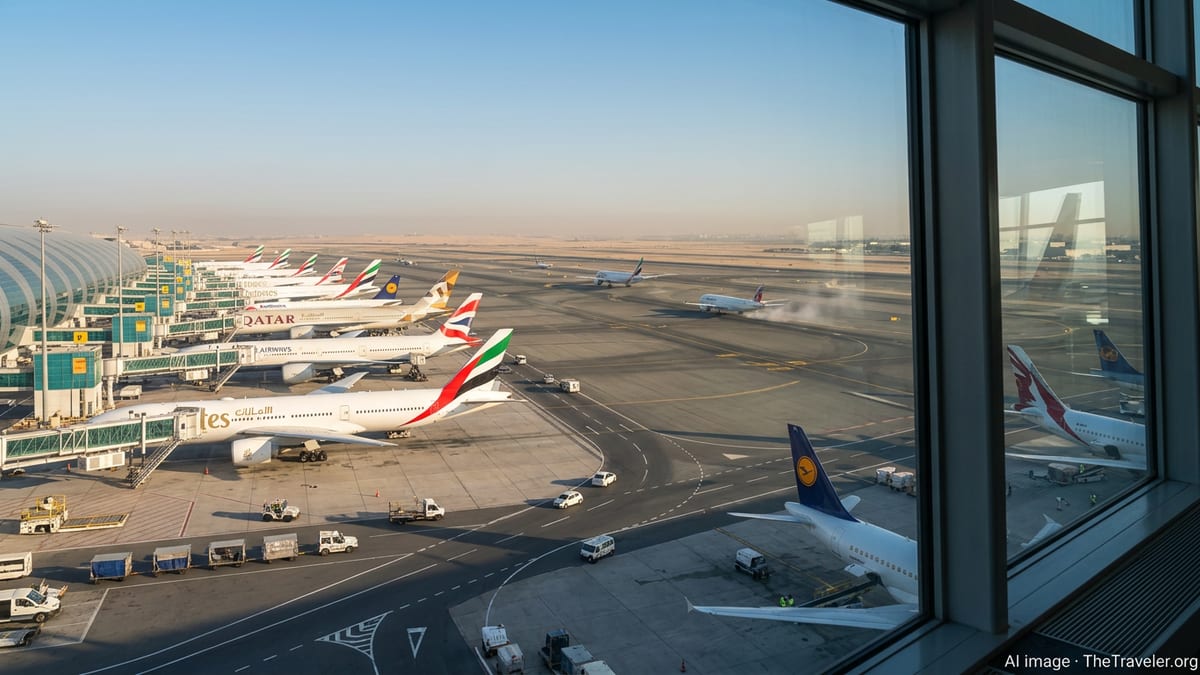
GCAA Lifts Temporary Restrictions After Security Review
According to publicly available information, the UAE’s General Civil Aviation Authority introduced a series of precautionary airspace restrictions at the end of February 2026 in response to heightened regional tensions and repeated missile and drone attacks. Those measures included extensive rerouting, the suspension of many commercial services, and a sharp reduction in overflights across the country’s airspace.
New updates circulating on 17 March indicate that these restrictions have now been lifted following a fresh assessment of regional airspace conditions. The easing of precautions is described as a systemwide step, covering both en route traffic and arrivals and departures at the country’s main international gateways.
Publicly available coverage suggests that the decision follows several days of gradually improving operational stability, as air defenses mitigated incoming threats and airport infrastructure was inspected and cleared for sustained use. The lifting of measures marks the first full reopening of UAE airspace since the initial closures and partial suspensions that began in late February.
While security considerations remain in focus, aviation notices and travel advisories now characterize UAE airspace as open to normal civil operations, allowing airlines to rebuild schedules that were heavily curtailed during the peak of the disruptions.
Dubai International Leads the Return to Normal Schedules
Dubai International Airport, one of the world’s busiest hubs for international passengers, experienced some of the most visible impacts from the recent airspace restrictions, including temporary suspensions of takeoffs and landings and subsequent periods of reduced schedules. Over recent days, airlines had been operating limited services while monitoring the evolving security picture and available air corridors.
On 17 March, travel forums and aviation tracking data began to show a marked uptick in departures and arrivals at Dubai, suggesting a return to near-normal activity. Reports indicate that Emirates and other carriers based at Dubai are now transitioning from reduced operations toward regular timetables as aircraft and crews are repositioned and backlogs are cleared.
Passenger experiences shared online describe noticeably busier terminals and runway movements compared with the preceding week, when many travelers were rerouted through alternative hubs in Oman and Saudi Arabia. With airspace reopened, long-haul connections through Dubai, including flights to Europe, North America, Asia and Africa, are expected to stabilize as airlines reinstate suspended frequencies.
Airport access rules that were tightened during the disruption period, such as entry limited to ticketed passengers and heightened screening of vehicles, are gradually being relaxed, according to local reports. However, travelers are still being advised to arrive early and check their flight status due to residual congestion and occasional schedule adjustments.
Abu Dhabi and Sharjah Airports Restore Full Commercial Operations
Zayed International Airport in Abu Dhabi and Sharjah International Airport also faced significant operational constraints during the weeks of regional escalation, with many services cancelled or repatriation-focused and regular commercial schedules sharply reduced. Airlines based at these airports, including Etihad Airways and Air Arabia, had been operating small numbers of flights primarily to move stranded passengers and essential traffic.
Recent travel advisories and aviation community updates now describe both airports as returning to normal commercial operations in line with the broader reopening of UAE airspace. Etihad is reported to be expanding its network back toward its usual long-haul and regional destinations, while Air Arabia and other carriers at Sharjah are restoring routes across the Middle East, South Asia and beyond.
Published coverage suggests that terminal operations at Abu Dhabi and Sharjah are once again supporting routine arrivals and departures, rather than the limited, evacuation-style traffic patterns seen earlier in the month. Ground handling, baggage services and connecting flight arrangements are being scaled back up to standard levels as more aircraft and crew rotations return to planned patterns.
Although some international airlines had previously opted to suspend or reroute services to the UAE during the height of the crisis, the normalization of airspace conditions is expected to encourage a phased resumption of those flights over the coming days and weeks, subject to each carrier’s own risk assessment and fleet planning.
What Travelers Can Expect in the Coming Days
For travelers, the reopening of UAE airspace and the resumption of normal operations at Dubai, Abu Dhabi and Sharjah mean a gradual return to familiar connection patterns through the country’s major hubs. Long queues, last-minute cancellations and extensive diversions that characterized the earlier phase of the crisis are likely to diminish as airlines re-establish predictable schedules.
Industry observers note that some backlog is inevitable as carriers work through rebooked passengers whose flights were cancelled during the closure period. Economy and premium cabins on key routes may remain heavily booked in the short term, and available seats for new reservations could be limited on certain dates. Travelers planning imminent trips are being encouraged, in public advisories and airline updates, to secure confirmed bookings before heading to the airport.
Published travel guidance also highlights the possibility of residual delays even as operations normalize. Air traffic control units across the region are adapting to new routings and flows, and some airlines may maintain slightly longer block times on routes that cross previously restricted areas. Passengers with tight connections are advised to allow extra time where possible.
Travel insurance providers and corporate travel managers are expected to update their risk assessments to reflect the changed environment, potentially easing earlier restrictions on non-essential travel to and through the UAE. However, many recommendations still emphasize staying alert to official travel advisories and monitoring airline communication channels for short-notice schedule changes.
Regional Aviation Outlook After the Reopening
The lifting of precautionary measures in UAE airspace has significant implications for wider regional connectivity. During the period of restrictions, carriers across the Middle East were forced to reroute or suspend flights, adding time and cost to journeys that would normally transit the UAE’s busy corridors.
With the UAE now described as open for normal traffic, neighboring markets are expected to benefit from restored one-stop connections that link Europe, Asia, Africa and the Americas via Dubai and Abu Dhabi. Freight operators in particular are likely to welcome the reopening, as cargo capacity had been constrained by the reduced number of widebody passenger flights, which typically carry substantial belly-hold freight.
Analysts following the situation point out that the episode underscores both the vulnerability and resilience of global aviation networks. The UAE’s hub-and-spoke model, with its reliance on complex flows of transfer passengers and high aircraft utilization, experienced sharp but temporary disruption, yet early signs of a robust rebound have emerged as soon as airspace conditions allowed.
For the travel and tourism sector, including hotels, tour operators and attractions in Dubai, Abu Dhabi and Sharjah, the normalization of flight operations is likely to support a renewed inflow of visitors ahead of the busy spring and early summer travel period. As airlines and airports settle back into regular patterns, the focus is shifting from crisis response to restoring traveler confidence and planning for sustained demand.