

More news on this day
Air travel between the United Arab Emirates and Bahrain is set for a radical overhaul as the two Gulf nations launch a groundbreaking single-point airport system that consolidates security, immigration, and boarding checks into one streamlined touchpoint, promising to redefine how passengers move through airports in the region and beyond.
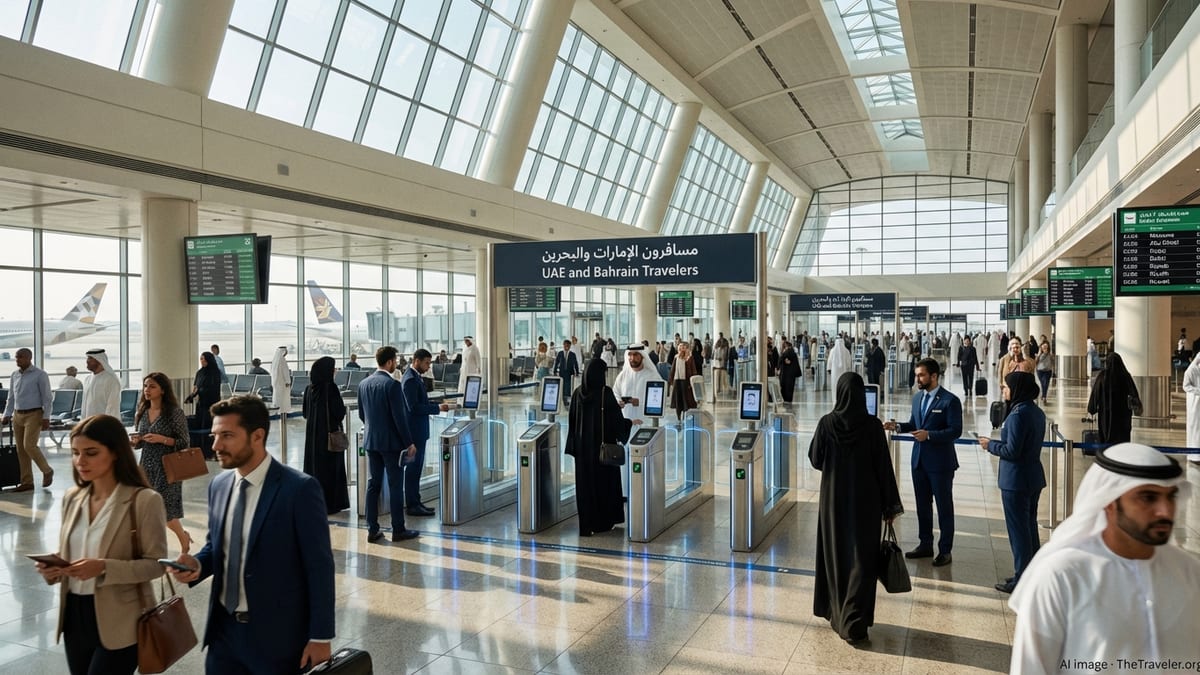
A First-of-Its-Kind One-Point Air System Takes Off
The UAE and Bahrain on February 17, 2026, are rolling out the first operational phase of a Single Travel Point air system, initially for citizens flying between Manama and Abu Dhabi. The concept is simple yet transformative: passengers complete all formalities at a single, integrated checkpoint before departure, rather than progressing through multiple queues and counters.
Under the scheme, travelers flying Gulf Air from Bahrain International Airport and Etihad Airways from Zayed International Airport in Abu Dhabi will clear immigration, security, and airline checks in one pass at their point of origin. On arrival, they will no longer repeat the same procedures, effectively turning cross-border journeys into an experience that more closely resembles a domestic flight.
The program is the first visible outcome of a Gulf Cooperation Council initiative, approved by interior ministers, to modernize cross-border travel. It positions the UAE and Bahrain as test beds for a model that other Gulf states are closely watching, and potentially a template for wider regional harmonization of air travel.
Officials describe the system as a “one-point air corridor” in which identity, security, and travel credentials are merged digitally behind the scenes, even as the physical experience for passengers is reduced to a single, fast-moving checkpoint.
How the Single Travel Point Will Work for Passengers
For travelers, the new system is designed to eliminate the familiar stop-start rhythm of a typical airport journey. Instead of separate lines for check-in, security screening, exit immigration, and then another round of procedures on arrival, passengers using the Bahrain–UAE corridor will be funneled through one consolidated processing zone.
At that point, their travel documents, biometric identity, security screening, and exit controls are verified together, supported by a shared data backbone between authorities in both countries. Once cleared, the passenger’s status is pushed digitally to the arrival airport, where they can disembark and head straight to baggage claim or exit, without another passport queue.
The system is expected to rely heavily on biometrics, advanced identity management, and pre-travel data sharing, in line with global moves toward digital travel credentials and One ID concepts championed by international aviation bodies. In practical terms, that could mean facial recognition and national digital IDs doing most of the work that boarding passes and physical stamps once did.
While the first phase is targeted at citizens of the two countries on designated routes, officials have indicated that the underlying technology and procedures are being built with scalability in mind. Over time, that could allow the zone to expand to residents, then to a broader pool of international travelers once legal and technical frameworks are in place.
Bahrain’s Digital Identity Push Sets the Stage
Bahrain enters the pilot from a position of relative digital maturity in identity management. In recent years, the kingdom has introduced an upgraded national ePassport and embedded digital-travel capabilities into its national ID card, designed to meet international standards for electronic travel credentials.
The Information and eGovernment Authority has also rolled out eKey 2.0, a unified, biometric-enabled digital login that underpins government and some private-sector services. These initiatives have laid the groundwork for treating identity as a secure, reusable digital asset that can span borders and sectors, including aviation.
At Bahrain International Airport, the infrastructure story is equally significant. The airport’s operating company has built out a modern digital backbone with partners such as SITA, enabling fast, integrated passenger processing from check-in through to boarding. The airport has been recognized by Airports Council International for its customer experience performance, underscoring a wider strategy to compete as a technology-forward hub.
This convergence of secure identity, upgraded travel documents, and smart airport systems makes Bahrain a logical launch partner for an experiment that depends on frictionless data exchange and trusted credentials between states.
UAE Airports Push Toward a Document-Light Future
The UAE side of the corridor is anchored by Abu Dhabi’s Zayed International Airport, which in recent years has aggressively invested in biometric and contactless travel. The airport has tested and deployed facial-recognition corridors with airline partners, promising a “curb-to-gate” journey where a traveler’s face functions as their ticket, ID, and boarding pass.
Working with national authorities for identity and border management, Abu Dhabi has developed systems that reuse biometric data collected at immigration across multiple points in the airport journey. That means the same verified identity can be referenced at security, boarding gates, and other touchpoints without repeated document checks.
These projects are closely aligned with the UAE’s wider digital transformation agenda, which sees identity and border technologies as strategic infrastructure. In practice, this has meant partnering with specialized firms in biometrics, artificial intelligence, and airport IT to create what officials describe as one of the world’s most technology-driven airport environments.
By plugging that environment into a bilateral one-point air system with Bahrain, the UAE effectively extends its document-light vision beyond its own borders, testing how far seamless travel can stretch when two sovereign systems are tightly integrated.
A Test Bed for Wider GCC Travel Integration
The single-point air system between the UAE and Bahrain is also a political and technical pilot for broader Gulf ambitions. GCC states have long discussed closer integration of travel, ranging from shared border data to a Schengen-style unified tourist visa that would allow visitors to move freely among all six member countries.
While the unified visa has encountered delays and is now expected to launch in 2026, the one-point air corridor represents tangible progress on the operational side of cross-border travel. By showing that two states can securely share responsibility for security and immigration checks, the pilot could accelerate trust and interoperability across the bloc.
A central element in this strategy is the creation of shared electronic platforms for border data, violations, and risk assessments. The single-point system effectively depends on such platforms: once a traveler clears all checks at their origin airport, the destination state must trust the integrity of that process, supported by real-time data exchange and common standards.
If the Bahrain–UAE trial delivers shorter queues, fewer bottlenecks, and no compromise on security, officials say the model could be extended to Saudi Arabia, Kuwait, Oman, and Qatar. Over time, that would turn intra-GCC air travel into an experience closer to moving between states in a single domestic market.
Global Momentum Toward Single-Token and One ID Travel
The Gulf experiment comes as the global aviation industry leans into digital-first travel. International bodies and airline groups have been promoting “single token” or “one ID” concepts, in which passengers enroll their biometric and digital travel credentials once and then glide through airports without repeatedly presenting documents.
Industry surveys show that passengers are increasingly comfortable with such technologies when they are clearly explained and demonstrably secure. A growing share of travelers say they would prefer to manage their journey through a smartphone that combines a digital wallet, digital passport, and loyalty credentials, alongside features like electronic bag tags and mobile boarding.
Airports in Europe, North America, and Asia have already introduced biometric boarding gates, automated border kiosks, and trials where a traveler’s face replaces their physical boarding pass. The UAE and Bahrain, however, are pushing the model further by applying it at a cross-border, state-to-state level, rather than simply within a single airport or airline’s ecosystem.
That distinction matters. If two states can successfully implement a shared, one-point system, it moves the conversation from “smart airport” to “smart corridor,” and eventually to “smart region.” This positions the Gulf as a live laboratory for the next phase of frictionless travel.
Security, Privacy, and Trust at the Core
Behind the promise of smoother journeys is a complicated security and privacy equation. Consolidating all procedures into one point means that checkpoint must be robust, deeply integrated with intelligence systems, and resilient against cyber threats and identity fraud.
Bahrain’s adoption of secure chips and public-key infrastructure in its travel documents, alongside biometric-backed digital identity systems, is one response to this challenge. The UAE, for its part, has invested heavily in modern border-control platforms that can analyze passenger data in advance, apply risk-based screening, and share information quickly with partners.
Privacy advocates often raise questions about how biometric data is stored, how long it is retained, and who can access it. Authorities in both countries have emphasized that their systems are designed to meet international standards for data protection, with strict controls on how biometric and travel information is used and shared.
In the context of the single-point air system, trust will depend not only on technical safeguards but also on transparency. Clear communication to passengers about what data is captured, why, and under what legal frameworks will be essential if the new model is to gain widespread acceptance.
What Travelers Can Expect Next
In the early months, the one-point air system between Bahrain and the UAE will likely feel experimental, with airport staff guiding eligible passengers through new lanes and explaining the process at each step. Feedback from these early users will help authorities fine-tune everything from signage to staffing and digital interfaces.
Airlines involved in the pilot are expected to adjust their own workflows, coordinating flight schedules, boarding processes, and disruption management with the new shared-clearance model. For passengers, that may ultimately translate into later cut-off times for check-in, shorter overall processing times, and a more predictable journey.
If the trial meets performance and security benchmarks, officials have signaled that eligibility could expand beyond citizens to include residents and certain categories of frequent travelers. Integration with future GCC-wide initiatives, including the planned unified tourist visa, would further increase the benefits for international visitors.
For now, the message from both governments is clear: the days of shuffling from one counter to another, passport in hand, may be numbered on key Gulf routes. With the launch of the single-point air system, the UAE and Bahrain are betting that the future of travel lies in shared digital trust, not more paper and more lines.