

More news on this day
A fragile five day ceasefire mediated by the United States is beginning to ease one of the most turbulent periods for Gulf aviation in years, with airports in the United Arab Emirates, Oman, Qatar, Saudi Arabia and other regional hubs cautiously restoring limited flight operations after widespread suspensions linked to the latest Middle East conflict.
Get the latest news straight to your inbox!
From Sudden Shutdowns to a Tentative Reopening
In the days leading up to the ceasefire, large parts of Middle East airspace were effectively shut to routine commercial traffic as hostilities between the United States, Israel and Iran spilled across the region. Aviation advisories and maritime security briefings described airspace closures or severe restrictions over several Gulf states, including Qatar and parts of the United Arab Emirates and Saudi Arabia, triggering mass cancellations and large scale rerouting of long haul services between Europe, Asia and North America.
Data compiled by industry trackers and regional media indicated that flights to and from Dubai, Abu Dhabi, Doha, Riyadh, Muscat and other key gateways were either suspended outright or reduced to a skeleton schedule focused on repatriation and emergency traffic. Airlines in India, Europe and the wider Middle East dropped services into the Gulf, while carriers that continued to operate diverted around conflict zones, often adding hours to flight times and forcing unplanned technical stops.
The US backed five day pause in fighting, which regional coverage characterizes as a limited ceasefire designed to de escalate attacks and reopen critical corridors, has shifted that picture. Within days of the truce taking effect, aviation notices and local press reports pointed to a gradual, if uneven, resumption of flights from several Gulf hubs, led by the UAE and Saudi Arabia and followed more cautiously by Qatar and smaller regional markets.
UAE Leads With Phased Return of Flights
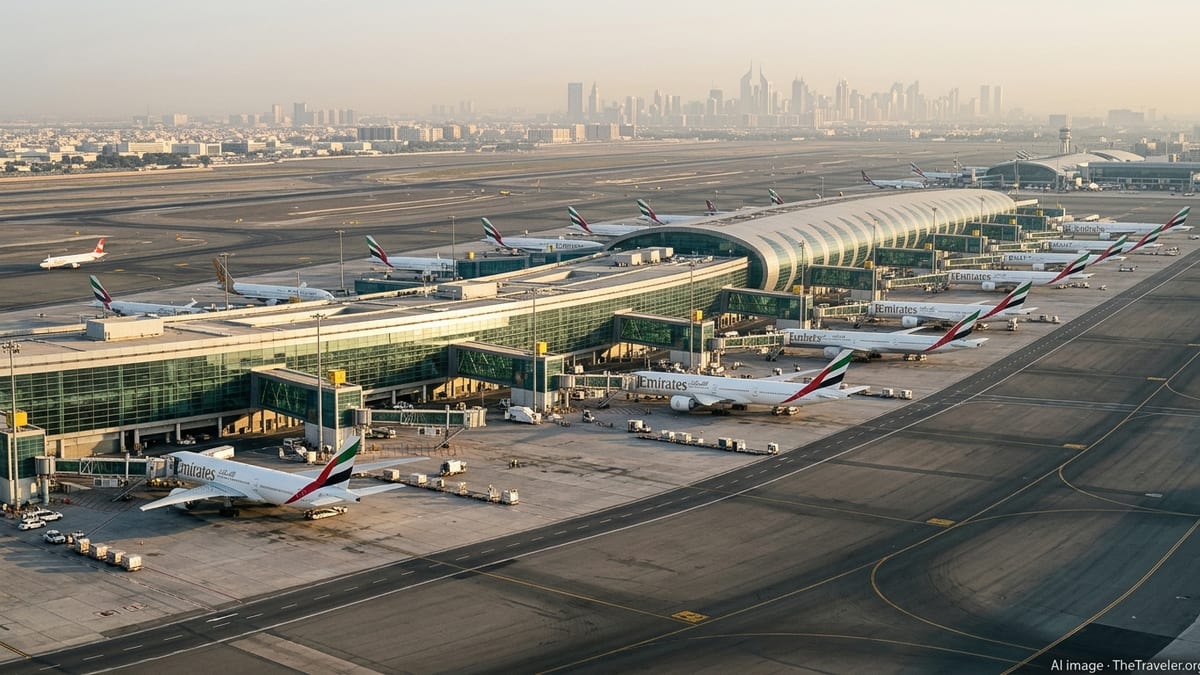
The United Arab Emirates has been among the most closely watched markets, given Dubai’s role as one of the world’s busiest international hubs. Publicly available schedules and airport advisories show Dubai International and Abu Dhabi International moving from a near standstill at the height of the strikes to what officials describe as partially resumed or limited operations a few days into the ceasefire period. Flag carrier Emirates and Abu Dhabi based Etihad have focused initially on trunk routes linking the UAE with major cities in Europe and Asia, operating reduced frequencies and prioritizing stranded passengers.
Industry analytics cited in regional newspapers indicate that the first wave of resumed services from Dubai included widebody flights to high demand destinations such as London, Frankfurt and select Asian capitals, while many secondary routes and regional links remain paused or heavily cut back. Low cost and regional operators serving the UAE have proceeded more slowly, with some carriers maintaining full suspensions to and from Emirati airports even as the national airlines restart.
Operationally, airlines appear to be using conservative routings that hug the periphery of sensitive airspace or dip south via Oman and Saudi Arabia to avoid the most volatile zones. Passengers transiting the UAE are being warned to expect last minute schedule changes, extended layovers and rebookings as carriers test the stability of the ceasefire and gradually rebuild their networks.
Oman and Saudi Arabia Offer Key Southern Corridors
Oman and Saudi Arabia have emerged as vital southern corridors for global aviation during the crisis, roles that are likely to grow as flights resume under the ceasefire. Travel forums and airline communications describe Muscat and several Saudi airports continuing to handle a limited flow of flights even during the peak of the shutdown, with some long haul services rerouted through Omani and Saudi airspace to skirt conflict areas further north.
With the ceasefire in place, carriers are leaning more heavily on these routes. Aviation monitoring cited by regional outlets highlights an uptick in traffic using Saudi and Omani corridors to connect Europe and Asia, often linking into reduced networks from the UAE. Saudi based airlines, which had earlier suspended flights to multiple Gulf destinations, are cautiously reinstating services on selected routes while maintaining broader suspensions where risk assessments remain unfavorable.
For travelers, this means that routings via Riyadh, Jeddah or Muscat may be among the first reliable options back into the region, even as direct links to some cities remain uncertain. Travel agents and airline advisories are encouraging passengers to build in generous connection times and to monitor bookings closely as timetables are adjusted in response to shifting security evaluations.
Qatar’s Slower Path Back After Direct Strikes
Qatar’s aviation recovery is proving more complex. Reports on the conflict describe repeated missile and drone strikes on Qatari territory since late February, leading to the closure of national airspace and the grounding of almost all commercial flights into and out of Doha at the height of the crisis. Hamad International Airport, normally one of the region’s top transfer hubs, saw traffic drop to a trickle of emergency and outbound services.
According to travel advisories and airline notices shared publicly, limited repatriation flights from Doha began under special authorization even before the broader ceasefire took hold, largely aimed at moving stranded passengers to major European capitals. However, standard commercial operations on Qatar Airways’ global network have remained severely constrained, with many passengers reporting multiple cancellations and rebookings as the carrier adjusts schedules day by day.
The five day ceasefire has opened the door to further easing of restrictions, and Qatar’s civil aviation authorities have signaled readiness to expand operations as safety conditions allow. Yet, compared with the quicker ramp up seen in the UAE and Saudi Arabia, Qatar’s reentry into normal traffic patterns is expected to lag, reflecting both the intensity of the strikes it absorbed and the continued strategic sensitivity of its airspace.
What Travelers Should Expect in the New Middle East Aviation Landscape
The collective experience of the past weeks, capped by the ceasefire driven reopening, is reshaping expectations of what flying through the Middle East looks like. Aviation consultancies cited in recent analyses point to a likely period of sustained volatility, during which airlines will keep contingency routings and rapid suspension mechanisms in place even as they rebuild schedules through the Gulf hubs.
Traveler accounts and booking data suggest that demand is returning fastest on core intercontinental corridors that rely heavily on Gulf connections, such as South Asia to Europe and Southeast Asia to North America. However, many itineraries are being reconfigured to avoid the most exposed airspace, using southern tracks over Oman, Saudi Arabia and Egypt or shifting connections temporarily to hubs outside the immediate conflict zone.
Industry observers indicate that airlines and airports across the UAE, Oman, Qatar and Saudi Arabia are simultaneously working to restore confidence while retaining enough operational flexibility to respond quickly if the fragile ceasefire falters. That balance is likely to define the “new era” for Middle East aviation in the months ahead: a region still central to global air travel, but operating with heightened sensitivity to geopolitical risk and with passengers far more attuned to the strategic implications of the routes on their boarding passes.