

More news on this day
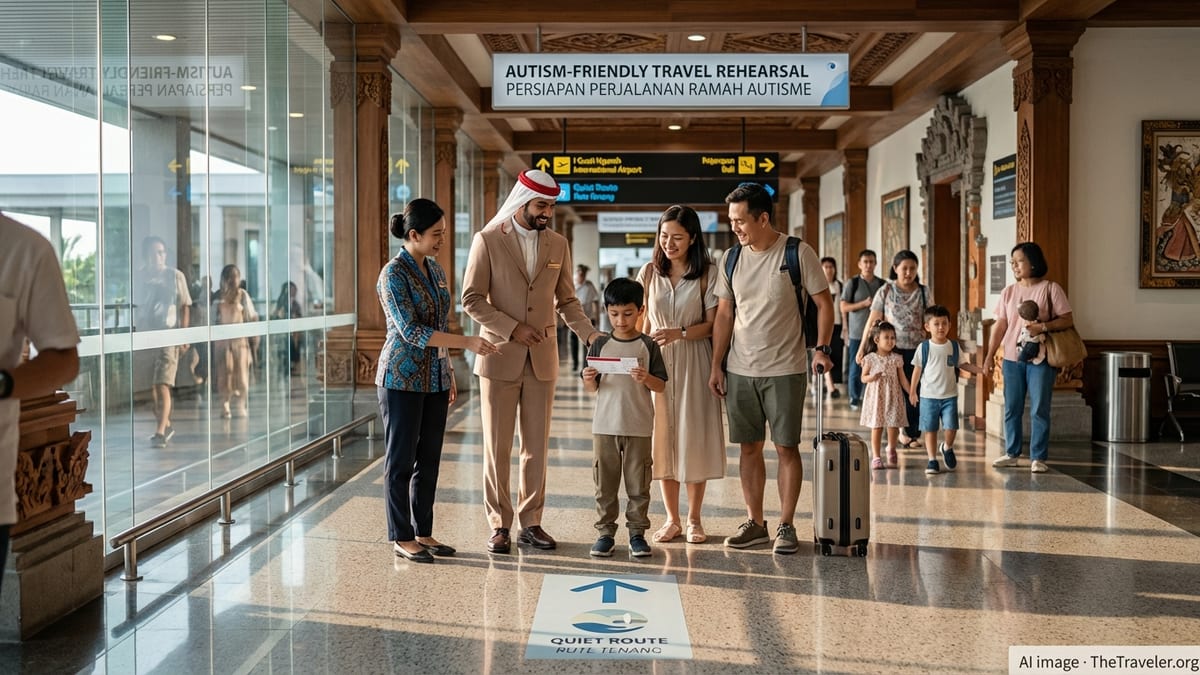
The United Arab Emirates and Indonesia are joining forces with Emirates to test a groundbreaking travel rehearsal programme for children with autism in Bali, positioning both countries at the forefront of a fast-evolving movement to make global tourism more inclusive and accessible.
A New Chapter for Accessible Tourism in the UAE and Indonesia
The decision to bring Emirates’ travel rehearsal concept for children with autism to Bali marks a significant moment for both the United Arab Emirates and Indonesia, two nations keen to position themselves as leaders in inclusive tourism. Building on the UAE’s rapidly expanding network of certified autism-friendly facilities, the collaboration in Bali underscores how destinations can redesign the airport and flight experience so that neurodivergent travellers are not an afterthought, but a central focus.
For Indonesia, welcoming the programme to Bali sends a strong signal that one of the world’s most visited island destinations is ready to evolve beyond sun, surf and culture, and toward a more holistic vision of hospitality that recognises the needs of families travelling with children on the autism spectrum. For the UAE, the partnership demonstrates that its recent domestic advances in accessible travel are now becoming an exportable model that can be adapted and replicated across borders.
Officials and industry stakeholders in both countries describe the Bali initiative as a pilot that could inform wider changes, not only at Ngurah Rai International Airport but across Indonesia’s major gateways, while reinforcing Dubai’s ambition to be recognised as a global reference point for inclusive travel practices. By pairing the operational know-how of Emirates with local authorities and autism advocacy groups, the partners aim to set new standards for how airports and airlines interact with neurodivergent passengers.
Inside Emirates’ Travel Rehearsal Experience
Emirates’ travel rehearsal concept is built around a simple premise: when children with autism can practice the full journey before a real trip, the chances of a calm, successful flight increase dramatically. In practice, however, the programme is detailed and highly choreographed. Families are invited to the airport on a designated day, typically outside peak hours, and guided step by step through check-in, baggage drop, security, immigration, gate waiting areas and boarding, with staff specially trained to recognise and respond to sensory needs.
Children are encouraged to handle boarding passes, see their bags placed on the belt, walk through metal detectors and become familiar with the sounds, lights and queues that often make airports overwhelming. On some rehearsals, Emirates and airport partners arrange access to a parked aircraft, allowing participants to experience the cabin layout, seatbelts, lavatories, overhead bins and cabin announcements. The goal is to transform an unpredictable, anxiety-inducing environment into a series of known and rehearsed stages.
Parents, carers and therapists are closely involved throughout, sharing feedback with Emirates teams and local airport authorities about potential triggers and adaptations that could make future journeys smoother. For many families, the rehearsal serves a dual purpose: it helps the child prepare emotionally and practically for travel, and it allows adults to test coping strategies, from noise-cancelling headphones to visual schedules and preferred seating arrangements, in a realistic but low-stakes environment.
Bali’s Role as a Testbed for Inclusive Island Tourism
Few places symbolise international leisure travel as strongly as Bali, and that visibility is one reason it was chosen as an early showcase for Emirates’ expanded travel rehearsal programme. The island’s main gateway, I Gusti Ngurah Rai International Airport, has long been a pressure point for visiting families, with busy terminals, long queues and intense sensory stimulation that can be daunting for neurodivergent travellers. By hosting rehearsal sessions, Bali has an opportunity to reframe this challenge as a catalyst for change.
Local tourism authorities and airport operators have worked with Emirates and Indonesian autism organisations to adapt the rehearsal model to Bali’s particular environment. That has meant mapping quieter pathways through the terminal, identifying spaces that can be used as calm rooms and training ground staff on when and how to intervene supportively if a child becomes overwhelmed. The pilot has also prompted a fresh look at signage, queuing systems and the availability of visual aids for families who benefit from structured routines.
Because Bali relies heavily on international visitors, any improvements in accessibility have an outsized economic and reputational impact. Tourism officials argue that by accommodating families who might previously have avoided long-haul travel due to autism-related concerns, the island can broaden its appeal to a demographic that tends to travel in groups, stay longer and spend more when they feel genuinely welcomed. The collaboration with Emirates and the UAE gives Bali access to expertise gathered in Dubai and other cities where rehearsals have already been tested, accelerating the learning curve.
UAE Leadership and the Global Push for Autism-Friendly Travel
The Bali initiative is the latest expression of a wider strategy in the UAE to make travel more accessible for people of determination, the term used nationally for people with disabilities. Emirates has positioned itself at the centre of this effort, developing comprehensive autism and hidden-disability training for tens of thousands of frontline employees, from check-in agents and gate staff to cabin crew. The airline’s recognition as an autism-certified carrier has become a cornerstone of Dubai’s campaign to brand itself as a destination that is both glamorous and genuinely inclusive.
Dubai International Airport and associated check-in facilities in the emirate have already earned independent autism accreditation, with features such as dedicated routes for people with sensory sensitivities, priority lanes and clear visual guides to the passenger journey. These initiatives emerged from extensive consultation with local schools, clinics and advocacy organisations, whose feedback has been integrated into airport design and operating procedures. By extending their reach to an overseas hub like Bali, UAE stakeholders are effectively exporting a tested model of inclusive infrastructure.
At a policy level, the partnership aligns with the UAE’s broader social agenda, which places families and people of determination at the centre of community planning. Travel and tourism are key arenas in which those commitments are visible to the world. When a family boards a flight from Dubai to Bali and experiences consistent, autism-aware service from check-in to arrival, the message is that inclusivity is not a marketing slogan but a practical standard. That continuity is precisely what the travel rehearsal programme is designed to support.
Raising the Bar on Industry Standards
While many airlines and airports have taken steps in recent years to accommodate passengers with disabilities, industry experts say Emirates’ structured travel rehearsal approach, now extending to Bali, represents a more systematic attempt to address the specific challenges of autism. It moves beyond ad hoc assistance toward a model in which neurodivergent needs are integrated into training, staffing, infrastructure and service design. The programme’s expansion across multiple international cities suggests that what began as a community project in Dubai is evolving into a template that other operators could adopt.
In Bali, the presence of UAE and Indonesian officials during early rehearsal sessions has underscored a shared expectation that this is not merely a one-off awareness event but the beginning of a measurable shift in standards. Data from participant families regarding stress levels, successful coping strategies and service gaps are expected to inform future changes, from the placement of quiet zones to the way information is communicated during delays and schedule changes.
Industry observers note that as destinations compete for visitors, being able to credibly claim autism-friendly status could become a differentiating factor, particularly for long-haul family travel. With Emirates and its partners openly discussing certification frameworks and staff training benchmarks, the Bali pilot places pressure on other major tourism hubs to follow suit. The hope among advocates is that what is now an innovative programme will, over time, become a basic expectation across the global aviation network.
Voices of Families and Autism Advocates
For the families taking part in the Bali rehearsals, the impact is measured less in policy terms and more in everyday emotions: reduced fear, increased confidence and the simple possibility of planning a holiday that once felt out of reach. Parents describe the travel rehearsal as a chance for their children to experience the airport without the high stakes of a departure deadline and non-refundable tickets. Without those pressures, there is time to pause, explain and repeat steps until the child feels comfortable.
Autism specialists involved in the programme highlight the importance of predictability and familiarity. When children have seen the check-in counters, heard the boarding announcements and felt the vibration of aircraft systems beforehand, they are less likely to interpret these sensations as threats. That shift can prevent meltdowns and allow families to use coping strategies learned in therapy. Advocates also stress that the rehearsals are not about forcing children to conform, but about reshaping the travel environment so that it accommodates diverse ways of processing the world.
In Indonesia, where awareness and services for autism have been growing but remain unevenly distributed, the visibility of a high-profile initiative at a flagship tourism hub carries symbolic weight. It tells families that their needs are seen and that mainstream travel infrastructure can be adapted, not just specialised clinics and schools. For local organisations, working alongside Emirates and UAE experts provides access to global best practices that can be translated into guidance for hotels, tour operators and other parts of the Bali tourism ecosystem.
Implications for Bali’s Broader Tourism Ecosystem
The changes sparked at the airport level are already prompting questions across Bali’s wider tourism sector. If arriving and departing are becoming more autism-friendly, what about the rest of the journey: hotel check-in, resort dining, excursions and transport around the island? Local hoteliers and tour operators are watching the Emirates-led rehearsals closely, with some beginning to explore their own staff training and design adjustments, from quieter breakfast areas and flexible check-in procedures to clearer information about sensory environments at popular attractions.
Tourism authorities see an opportunity to position Bali not only as a paradise for surfers and honeymooners but also as a welcoming destination for families who have historically been under-served by mainstream travel offerings. Collaboration with UAE-based experts and Emirati institutions adds credibility to these efforts, as they draw on experience from a market that has already begun integrating autism-friendly practices into visitor journeys. Over time, shared standards between Dubai and Bali could allow families to move more seamlessly between the two destinations with consistent levels of support.
Economists and planners point out that inclusive tourism is also resilient tourism. Destinations that adapt to diverse needs are less vulnerable to shifts in traveller demographics or preferences. By moving early to embrace initiatives like Emirates’ travel rehearsals, Bali and the UAE are betting that the future of travel will reward places that approach accessibility as a core part of quality rather than an optional extra. The experience of children with autism and their families is becoming a litmus test for how well that vision is being realised on the ground.
Setting a Global Benchmark for Inclusive Travel
As the Bali rehearsals roll out, industry watchers are already describing the partnership between the UAE, Indonesia and Emirates as a potential blueprint for international cooperation on inclusive travel. The elements are replicable: comprehensive staff training, collaboration with autism organisations, detailed rehearsal sessions in real airport environments and a willingness by authorities to adjust infrastructure based on feedback. What is distinctive is the scale of ambition and the decision to pilot the model in one of the world’s busiest leisure destinations.
If the programme continues to expand across Emirates’ global network, families could, in time, move between multiple cities where similar rehearsals and support systems are available, reducing the patchwork nature of current accessibility offerings. This would not only benefit travellers with autism but also set expectations for how airlines and airports treat a wide range of hidden disabilities, from sensory processing conditions to anxiety and cognitive differences.
For now, the Bali initiative stands as a visible sign that inclusive travel is moving from aspiration to practice. By uniting the UAE’s policy focus and Emirates’ operational expertise with Indonesia’s tourism ambitions, the partners are reshaping what it means for a destination to call itself family-friendly. In doing so, they are not just opening the skies to more children with autism, but redrawing the map of global travel around principles of dignity, predictability and shared access.