

More news on this day
Germany has joined forces with the United Arab Emirates, Oman and several European partners to launch urgent repatriation flights for thousands of stranded German tourists, as cascading airspace closures and flight cancellations across the Middle East continue to upend global travel in the wake of the Iran war.
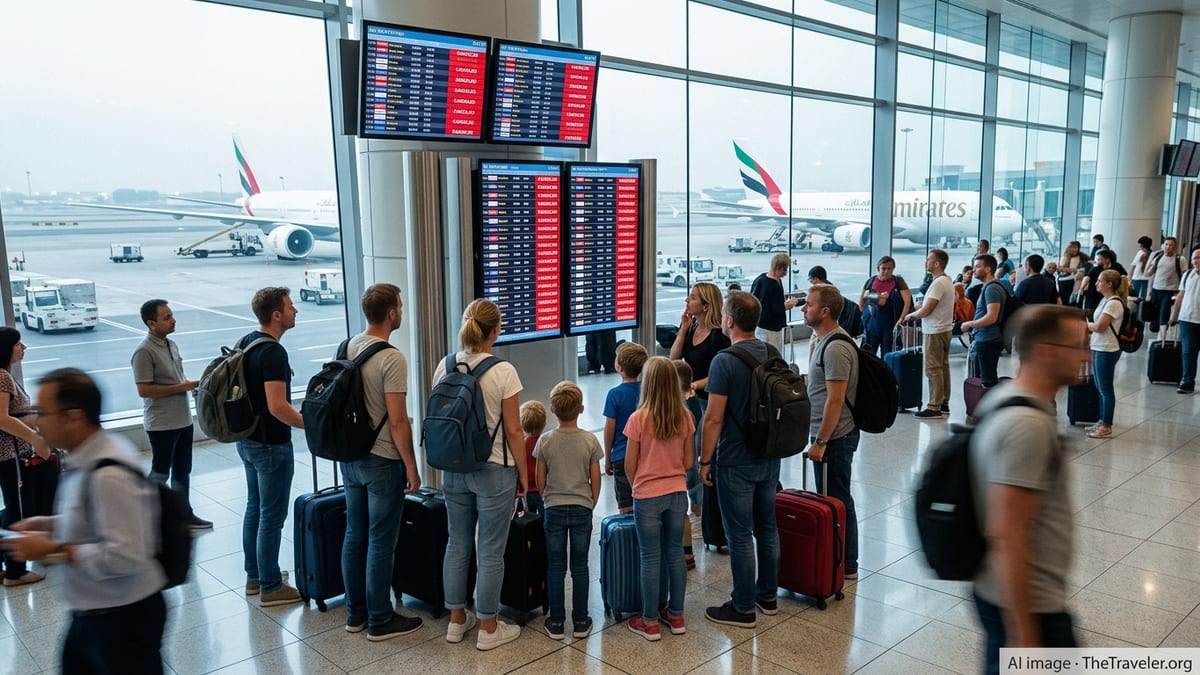
Regional Airspace Shutdown Strands Thousands of German Holidaymakers
The unprecedented disruption began on February 28 after coordinated US and Israeli strikes on Iran triggered a widening conflict and a rapid series of airspace closures across the Gulf and Levant. Authorities in Iran, Iraq, Israel, Qatar, Bahrain, Kuwait and other states moved to shut or heavily restrict their skies, while the United Arab Emirates imposed a temporary and partial closure that effectively halted normal traffic at Dubai and Abu Dhabi, two of the world’s busiest transit hubs.
The closures rippled through global aviation networks, forcing airlines to cancel or reroute thousands of flights in a matter of hours. German carrier Lufthansa suspended services to Dubai and Abu Dhabi and announced that its aircraft would avoid large swaths of Middle Eastern airspace at least through the first week of March. With many European, Asian and Gulf carriers implementing similar measures, package tourists and independent travelers found themselves marooned in hotels and airports from Dubai to Muscat.
German authorities now estimate that around 30,000 German tourists and business travelers have been stranded across the region, a significant proportion of them in the UAE and Oman. Travel companies such as TUI report that tens of thousands of their clients have seen onward connections canceled, turning short stopovers into open-ended stays as airlines struggle to secure safe corridors and aircraft.
For many Germans, the disruption has been felt most acutely in the UAE, where Dubai International Airport normally serves as a primary gateway to popular beach destinations in the Maldives, Indian Ocean and Southeast Asia. When Dubai, Abu Dhabi and Doha largely shut down commercial operations, passengers bound for Europe suddenly had nowhere to connect, leaving terminals packed with families sleeping on the floor and trying to rebook flights on jammed phone lines.
UAE Opens ‘Exceptional’ Flight Operations to Support Repatriation
As safety conditions and military traffic allowed, the UAE began cautiously reopening selected air corridors this week, prioritizing relief and repatriation traffic over regular commercial schedules. The country’s General Civil Aviation Authority announced the start of what it described as “exceptional” flight operations, allowing Dubai, Abu Dhabi and Sharjah to handle a limited number of departures and arrivals each hour under tight routing and security protocols.
According to UAE officials, the country has already assisted more than 30,000 stranded travelers with visa extensions, immigration clearances and onward travel coordination since the crisis began. The Federal Authority for Identity, Citizenship, Customs and Port Security has fast-tracked thousands of short-term entry permits, allowing passengers whose connecting flights vanished to remain legally in the country while they wait for scarce seats on outbound flights.
Emirates and Etihad are operating a reduced schedule centered on repatriation and positioning flights, often at short notice. While Emirates has suspended its regular timetable and ticket sales through at least March 7, both carriers have quietly added special services to major European cities whenever airspace windows and aircraft availability permit. Seats on these flights are being prioritized for travelers stranded in the UAE, coordinated with foreign embassies and tour operators.
UAE tourism officials stress that the focus remains on safety and controlled capacity rather than a rapid return to business as usual. With the airspace picture still fluid and conflict zones nearby, authorities say they are working closely with European regulators and airlines, including German carriers, to share routing data and ensure repatriation flights can operate without entering restricted or high-risk areas.
Germany Charters Special Flights via Oman and Other Regional Gateways
Faced with mounting pressure from families at home and stranded citizens abroad, the German government has moved from relying on commercial rebookings to actively organizing repatriation flights. Berlin is coordinating with Lufthansa and other operators to run special services from safer regional gateways, particularly Muscat in Oman and Riyadh in Saudi Arabia, where airspace has remained comparatively more accessible.
One key element of the German plan involves chartered flights from Muscat, allowing stranded tourists in the UAE and other Gulf states to travel overland or on short regional hops to Oman before boarding direct services back to Germany. Officials say the first such Lufthansa-operated flight from Muscat to a German hub airport is scheduled to depart this week, with priority given to vulnerable travelers such as families with young children, pregnant women and people with medical needs.
Germany’s foreign ministry has also deployed consular teams to major airports and land borders to assist with documentation checks, transit visas and transport to staging points. Working alongside Emirati and Omani authorities, these teams are helping to identify German citizens, verify bookings on repatriation flights and coordinate ground transport where commercial options have disappeared. Similar operations are underway at border crossings between the UAE and Oman and at regional collection points used by other European countries.
In parallel, Germany is part of a broader European push to share capacity on special flights. Some repatriation services organized by smaller EU states are also taking German nationals when seats are available, while German charter flights leaving Muscat and other hubs may in turn carry citizens from partner countries. Officials describe this as a pragmatic, seat-by-seat approach designed to move as many people as possible out of the affected region before airspace restrictions or security conditions change again.
Oman Emerges as Crucial Hub in Emergency Evacuation Network
With key Gulf hubs like Dubai and Doha struggling to restore normal connectivity, Oman has quickly emerged as a vital alternative for evacuation efforts. Muscat International Airport has become a staging ground for a patchwork of government-chartered and specially approved commercial flights bound for Europe. Omani authorities have kept their airspace open with enhanced monitoring, offering a relatively stable corridor at a time when other routes remain closed or heavily constrained.
Oman Air has shifted its focus toward operating where safe corridors are available, canceling flights into conflict-adjacent hubs while maintaining selected services that can support evacuation flows. For German tourists, this has meant a growing number of options to reach Muscat from secondary Gulf airports or via overland routes from the UAE, before connecting to onward flights arranged by European governments.
European consular officials say Muscat’s role in the crisis has expanded by the day as airlines and governments look for predictable routings that avoid the densest military activity. Some countries have instructed their nationals stranded in the UAE, Bahrain or Qatar to make their way, where possible, to Oman’s capital to join organized repatriation flights, often at subsidized or cost-recovery fares.
The Omani government, mindful of its position as a neutral mediator in regional disputes, has framed its support for evacuation flights as a humanitarian obligation and a practical contribution to de-escalating the secondary impacts of war. By keeping its airports operating within strict safety parameters, officials argue, Oman can help relieve pressure on neighboring states while enabling thousands of foreign tourists, including many Germans, to return home more quickly.
Stranded Tourists Face Uncertainty as Limited Flights Fill Quickly
Despite the growing network of special flights, many stranded German tourists report that the process of securing a seat remains slow and deeply uncertain. With commercial schedules largely wiped out, repatriation services are often announced only hours in advance, leaving travelers glued to airline apps, embassy alerts and tour operator messages while they wait in crowded hotel lobbies and departure halls.
Tour companies say they are working around the clock to rebook customers, but warn that limited capacity and volatile conditions mean some travelers may need to wait several more days before leaving the region. Families whose original itineraries routed them through Dubai or Doha on the way back from far-flung holiday destinations are in some cases being offered complex alternatives that involve overland transfers, overnight stays at staging hubs and flights to secondary airports in Germany.
German officials are urging citizens to remain in close contact with their tour operators and the foreign ministry’s crisis hotline, and to be prepared to move quickly when a seat becomes available. They also advise travelers not to attempt independent overland journeys through unfamiliar border regions without coordination, stressing that organized transfers arranged by local authorities and tour companies are far safer than improvised routes.
For now, the tempo of repatriation is likely to depend on how long regional airspace restrictions remain in place and how rapidly Gulf hubs such as Dubai and Abu Dhabi can expand their controlled reopening. As conflicts and diplomacy continue to shape the skies over the Middle East, the coordinated efforts by the UAE, Germany, Oman and other nations offer at least a measure of relief for stranded tourists waiting to fly home.