

More news on this day
A widening conflict involving Iran has triggered a sudden shutdown of Celestyal Cruises’ Arabian Gulf program, leaving ships immobilized in the United Arab Emirates and Qatar, and thousands of would-be holidaymakers scrambling to rebook or get home.
Get the latest news straight to your inbox!
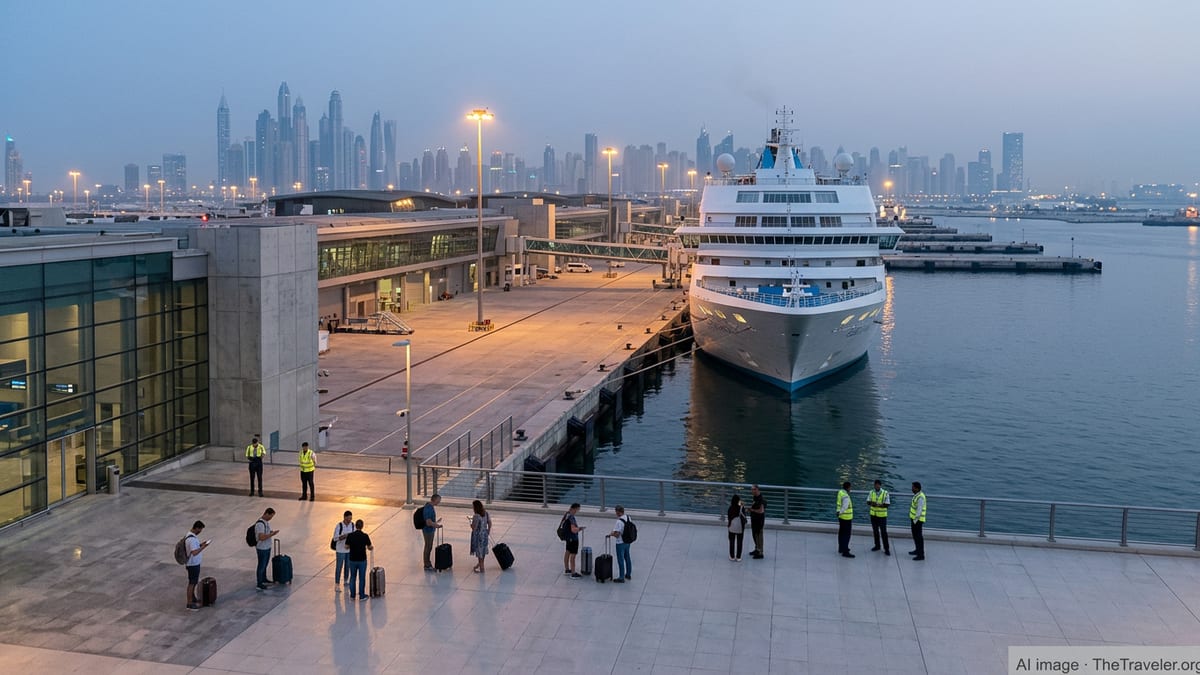
Celestyal Ships Stuck in Gulf Ports as Season Ends Overnight
Celestyal Cruises has cancelled the remainder of its 2025 to 2026 Arabian Gulf season, citing escalating security risks and operational constraints linked to the Iran conflict. The Athens-based line had deployed its two ships, Celestyal Journey and Celestyal Discovery, on winter itineraries from ports including Dubai and Doha, but both vessels are now effectively sidelined while the company focuses on repatriating guests and repositioning the fleet for summer in the Mediterranean.
The decision comes days after a joint American and Israeli strike on Iranian targets and subsequent retaliatory actions disrupted shipping in and around the Strait of Hormuz. Cruise lines operating in the region have been forced to halt sailings or keep ships docked as airspace closures, travel advisories and port security restrictions ripple across the Gulf states. For Celestyal, the fallout includes lost sailings in the Middle East and knock-on cancellations to early-season cruises in Greece as ships remain out of position.
Celestyal confirmed that near-term departures in March, including three and four night voyages, will not go ahead while the company coordinates with maritime authorities on safe corridors to move its ships. Its next scheduled itineraries now begin from Athens in late March and early April, assuming conditions in the Gulf allow the vessels to transit out of the region.
UAE and Qatar Grapple With Stranded Guests and Empty Berths
Dubai and Doha, which had positioned themselves as marquee homeports for winter cruising, are now contending with the immediate challenge of stranded passengers and suddenly vacant cruise terminals. In Dubai, Celestyal Discovery completed an unscheduled disembarkation, with all guests taken off the ship and assisted with flights, hotels and onward connections as commercial capacity allowed. Tourism officials and port agents have been working alongside cruise line teams to move people out of the region amid fluctuating flight schedules.
In Qatar, Celestyal Journey has become a high-profile symbol of the crisis after remaining alongside for days while passengers gradually disembarked. Local reports describe groups of international tourists waiting for repatriation flights and charter arrangements as airspace restrictions around Iran and parts of the Gulf complicated normal airline operations. While authorities stress that both the United Arab Emirates and Qatar remain secure for residents and visitors, the uncertainty at sea and in the air has turned routine cruise turnarounds into complex logistical operations.
The disruption comes at a sensitive time for both countries, which have invested heavily in cruise terminals, marketing campaigns and partnerships with international lines to grow winter tourism. Empty berths at flagship ports in Dubai and Doha during what should be peak season underscore how vulnerable the region’s nascent cruise sector is to geopolitical shocks beyond its control.
Regional Cruise Shutdown Spreads Beyond Celestyal
Celestyal is not alone in withdrawing from the Arabian Gulf this season. Other major operators including MSC Cruises, Saudi Arabia backed AROYA Cruises and Germany’s TUI Cruises have all curtailed or cancelled their remaining Gulf itineraries in recent days, effectively bringing scheduled cruising in the region to a standstill. Industry trackers estimate that tens of thousands of passengers across multiple brands have had voyages shortened, altered or cancelled outright since late February.
Several ships from different fleets are reported to be anchored or berthed long term at Gulf ports while cruise lines wait for clearer guidance on safe passage through the Strait of Hormuz. With commercial shipping and energy traffic also heavily impacted, operators are weighing not only security concerns but also the availability of bunkering, port services and airlift for crew changes and guest repatriation. The result is an unprecedented, multi-country cruise pause that reaches from the UAE and Qatar to Bahrain, Kuwait and beyond.
For the broader industry, the abrupt end to the Arabian Gulf winter season marks a setback in efforts to diversify itineraries away from crowded Mediterranean and Caribbean routes. The Gulf had been marketed as a warm weather alternative with modern infrastructure and high onboard spending, but the current shutdown may force cruise lines to rethink their exposure to routes dependent on narrow and politically sensitive waterways.
Passengers Face Rebooking Headaches and Shifting Compensation Policies
As sailings disappear from schedules, travelers are navigating a maze of rebooking options, credits and refunds. Celestyal has informed affected guests that they may choose between full refunds and future cruise credits, often with added incentives to encourage rebooking on upcoming Mediterranean departures. However, the timing of those future sailings depends on when the company can safely reposition its ships from the Gulf to Europe, a factor that remains tied to fast moving events on the ground and at sea.
Travel agents across key source markets in Europe and Russia report heavy call volumes from clients whose Gulf itineraries have been cancelled or cut short. Some customers who were already in the region when the crisis escalated have been offered hotel stays and one way flights home at the cruise line’s expense, while others with upcoming bookings are being urged to consider later dates or alternative destinations. Insurance coverage varies, with policies often treating war related disruptions differently from standard travel delays.
For tourists who had chosen UAE and Qatar cruises as stress free, all inclusive holidays, the situation has been a stark reminder of how quickly geopolitical tensions can upend even well planned trips. Many will now be watching closely to see how quickly cruise lines respond with clear communication, flexible terms and concrete guarantees for future travel.
Gulf Cruise Ambitions in Question as Lines Look to the Mediterranean
The immediate focus for Celestyal and its peers is safety and repatriation, but the longer term implications for Gulf cruising are already coming into view. If the current conflict and shipping disruption persist, lines may delay or scale back future seasonal deployments to the region, preferring to concentrate ships in more predictable markets such as the eastern Mediterranean, western Europe and the Caribbean. For an industry that plans itineraries years in advance, the sudden instability of a key winter region will prompt cautious reassessments.
Industry analysts suggest that Gulf destinations, including the UAE and Qatar, will need to work closely with cruise partners on contingency planning, security coordination and messaging to restore confidence once the current crisis passes. Enhanced route flexibility, such as itineraries that do not depend on transiting the Strait of Hormuz, and stronger assurances around air connectivity and emergency response could form part of that conversation.
In the near term, however, the sight of idle cruise ships in some of the Middle East’s most modern ports captures a turning point in the region’s travel narrative. What was expected to be another growth winter for Arabian Gulf cruising has instead become a case study in how swiftly regional conflict can strand ships, scatter itineraries and leave sophisticated tourism hubs like Dubai and Doha suddenly, and visibly, quiet.