

More news on this day
Passenger flights across the United Arab Emirates and Qatar are slowly resuming after a drone incident near Dubai International Airport and weeks of regional airspace disruptions linked to the Iran conflict triggered mass cancellations and left travelers stranded across the Gulf.
Get the latest news straight to your inbox!
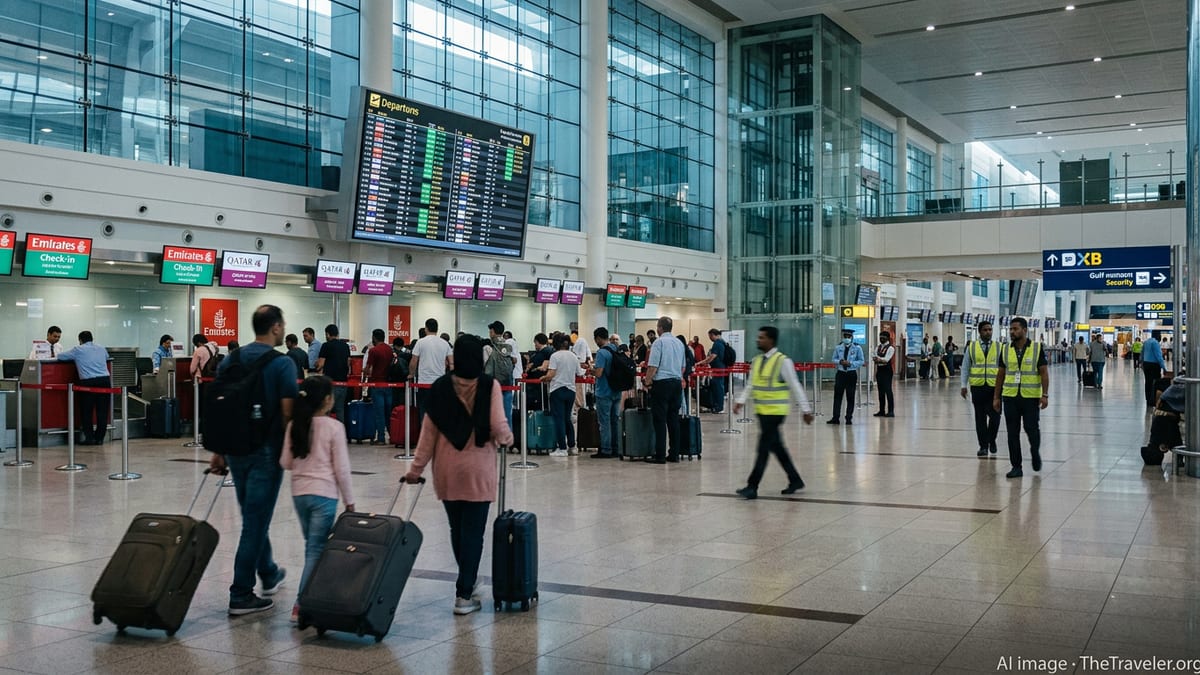
Dubai Drone Incident Deepens Ongoing Aviation Turmoil
The latest disruption for Gulf aviation came when a drone approaching Dubai International Airport was intercepted on March 8, with debris reportedly falling on a runway and prompting a temporary suspension of operations. Published coverage from regional aviation outlets indicates that traffic at one of the world’s busiest hubs was halted while safety checks were carried out and runways were cleared before limited movements restarted.
This incident followed earlier drone and missile activity around the UAE that had already strained the country’s airspace. Analysis from security consultancies and regional media describes a pattern of repeated drone strikes and interceptions since late February, including minor incidents in Dubai neighborhoods and an earlier strike that damaged airport fuel infrastructure. While official communications have tended to emphasize the contained nature of these events, the cumulative impact on airline operations has been significant.
Travel advisories and airport updates in recent days describe a patchwork of restrictions, with the UAE implementing emergency control zones over parts of its airspace and periodically tightening or relaxing these measures in response to perceived threats. For passengers, this has translated into rolling delays, missed connections and last‑minute schedule changes even on routes that have technically remained open.
UAE Airports Move from Shutdown to Limited Schedules
Following the initial wave of regional missile and drone attacks beginning on February 28, Dubai International (DXB), Al Maktoum International (DWC) and Abu Dhabi’s Zayed International Airport saw large portions of their passenger operations suspended. Travel industry briefings and business press reports indicate that the UAE’s main gateways began reopening in stages from around March 2 to March 5, first with humanitarian and repatriation flights and then with a thin skeleton of regular services.
By March 5, publicly available information from local media suggested that Emirates, Etihad, flydubai and Air Arabia had all restored at least some routes, particularly to key regional and South Asian destinations. However, Gulf-focused outlets stress that capacity remains well below normal and that airlines are prioritizing stranded residents, transit passengers and essential travel over discretionary trips. Many carriers continue to encourage passengers to treat their bookings as provisional and to verify departure status on the day of travel.
Operational data compiled by travel and aviation analysts points to thousands of flights canceled across the wider Middle East airspace in the first week of March, with the UAE accounting for a substantial share. Even as departures from Dubai and Abu Dhabi tick upward, knock‑on effects remain visible in European and Asian schedules, where rerouting around restricted Gulf corridors has created delays far from the conflict zone.
Qatar Flights Restart Cautiously After Airspace Closure
Qatar, which had fully closed its airspace to civilian traffic at the height of the recent escalation, is now seeing a cautious return of passenger services. Briefings from airline industry intelligence platforms show that Qatar Airways initially halted most scheduled operations in late February after Iranian missiles targeted sites near Doha and airspace restrictions were imposed across the Gulf.
According to aviation databases and specialist news coverage, the carrier began limited rescue and repatriation flights around March 4 and March 5, in some cases operating from airports in neighboring Saudi Arabia and Oman while Qatari airspace remained constrained. Community travel updates referencing airline advisories describe carefully controlled corridors used for specific departures, primarily to major European hubs, under close coordination with aviation authorities.
As of mid‑March, Qatar Airways appears to be gradually rebuilding a core network out of Hamad International Airport, with priority given to long‑haul connections and high‑demand regional links. However, industry trackers and passenger reports suggest that many routes remain suspended or subject to abrupt timetable changes, and travelers are being urged to maintain flexible plans and to monitor official channels for updates.
Regional Ripple Effects and Guidance for Travelers
The combination of the Dubai drone incident, repeated strikes across the wider Gulf and overlapping airspace restrictions has produced a complex and fluid situation for air travel throughout the Middle East. Data compiled by travel disruption services and trade media indicates that more than a thousand flights across Saudi Arabia, the UAE, Qatar, Turkey, Jordan and other states were canceled or heavily delayed in the days after March 3, as airlines reworked routings and avoided sensitive corridors.
European networks have also felt the impact. Statistics published by flight compensation platforms show spikes in delays and cancellations on March 11, as aircraft diverting around the Gulf arrived late into key hubs, leading to missed onward connections. Analysts note that these disruptions can continue for several days beyond the initial airspace closures, as aircraft and crews gradually return to their normal positions.
For travelers planning journeys to or through Dubai, Abu Dhabi or Doha in the coming days, publicly available advice from airlines and risk consultancies emphasizes preparation and flexibility. Passengers are being encouraged to allow extra time for connections, to keep contact details updated in airline booking systems, and to be ready to accept rerouting via alternative gateways such as Muscat or Istanbul if their original transit points become temporarily restricted again.
While flight schedules in the UAE and Qatar are clearly moving toward partial normality after the most acute phase of disruption, the underlying security situation in the region remains volatile. Travel observers suggest that further short‑notice adjustments to airspace and airport operations are possible, meaning that real‑time information and adaptable itineraries will remain essential tools for anyone flying through the Gulf in the near term.