

More news on this day
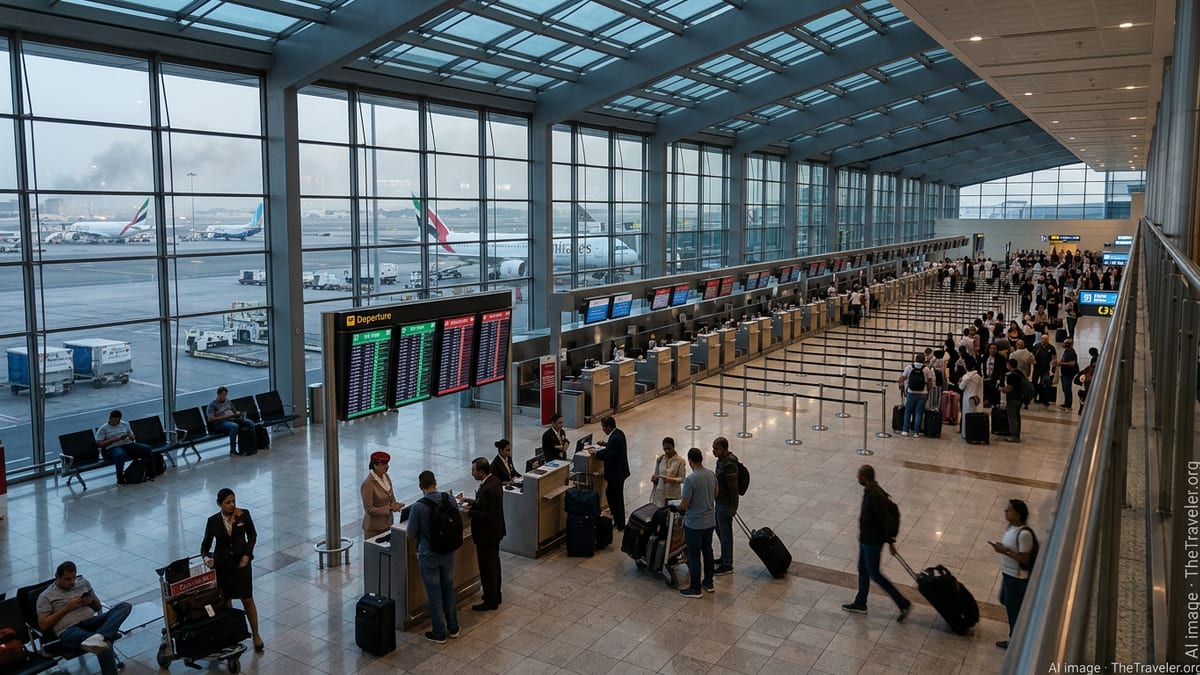
As missile strikes and sweeping airspace closures jolt the Middle East, the United Arab Emirates is cautiously restarting limited flight operations from Dubai and Abu Dhabi, seeking to preserve its status as a global aviation hub while projecting calm in the face of an evolving regional conflict.
Limited Resumptions After Sudden Shutdown
After several days in which much of Gulf airspace fell quiet, UAE carriers have begun operating a carefully controlled trickle of services. Etihad Airways resumed limited flights from Abu Dhabi on March 2, with a small number of departures to major European and Asian cities and to key regional markets such as Riyadh and Jeddah. These services, many of them repatriation and repositioning flights, are being coordinated closely with the country’s civil aviation regulators.
Emirates, by contrast, has extended its suspension of all regularly scheduled flights until late on Saturday, March 7, while maintaining a handful of cargo and repatriation rotations. Activity at Dubai International Airport has plunged from more than a thousand daily movements to only dozens, turning one of the world’s busiest hubs into a largely dormant airfield. Flydubai has also begun moving limited aircraft and crews, prioritising operational recovery rather than restoring full commercial schedules.
The gradual restart follows a near-total halt in traffic after Iranian missile and drone strikes beginning on February 28 damaged parts of Dubai International and areas around key landmarks in both Dubai and Abu Dhabi. Authorities describe the physical damage at the airports as limited but significant enough to warrant temporary closures, inspections and repairs, and the conflict has left large portions of regional airspace effectively off limits to civilian traffic.
Calibrated Strategy Balances Safety and Hub Status
Officials in Abu Dhabi and Dubai are emphasizing that any resumption of flying is being dictated first by security assessments. The UAE’s General Civil Aviation Authority has maintained partial airspace restrictions, even as it grants slot-by-slot approvals for repatriation and selective international flights. Airlines are routing aircraft along narrow corridors judged to be lower risk and are avoiding overflight of several neighboring countries whose skies remain closed or restricted.
That approach reflects a familiar playbook for the UAE, which has previously used temporary suspensions and aggressive rerouting to manage earlier flare-ups in regional tensions. During past crises, carriers such as Emirates and Etihad reduced or halted services to destinations including Tehran, Baghdad, Basra, Tel Aviv and Amman, while keeping long-haul trunk routes open by skirting conflict zones. The current situation, however, is more acute, with a wider arc of airspace closed and the country itself directly targeted.
Industry analysts note that the UAE is trying to strike a delicate balance: demonstrate that its integrated air defense systems and crisis protocols are effective enough to allow a controlled return to flying, without moving so quickly that airlines or insurers perceive undue risk. The result is a phased reopening in which aircraft are carefully sequenced, turnaround times lengthened for security procedures, and spare capacity reserved in case routes need to be shut down again at short notice.
Stranded Passengers and Strained Travel Networks
The calibrated restart is little comfort to the hundreds of thousands of travelers whose plans have been upended since the fighting intensified. Data from flight-tracking services indicate that more than 40 percent of scheduled services in the wider region have been cancelled in recent days, with an estimated one and a half million passengers affected. Dubai and Abu Dhabi, long relied upon as dependable connectors between Europe, Asia and Africa, suddenly became chokepoints, with aircraft and crews out of position across multiple continents.
For now, most operating flights into and out of the UAE are focused on repatriation, moving residents and stranded visitors rather than carrying new waves of tourists. Airports and airlines have urged passengers not to travel to terminals unless specifically confirmed on a flight, warning that limited security capacity, intermittent alerts and sudden airspace changes could lead to last-minute diversions or returns to origin. Some long-haul services that do depart are flying with light loads or crew only, as carriers reposition aircraft for future operations.
The wider global network continues to feel the strain. With Iranian, Iraqi and several Gulf airspaces still shut or heavily restricted, many intercontinental flights are being rerouted south over Egypt and the Arabian Sea or north via the Caucasus, adding hours of flying time and substantial fuel costs. Congestion in those substitute corridors, and uncertainty over the duration of the closures, mean that even passengers whose journeys do not touch the Gulf directly are facing delays and missed connections.
Tourism and Safe-Haven Image Under Pressure
The hit to the UAE’s aviation system is already feeding through to tourism and its broader reputation as a safe haven. Travel industry data indicate a sharp drop in new leisure bookings to Dubai and Abu Dhabi amid images of missile intercepts and reports of debris damage near well-known landmarks. Short-term rental platforms have recorded thousands of cancellations, and several high-end tour operators report clients shifting winter and spring holidays to destinations as far afield as North Africa, southern Europe and the Indian Ocean.
Authorities and industry leaders are working to counter that narrative, stressing that critical infrastructure damage has been limited and that life in the main urban centers continues largely as normal away from brief alert periods. Hoteliers say they are fielding constant queries about safety protocols, shelter arrangements and contingency plans, even as they extend flexible rebooking and refund policies to wary travelers. The country’s sizable business travel segment, particularly linked to energy, finance and logistics, is expected to recover more quickly once airlines can offer reliable schedules again.
For now, however, the optics are challenging. The UAE has long marketed itself as an island of stability amid regional volatility, and the sight of one of the world’s premier hubs operating at a fraction of capacity underscores how exposed that model can be when conflict encroaches on its own territory. Tourism officials are already preparing renewed campaigns focused on resilience and recovery once flight operations stabilize.
Outlook: Gradual Recovery in a Volatile Sky
Aviation executives and regulators caution that any return to normality will be uneven. Much depends on how long active hostilities continue, whether additional missile or drone barrages target civilian infrastructure, and when neighboring states reopen their skies. Even in optimistic scenarios, airlines expect several weeks of rolling schedule changes, with capacity ramping up only as airspace corridors are confirmed safe and aircraft and crews are brought back into position.
In the meantime, the UAE is leaning into the tools it has spent years developing for precisely such shocks: diversified fleets, deep coordination between airlines and state agencies, and contingency routings designed to keep at least some traffic flowing when traditional flight paths close. The current crisis serves as a stress test of that system, highlighting both its strengths in mounting a controlled restart and its vulnerabilities when geopolitical turbulence engulfs the very hubs that anchor global travel.
For travelers, the message from the UAE’s calibrated resumption is clear but sobering. Flights are coming back, but they will do so gradually, subject to change with little notice, and with safety rather than convenience setting the pace. Until the skies above the region are demonstrably more stable, the country’s aviation powerhouses will remain in recovery mode, navigating a narrow passage between operational necessity and persistent risk.