

More news on this day
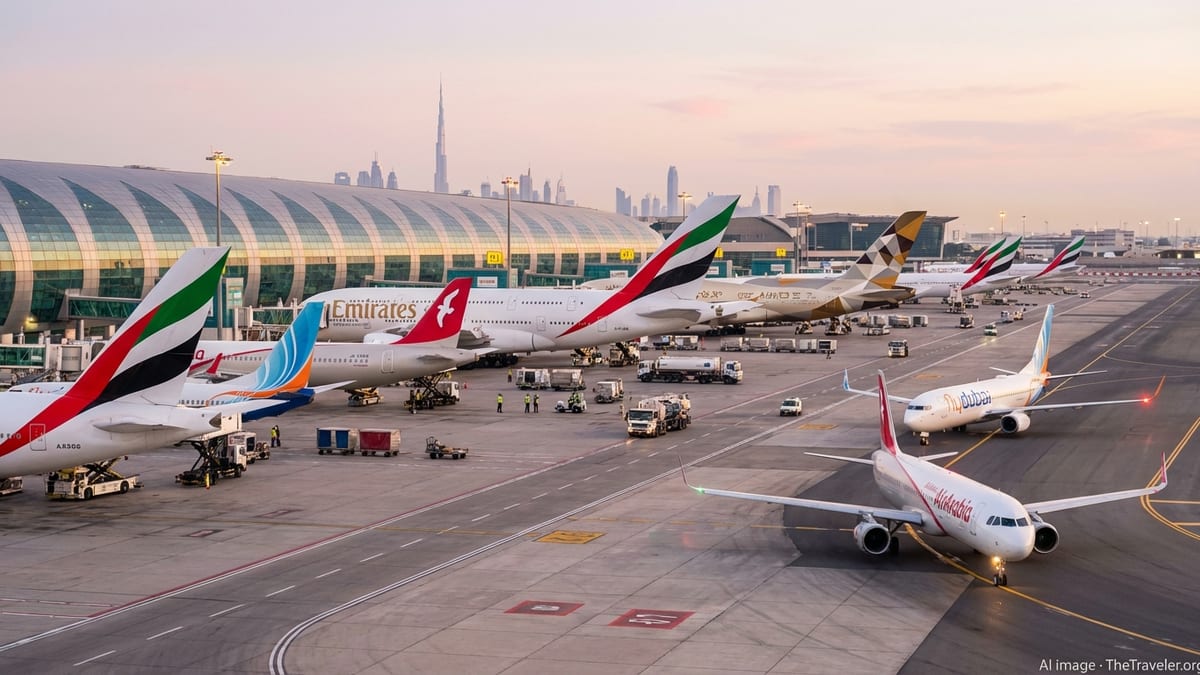
Major Gulf carriers are setting up 2026 as a pivotal year for global aviation, with new routes placing the UAE, Finland, Canada, Germany, Spain and the UK at the core of a rapidly redrawn long-haul map.
Nordic Breakthrough as Emirates Targets Finland
Emirates has fired one of the opening shots of the 2026 aviation surge with plans to launch daily Dubai–Helsinki services from 1 October 2026, establishing the only year-round non-stop link between Finland and the United Arab Emirates. The move deepens the carrier’s presence in Northern Europe and gives Finland a direct connection into Emirates’ global network spanning Asia, Africa and Oceania.
Operated by the new Airbus A350, the route is designed to capture both leisure and corporate demand, tapping into Helsinki’s role as a technology hub and gateway between Europe and Asia. For Finnish travelers, the Dubai link will significantly reduce connection times to destinations such as Sydney, Bangkok and Johannesburg, while also reinforcing the UAE’s position as a preferred stopover for Nordic passengers heading long-haul.
Tourism officials in Finland are expected to lean heavily on the new daily service to attract high-spending visitors from the Gulf and beyond, particularly during the winter season when interest in Arctic experiences, Lapland safaris and aurora tourism peaks. The year-round nature of the route signals confidence that demand will extend well beyond traditional holiday peaks, with business and conference travel also in focus.
For the UAE, the Helsinki announcement underscores a broader strategy to lock in direct access to high-income, export-oriented economies across Europe. As the 2026 schedule fills out, the link to Finland becomes one more spoke in a growing network that channels Nordic trade, talent and tourism through Dubai.
Canada Emerges as a Strategic Long-Haul Battleground
Canada is rapidly emerging as one of the most hotly contested long-haul markets in the 2026 plans of both UAE and local carriers. Etihad Airways has confirmed that it will begin nonstop Abu Dhabi–Calgary services in November 2026, operating four times weekly with Boeing 787-9 aircraft. The move brings a new Gulf competitor into western Canada and gives Calgary, a major energy and logistics hub, a direct link to the Middle East and onward to South Asia and Africa.
The new Abu Dhabi–Calgary flights will sit alongside Etihad’s growing presence in Toronto, where the airline is already using its Airbus A380 superjumbo to meet surging demand on the Abu Dhabi–Toronto route. Deploying high-capacity aircraft into Canada signals strong confidence in both corporate travel and visiting-friends-and-relatives traffic between the Gulf, the Indian subcontinent and Canada’s large diaspora communities.
Canadian airlines are also in expansion mode as they look across the Atlantic. Air Canada has outlined an ambitious Summer 2026 schedule that adds or resumes a string of European destinations from Montreal and Halifax, including Berlin, Brussels, Nantes, Palma de Mallorca and Catania. WestJet, meanwhile, plans new services from Halifax and Toronto to European cities such as Madrid, Lisbon, Copenhagen and Glasgow, further thickening the transatlantic web that the UAE carriers will plug into via Europe.
This combined growth is turning Canada into a crucial long-haul junction in 2026. For travelers, the effect will be a sharp increase in one-stop options between Canadian cities, the Gulf, and second-tier European and Asian markets, frequently via Dubai or Abu Dhabi. For airports such as Calgary, Toronto and Montreal, the arrival and expansion of Gulf carriers adds competitive pressure but also helps cement their status as global connecting hubs.
Germany and Wider Europe See Capacity and Connectivity Surge
Germany, already one of Europe’s largest outbound travel markets, is poised to benefit as UAE and European airlines alike layer new services into their 2026 schedules. While Emirates and Etihad are expected to maintain strong frequencies into cities such as Frankfurt and Munich, the broader story is the way their networks intersect with a wave of European expansion by Canadian and regional carriers.
Air Canada’s decision to launch Montreal–Berlin in summer 2026, alongside the resumption and growth of other European routes, will add additional feed into Germany from North America at the same time Gulf carriers deepen their own links into the country. This multi-directional expansion gives German travelers a wider choice of routings to the Middle East and onward to Asia and Africa, often via a combination of Canadian and UAE hubs.
Beyond Germany, Central and Eastern Europe are also coming into sharper focus for Gulf airlines. Etihad is pushing ahead with new or revived services from Abu Dhabi to cities including Bucharest, as well as to Almaty, Baku and Tbilisi, as part of a 2026 network build-out that uses fuel-efficient Airbus A321LR and A321 aircraft. These routes are designed to capture pent-up demand in secondary markets that have historically lacked high-frequency, long-haul connectivity.
Low-cost players from the UAE are complementing this growth. Flydubai has announced fresh European destinations, including new services to Chișinău and Iași in Romania, as well as Riga and Vilnius in the Baltics, from late 2025. As those flights mature into 2026, they will add yet more capacity between the Gulf and Europe’s emerging tourism and tech centers, creating a patchwork of connections that benefit German and wider European travelers seeking alternatives to traditional western gateways.
Spain and the Mediterranean Ride a New Leisure Wave
Spain is at the heart of a broader Mediterranean revival that will shape leisure travel patterns in 2026. The country is seeing new long-haul connectivity from both sides of the Atlantic, with routes that intersect strategically with UAE-based traffic flows. On the European side, Spanish flag carrier Iberia has announced new North American services from Madrid to Toronto and Newark using long-range Airbus A321XLR aircraft beginning in 2026, strengthening Madrid’s role as a transatlantic hub.
At the same time, Air Canada is planning a new seasonal Montreal–Palma de Mallorca route for summer 2026, adding one of Spain’s most popular island destinations to its European portfolio. These additions sit alongside WestJet’s plan to reach Madrid from Halifax as part of its transatlantic push. As capacity builds, more Canadian and U.S. passengers will be routed through Spanish airports, where they can connect onward to Gulf carriers heading to Dubai and Abu Dhabi.
For the UAE’s aviation giants, Spain’s revived network offers a high-yield mix of sun-seeking leisure traffic, growing business travel and increasingly year-round demand. Emirates and Etihad already see strong performance on services to Madrid and Barcelona, and the added feed from Canada and secondary European markets is expected to lift load factors further in 2026.
Spanish tourism stakeholders are preparing for another record wave of visitors, with the added twist that more of them will now arrive via multi-stop itineraries involving Gulf hubs. The combination of competitive fares from low-cost carriers such as flydubai and Air Arabia, plus premium cabins on Emirates and Etihad, is broadening the range of price points and products available to travelers heading for the Mediterranean.
UK and UAE Low-Cost Carriers Redraw Budget Travel
The United Kingdom is set to play a central role in the 2026 aviation surge, particularly in the low-cost segment. Air Arabia will launch double-daily flights from Sharjah to London Gatwick from 29 March 2026, served by Airbus A321LR aircraft. The new route gives the UAE’s third-largest city a high-frequency, low-cost link into one of Europe’s busiest airports and injects fresh competition into the Gulf–London market.
For price-sensitive travelers, the Sharjah–Gatwick service opens up new one-stop options between the UK and destinations across Air Arabia’s growing network in the Middle East, North Africa and South Asia. The announcement comes as Air Arabia Maroc continues to build its own UK presence, including existing services to Gatwick from Tangier, underlining how the group is exploiting London’s role as a magnet for both inbound tourism and diaspora travel.
While Emirates remains a dominant premium player at London Heathrow, the presence of Air Arabia at Gatwick and flydubai’s continued expansion into European capitals is creating a more segmented market. Travelers can increasingly combine low-cost legs operated by flydubai or Air Arabia with long-haul services on Emirates or Etihad, tailoring itineraries to balance cost and comfort.
This trend is being closely watched by UK airports outside London, which are vying to attract new services from Gulf carriers in the next phase of expansion. For now, however, Gatwick’s gain is emblematic of how the 2026 route surge is diversifying entry points into the UK, spreading economic benefits beyond Heathrow and presenting British travelers with more direct options to the UAE.
Etihad’s Network and A380 Strategy Amplify the Shift
Etihad Airways is pursuing one of the most aggressive network overhauls of any Gulf carrier in the run-up to 2026. Alongside its new routes to Calgary and Luxembourg, the airline is reshaping its long-haul offering by restoring and expanding Airbus A380 deployments to key markets. By mid-2026, Etihad plans up to seven daily A380 departures from Abu Dhabi, serving London Heathrow, Paris Charles de Gaulle, Singapore, Tokyo Narita and Toronto.
The return of the superjumbo at scale is intended to absorb surging demand on trunk routes and free up smaller wide-bodies such as Boeing 787s and Airbus A350s for new destinations. Tokyo Narita will receive A380 service from June 2026, while Toronto continues as a daily A380 destination after the aircraft was moved from New York. These moves significantly expand Etihad’s capacity into Canada, Europe and Asia at a time when global demand remains robust.
Underpinning this expansion is a broader fleet and growth strategy that will see Etihad add around 20 new aircraft annually through 2026, with ambitions to roughly double its fleet by 2030. The airline aims to serve close to 100 destinations in the medium term, positioning Abu Dhabi as both a transit hub and a destination for tourism and business.
As these aircraft and routes come online, Etihad’s network will interlock more tightly with those of fellow UAE carriers and key partners in Europe and North America. For travelers in Finland, Canada, Germany, Spain and the UK, that means more non-stop and one-stop options through Abu Dhabi, greater schedule flexibility and a wider choice of cabin products, from low-cost to ultra-premium.
flydubai and Air Arabia Push into Underserved Markets
While Emirates and Etihad focus heavily on wide-body, long-haul growth, flydubai and Air Arabia are using single-aisle aircraft to penetrate underserved and secondary markets across Europe, Central Asia and North Africa. Flydubai’s network will exceed 135 destinations as it adds new cities including Chișinău and Iași in Romania and Riga and Vilnius in the Baltics from late 2025, with services ramping up into 2026.
These routes bring direct Dubai links to countries and regions that previously lacked non-stop Gulf connectivity, including parts of Eastern Europe and the Baltics. The strategy allows flydubai to cultivate demand in smaller markets while feeding passengers into Emirates’ long-haul network through coordinated schedules and codeshare arrangements, effectively extending the reach of both airlines without duplicating capacity.
Air Arabia is following a similar template from its Sharjah base, marrying low fares with a growing map of destinations across Europe, North Africa and South Asia. The forthcoming launch of Sharjah–London Gatwick exemplifies how the carrier is targeting high-demand, price-sensitive corridors that can support high-frequency A321LR operations.
Together, the two low-cost carriers complement the premium-heavy offerings of Emirates and Etihad, giving travelers in Europe and Canada new ways to reach the UAE and beyond. For Finland, Germany, Spain and the UK in particular, the arrival of additional point-to-point low-cost capacity is expected to encourage short-break tourism to Dubai and Sharjah, as well as stimulate outbound travel from the Gulf into regional European cities that previously relied on indirect connections.
Travelers and Tourism Boards Brace for a New Connectivity Era
The combined effect of these moves by Emirates, Etihad, flydubai and Air Arabia is to place the UAE at the center of a densifying web of routes that ties together Finland, Canada, Germany, Spain and the UK in new ways. What distinguishes 2026 from earlier growth cycles is the scale of simultaneous expansion by both Gulf and local carriers, as well as the growing importance of secondary cities and low-cost operations.
Tourism boards and airport authorities across the affected countries are already repositioning their marketing and infrastructure plans to capture the benefits. Helsinki, Calgary, Berlin, Madrid, Palma de Mallorca and London Gatwick are among the airports set to gain new long-haul or high-frequency connections, bringing fresh opportunities for inbound tourism, trade and investment.
For passengers, the 2026 aviation surge will be felt in more competitive fares on key routes, a wider choice of departure points and, in many cases, shorter total journey times thanks to new non-stop services. At the same time, the increase in capacity raises questions about sustainability, slot constraints at major hubs and the resilience of demand should economic conditions soften.
As schedules for late 2026 continue to take shape, one trend is already clear: the UAE’s major airlines are not only expanding but also recalibrating the way global air traffic flows between Europe, North America, the Middle East and Asia. In that process, Finland, Canada, Germany, Spain and the UK are emerging as pivotal nodes in a newly configured global route map.