

More news on this day
Emirates is preparing to join fellow UAE carriers Etihad Airways, flydubai and Air Arabia in rolling out new flights in 2026, as the country’s aviation heavyweights map out fresh routes and capacity upgrades that are set to tighten the UAE’s grip on global air travel flows.
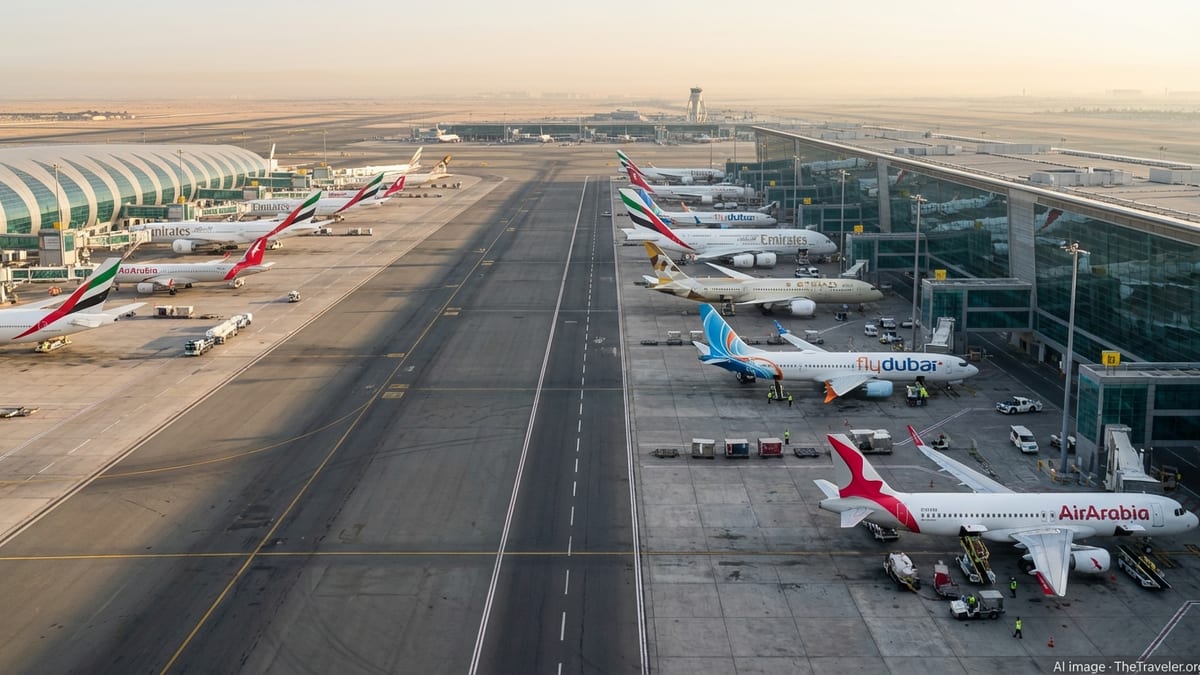
Major UAE Airlines Align Around 2026 Growth Push
The UAE’s four leading passenger carriers are converging on a similar timeline for their next phase of network expansion, with 2026 shaping up as a pivotal year. While detailed new route announcements from Emirates for that year are still pending, the airline has already been boosting services into 2025, positioning itself to layer additional frequencies and destinations on top of a robust long-haul network.
Etihad Airways, based in Abu Dhabi, has signalled some of the most aggressive growth intentions in the country. The airline plans to keep adding around 20 aircraft a year to 2030 and is hiring between 2,500 and 3,000 employees annually to support new routes and added frequencies. Its network grew from 94 to 110 destinations in 2025, a trajectory that implies further launches in 2026 as new aircraft arrive and the carrier deepens its long haul and regional reach.
Low cost operators flydubai and Air Arabia are also aligning their fleet and network plans toward 2026. Flydubai expects 12 new Boeing 737 MAX aircraft to join its fleet in 2026, while Air Arabia is rolling out additional Airbus A320neo-family jets. Both carriers are targeting underserved city pairs and secondary markets, using the UAE as a bridge between Europe, the Middle East, Africa and Asia.
Together, the four airlines are positioning the UAE as a multi-hub platform rather than a single-airport story. Dubai, Abu Dhabi and Sharjah each anchor a distinct brand and business model, but the timing of fleet deliveries and new routes around 2026 points to a coordinated upswing in capacity across the federation.
Etihad Confirms New 2026 Routes and Capacity Upgrades
Among the UAE carriers, Etihad Airways has already set out some of the most concrete 2026 schedule changes. The airline will introduce its Airbus A380 on the busy Abu Dhabi to Bangkok route from late October 2026, upgauging one of its daily flights on a sector that is a key leisure and connecting market for the carrier. The move will significantly increase capacity and restore the airline’s flagship onboard products, including its premium suites, on another high demand Asian route.
Etihad is also preparing to open new leisure and regional routes in 2026. In Europe, the airline plans to launch seasonal Abu Dhabi to Palma de Mallorca flights from June 2026, offering three weekly services during the summer to the Balearic Islands. That service will give UAE residents and connecting passengers a nonstop option to one of Spain’s most popular holiday destinations, complementing existing Etihad services to mainland Europe.
Closer to home, Etihad is due to add Abu Dhabi to Damascus flights from June 2026, restoring a direct air link between the UAE capital and the Syrian capital under its own brand. The route will initially be operated several times a week using narrowbody Airbus aircraft, focusing on point to point traffic and regional connectivity into Etihad’s broader Middle East and Indian subcontinent network.
These additions build on a growth spurt in 2025 that saw Etihad introduce new destinations such as Atlanta, Prague, Warsaw, Addis Ababa, Phnom Penh, Hanoi and Hong Kong. With more aircraft and staff being brought in, industry observers expect further 2026 route announcements from Abu Dhabi that will deepen the carrier’s presence in both established and emerging markets.
flydubai Targets Underserved Markets With New 2026 Capacity
Dubai based flydubai is reinforcing its role as the region’s key connector of secondary and underserved cities. The airline reported record 2025 results and outlined plans to take delivery of 12 additional Boeing 737 MAX aircraft in 2026, a mix of MAX 8 and the higher capacity MAX 9 variant. The extra lift will be used to add frequencies on popular routes and open new destinations, including in Southeast Asia.
Flydubai has already flagged a new service to Bangkok that will start later in 2026, marking an important move into one of Asia’s busiest hubs and adding another option for travelers moving between the Gulf and Thailand. The airline has historically focused on markets that larger widebody operators do not serve nonstop, and its latest capacity plans suggest more of these niche routes will be tied into Dubai’s wider connectivity ecosystem.
The carrier is also expanding its product and onboard technology. From 2026, flydubai plans to introduce complimentary high speed Starlink connectivity across its fleet, a rare feature in the low cost segment. Economy cabin upgrades rolled out in 2025, including enhanced meals and entertainment, are aimed at improving the experience on longer narrowbody sectors that are becoming more common as the airline stretches its network.
Flydubai’s deep partnership with Emirates, which already enabled millions of passengers to connect across a joint network of more than 200 destinations in 2025, is central to its growth logic. New 2026 routes operated by flydubai are expected to plug directly into Emirates’ long haul bank at Dubai International, giving smaller cities one stop access to global destinations via a coordinated schedule and single-ticket offering.
Air Arabia Expands Sharjah Hub With Fresh European Links
Sharjah based Air Arabia is pushing ahead with its own 2026 network plans, strengthening its role as a budget gateway for price sensitive travelers. The carrier has announced a new daily non stop service between Sharjah and Rome Fiumicino starting in July 2026, marking its second Italian destination from the emirate after Milan Bergamo.
The Rome launch illustrates Air Arabia’s strategy of using fuel efficient narrowbody aircraft to connect Gulf hubs with major European capitals while maintaining low fares. The airline will deploy Airbus A320neo aircraft on the route, taking advantage of lower fuel burn and operating costs to support a high frequency daily schedule.
Beyond Italy, the airline is expected to continue filling gaps in short and medium haul connectivity to Central and Eastern Europe, North Africa and South Asia, building on a network that already spans more than 100 cities through multiple hubs. As Sharjah International Airport expands its facilities, Air Arabia’s incremental 2026 additions will help disperse UAE bound traffic beyond Dubai and Abu Dhabi.
For leisure travelers, the growing choice of direct low cost links from Sharjah to European and regional cities adds competition that could restrain fares during peak travel months. It also supports the UAE’s tourism goals by making the country more accessible to budget conscious visitors who might otherwise route through other hubs.
Emirates Poised to Complement Partners With Additional 2026 Flights
While Emirates has not yet detailed a specific slate of brand new routes for 2026, the airline has been steadily increasing capacity into late 2025 across key long haul markets, a pattern it typically follows ahead of further growth. In recent months, the carrier has added frequencies and larger aircraft on routes linking Dubai to major European and American cities, and upgraded services such as its Barcelona operations with additional daily flights.
Industry analysts expect Emirates to use 2026 to deepen its network rather than radically reshape it, focusing on extra frequencies in high demand markets, upgauging to larger aircraft on constrained routes and selectively adding new points that dovetail with feed from flydubai. Any fresh 2026 destinations are likely to be layered into regions where the airline sees strong premium and leisure demand, including parts of Europe, the Americas and Asia Pacific.
Within the UAE, Emirates’ growth will function as the long haul anchor of a wider multi airline system. As Etihad, flydubai and Air Arabia roll out confirmed new routes and capacity, Emirates is expected to reinforce Dubai’s role as the primary global super hub, using its widebody fleet to distribute passengers coming from and heading to the expanding networks of its fellow UAE carriers.
For travelers, the combined effect is a denser web of options rather than a single headline route. By 2026, passengers flying to or from the UAE will be able to choose from a broader mix of price points, cabin products and city pairs as all four airlines sharpen their competitive positions and the country’s aviation sector enters its next stage of growth.