

More news on this day
Emirates has joined fellow UAE carriers flydubai, Etihad Airways and Air Arabia in restarting a reduced flight schedule, as airports across the country cautiously reopen after almost a week of unprecedented Middle East airspace disruption.
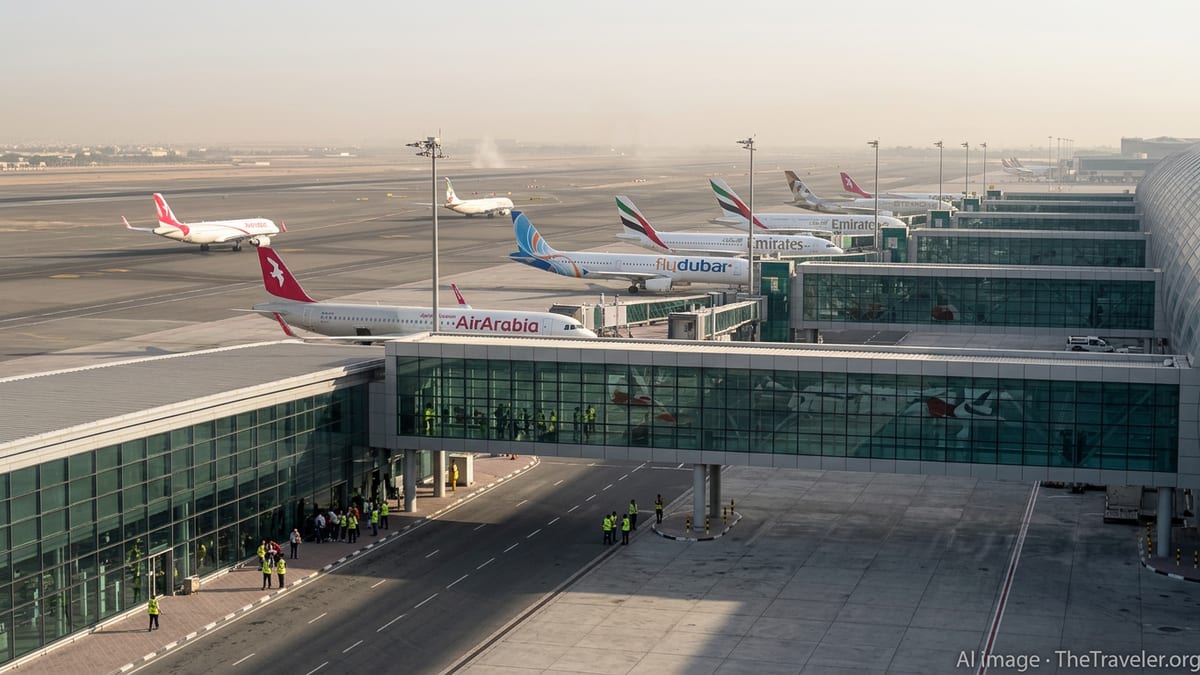
Gradual Reopening After Days of Closures
UAE aviation is edging back to life after widespread airspace closures triggered by escalating conflict in the region forced thousands of cancellations and left passengers stranded worldwide. Authorities have moved to reopen key corridors in phases, allowing a growing number of departures and arrivals through the country’s major hubs while maintaining heightened safety controls.
Dubai International Airport and Dubai World Central reported partial resumptions of operations from early March, progressively adding flights as regional airspace assessments permitted. Abu Dhabi International, Sharjah and Ras Al Khaimah have followed a similar pattern, with limited arrivals and departures cleared under tightly coordinated slots and revised routings.
Industry trackers estimate that several thousand flights touching the Gulf were cancelled or diverted in the first days of the crisis, creating an acute backlog for carriers that serve the UAE as a global connection point between Asia, Europe, Africa and the Americas. The current restart is being framed by both regulators and airlines as a managed recovery, rather than an immediate return to normal schedules.
Emirates Rejoins Peers With Reduced Network
Emirates confirmed over the weekend that it has resumed a limited schedule from Dubai, joining flydubai, Etihad Airways and Air Arabia, which began operating selected services from March 6 and 7. The carrier is now operating to a growing list of destinations across its global network, but at significantly reduced frequencies compared with pre-crisis levels.
Operational statements from the airline indicate that flights are being prioritised on trunk routes to Europe, Asia, Australia and key African gateways, with many services operating as combined or upgauged rotations to maximise capacity for stranded passengers. Some long-haul flights are using longer routings to avoid restricted airspace, adding flying time and placing further pressure on aircraft and crew availability.
Emirates has warned that schedules remain highly fluid and that further adjustments are possible at short notice if regional conditions deteriorate or airspace corridors are tightened again. The airline has urged customers not to travel to Dubai International without a confirmed booking and has restricted terminal access to ticketed passengers as part of crowd-control measures.
Etihad, flydubai and Air Arabia Focus on Core Routes
Etihad Airways, based in Abu Dhabi, began restoring a limited commercial timetable from March 6, initially focusing on key destinations in Europe, North America, the Indian subcontinent and Australia. The airline has published set schedules that run through mid-March, but notes that all operations remain contingent on evolving airspace permissions and security assessments along its main corridors.
Budget carrier flydubai has also reintroduced a portion of its network, emphasising regional links to the Gulf, Indian subcontinent, East Africa and select Central and Eastern European cities. Given the airline’s heavy reliance on short and medium-haul routes that cross recently restricted airspace, its return has been carefully sequenced, with some destinations still suspended or heavily curtailed.
Sharjah-based Air Arabia has restarted limited services from its UAE bases, prioritising high-demand markets and repatriation flows. Capacity is being flexed through aircraft swaps and schedule consolidation as the carrier works through a sizeable backlog of disrupted passengers. As with its peers, many routes are subject to last-minute timing changes as traffic is funnelled through available corridors.
Passengers Face Backlogs, Rebooking Challenges and Longer Journeys
For travellers, the gradual reopening has translated into a mix of relief and ongoing uncertainty. With several days of cancellations to clear, UAE carriers are giving priority to passengers holding existing bookings from the height of the disruption, often rebooking them onto the first available departures regardless of original travel dates.
Flexible policies have been introduced across Emirates, Etihad, flydubai and Air Arabia for tickets issued before the crisis, allowing date changes and rerouting without standard change penalties in many cases. Even so, limited seat availability on popular routes means some passengers are facing delays of days before securing space, particularly during peak travel periods and on long-haul flights that are operating at reduced frequency.
Those who do travel are also encountering longer flight times as aircraft avoid certain airspace blocks and adopt more southerly or circuitous routings. The combination of extended flying, tight crew duty limits and ground congestion at hubs has increased the risk of knock-on delays, and airlines continue to advise passengers to monitor flight status closely and allow additional time at the airport.
Outlook Uncertain as Airspace Controls Persist
While the resumption of limited operations marks a significant step toward normality for UAE aviation, the outlook for a full recovery remains uncertain. Airlines and airport operators stress that any further deterioration in the regional security environment or new airspace restrictions could quickly force fresh cancellations or a rollback of recently restored services.
Executives at Emirates and Etihad have publicly signalled optimism that their full networks can be rebuilt within days once airspace stabilises, but they are equally clear that safety considerations and regulatory clearances will dictate the pace. Schedules for the coming weeks are being published with caveats, and carriers are maintaining expanded customer-support teams to manage high volumes of itinerary changes.
For now, the UAE’s major carriers are walking a narrow line between restoring vital global connectivity and protecting passengers, crew and assets amid an evolving airspace crisis. Travellers planning to transit through Dubai, Abu Dhabi, Sharjah or other UAE airports in the near term are being advised to treat schedules as provisional and to stay in regular contact with their airline as the situation continues to shift.