

More news on this day
Major UAE carriers Emirates, Etihad Airways, flydubai and Air Arabia are moving back to full flight operations with updated schedules after United Arab Emirates airspace reopened following a series of regional security disruptions that led to widespread cancellations and diversions.
Get the latest news straight to your inbox!
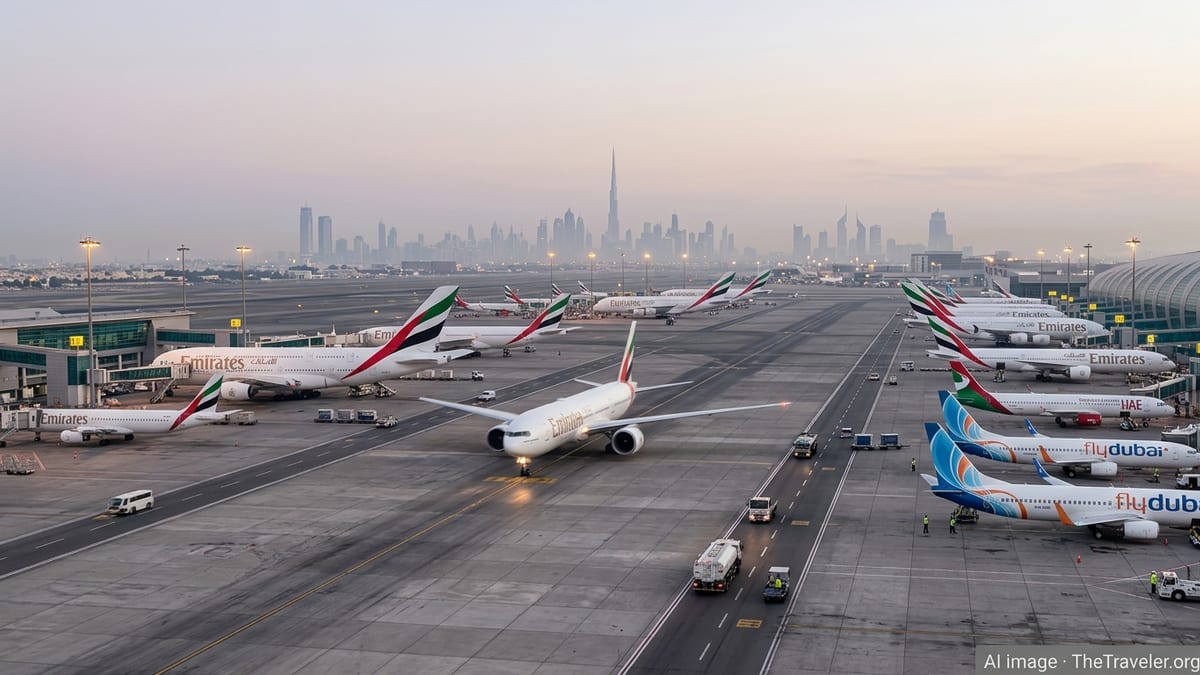
Airspace Reopens After Short Notice Disruptions
United Arab Emirates airspace has reopened to commercial traffic after a series of regional missile and drone incidents prompted temporary closures and strict restrictions on movements across parts of the Middle East. Publicly available information indicates that airspace closures were introduced with limited warning as regional tensions escalated, affecting routes over and around the Gulf and triggering cascading delays for long haul services connecting Europe, Asia, Africa and the Americas through the UAE.
Operational updates from aviation and travel advisories show that restrictions on flights to and from the UAE have now been lifted, allowing airlines to re-establish regular corridors and restore their hub schedules. The reopening has enabled aircraft that were grounded, diverted or operating on extended routings to return to planned patterns, easing pressure on crew resources, airport infrastructure and passenger handling.
Travel industry briefings describe the events as among the most disruptive for Gulf aviation in recent years, with ripple effects felt across multiple continents. As airspace gradually reopened, carriers initially adopted limited or phased schedules focused on repatriation and repositioning operations before confirming a full return to normal commercial services.
Emirates Rebuilds Global Hub Operations in Dubai
Emirates, the largest carrier based in Dubai, has restored its global hub operations at Dubai International after several days of suspensions and reduced frequencies linked to regional airspace constraints. Earlier advisories had highlighted a temporary halt to most passenger services, followed by a period of limited operations while aircraft and crew were repositioned and routing options were reassessed.
According to recent operational updates cited in industry and traveler reports, Emirates is now operating its full network schedule from Dubai, with some timings adjusted to reflect revised routings and slot availability. The airline has been prioritising customers whose flights were previously cancelled or significantly delayed, reallocating capacity to clear backlogs and to move passengers who were stranded in transit.
Publicly available guidance continues to emphasise that customers should not travel to Dubai International without a confirmed booking and updated departure time, as schedule adjustments and aircraft swaps remain possible while operations stabilise. Online flight status tools and mobile applications are being used extensively by passengers to track last minute timing changes as aircraft flows across the network normalise.
Industry observers note that the speed at which Emirates has scaled back up underlines the strategic importance of Dubai as a connecting hub, as well as the carrier’s ability to re-time large volumes of long haul services once airspace corridors are re-opened. However, some residual congestion in certain terminals and at transfer security checkpoints is still being reported as displaced passengers complete their journeys.
Etihad, flydubai and Air Arabia Confirm Return to Regular Schedules
In Abu Dhabi, Etihad Airways has also confirmed a full return to scheduled passenger services following an earlier suspension of most departures while airspace restrictions were in place. Initial limited operations focused on cargo, repatriation and essential repositioning flights have transitioned back to a regular timetable as route options and overflight permissions stabilized across the region.
In Dubai, flydubai, which operates a large regional and narrow body network from Dubai International and Dubai World Central, has moved from a period of limited operations to its customary schedule. Travel forums and industry reporting indicate that the airline initially reinstated a small number of flights to key regional destinations before gradually rebuilding frequencies and restoring its broader network as conditions allowed.
Sharjah based Air Arabia, a major low cost carrier serving destinations across the Middle East, North Africa, South Asia and beyond, has likewise resumed full commercial operations after initially scaling back services during the period of uncertainty. Published updates show that the airline is again operating its normal pattern of departures from Sharjah and other regional bases, with revised timings in some cases to align with updated air traffic flow management across affected air corridors.
Collectively, the four UAE carriers handle a significant share of connecting traffic for the wider region, meaning their return to full operation has an outsized impact on global travel flows. With schedules reinstated, travel agents and corporate travel managers are now working through rebookings and duty of care obligations for customers whose itineraries were disrupted.
Updated Schedules, Rerouted Flights and Ongoing Adjustments
Although regular operations have resumed, the latest schedules for Emirates, Etihad, flydubai and Air Arabia are not simple copies of pre disruption timetables. Publicly available scheduling data suggests that a number of routes have been retimed, with some flights operating at different hours of the day or on revised flight numbers to fit within newly optimized banks of arrivals and departures at UAE airports.
In some cases, longer routings remain in place in order to avoid specific airspace segments where operational constraints or risk assessments still apply. This can add flight time and may require airlines to adjust aircraft assignments, crew duty patterns and turnaround times. For passengers, this translates into potential changes to connection windows, particularly for those linking long haul services with shorter regional flights.
Aviation analysts indicate that carriers are using a combination of temporary schedule changes and dynamic day to day adjustments as they test operational resilience under the updated routing environment. Over the coming days, incremental refinements are expected as airlines evaluate load factors, airport congestion levels and air traffic control capacity to bring block times and on time performance further into line with pre disruption norms.
Travellers are being encouraged, through airline communications and travel advisories, to check for updates continuously in the 24 hours before departure, even if their flights were previously listed as confirmed. Minor timing shifts of 15 to 60 minutes remain possible as carriers fine tune rotations and as air traffic management units fine tune flow restrictions through busy regional sectors.
Passenger Impact, Backlogs and What Travellers Can Expect
The resumption of full flight operations comes after thousands of passengers experienced cancellations, missed connections and unplanned stopovers when UAE airspace first closed and regional routes were curtailed. Airport terminals in Dubai, Abu Dhabi and Sharjah saw peaks of stranded travellers attempting to rebook, claim accommodation assistance or secure seats on limited outbound services operating under special approvals.
With regular schedules now restored, airlines are working through remaining backlogs, including customers who accepted later travel dates or alternative routings during the height of the disruption. Publicly available reports describe a stepped approach to re-accommodating passengers, typically prioritising those already in transit or who have been disrupted for the longest periods, followed by customers whose future bookings coincide with restored capacity.
For travellers with upcoming trips, the return of full operations across Emirates, Etihad, flydubai and Air Arabia should restore a greater sense of predictability, although some residual crowding at peak times is still anticipated as displaced passengers complete delayed journeys. Check in cut off times and boarding procedures remain strictly enforced, as airlines seek to recover punctuality and stabilise rotations after an intensive period of irregular operations.
Travel planners note that the recent events highlight the value of flexible tickets, accurate contact details in bookings and regular monitoring of flight status whenever flying through a region affected by fast changing airspace conditions. While the reopening of UAE airspace and the resumption of full schedules mark a significant step back toward normality, both airlines and passengers are expected to remain alert to any further changes in the regional security environment that could affect aviation in the weeks ahead.