

More news on this day
Emirates, Etihad Airways and flydubai have begun restoring limited passenger services from the United Arab Emirates after days of near-total shutdowns triggered by a regional airspace crisis linked to the conflict between Iran, the United States and Israel.
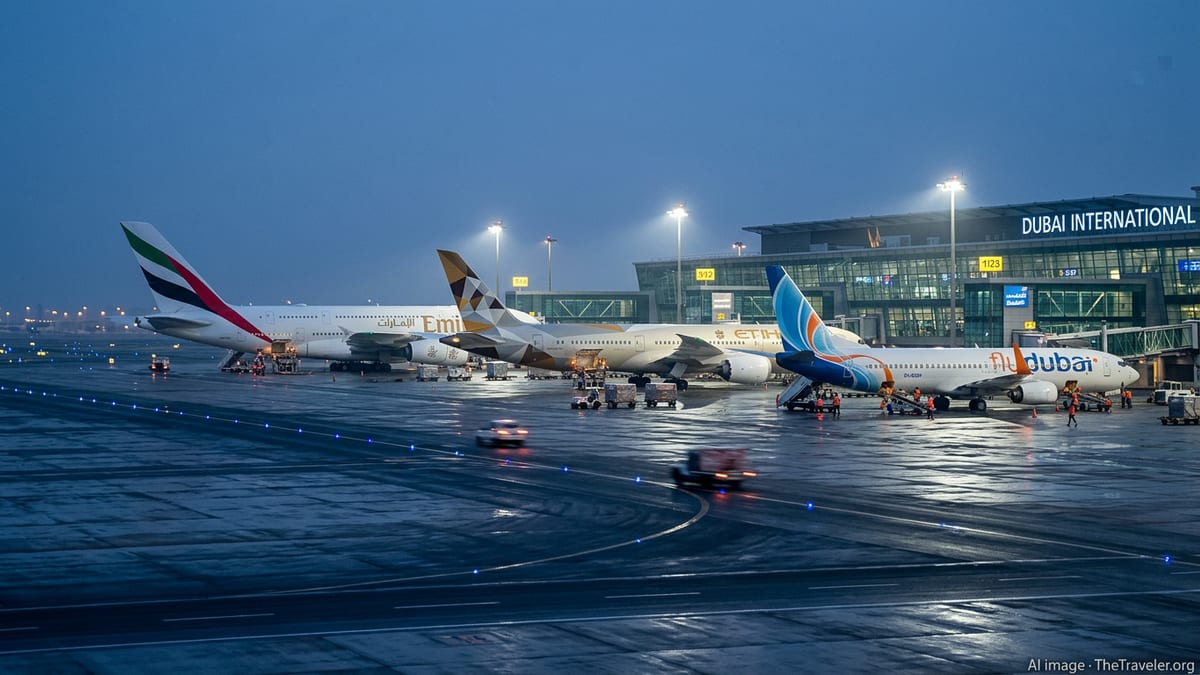
Partial Reopening of UAE Skies After Missile and Drone Strikes
The partial restart of flights follows a week in which Iranian missile and drone attacks across the Gulf forced the closure or severe restriction of airspace over the UAE and neighboring states, disrupting thousands of journeys and stranding travelers worldwide. UAE air defense systems intercepted multiple projectiles over Abu Dhabi and Dubai, prompting authorities to halt most commercial movements while damage assessments and safety checks were carried out.
The UAE General Civil Aviation Authority has now confirmed that regional contingency plans are in effect and that airspace over the country is gradually reopening under tight military and regulatory coordination. Only carefully approved corridors are being used, with each flight subject to additional risk assessment and real-time monitoring. Operators stress that these measures aim to balance the need to move stranded passengers with the overriding priority of safety.
Even with the reopening, capacity through the UAE’s global hubs remains a fraction of normal. Analysts say that before the crisis, the big Gulf carriers routed around 90,000 connecting passengers every day via Dubai and Abu Dhabi. Today, schedules are being rebuilt route by route, with a focus on destinations that can support evacuations, essential business travel and critical family journeys.
Emirates: Gradual Network Restoration and Tight Capacity
Dubai-based Emirates, the largest of the three UAE carriers, suspended regular scheduled services at the height of the crisis but has since restarted a growing number of flights from Dubai International and, in some cases, from Dubai World Central. The airline is prioritizing passengers with existing bookings whose earlier flights were cancelled, operating a mix of repatriation-style services and limited commercial rotations to Europe, Asia, Africa and Australia.
In statements to regional media on March 6 and March 7, Emirates said it had restored services to dozens of destinations and expected to reach its pre-crisis network “within days,” subject to the stability of regional airspace and the absence of further attacks. Aviation analysts note that the carrier is rebuilding cautiously, adding frequencies only when overflight permissions, security assessments and crew duty limitations align.
For travelers, that means seats are extremely tight on operating flights, and last-minute bookings are difficult to secure. Emirates has kept in place temporary waiver policies for tickets issued before February 28 for travel through late March, allowing date changes or travel credits in many cases, although specific options depend on fare type and point of sale. Passengers are being urged not to go to the airport unless they have received confirmed rebooking details from the airline.
Etihad and flydubai Focus on Select Routes and Repatriation
Abu Dhabi’s Etihad Airways initially suspended all scheduled commercial flights before moving to a limited schedule from March 6, centered on Zayed International Airport. The airline has published a list of more than 70 destinations it aims to serve between March 6 and March 19, including key cities in Europe, Asia and North America. Many of these flights are operating at reduced frequency compared with the pre-crisis timetable and are subject to day-to-day adjustments.
Etihad has emphasized that customers with cancelled flights will be given priority for the limited seats now available. The carrier has also organized targeted outbound services, including to several European gateways, to help clear backlogs of stranded tourists, residents and transit passengers. Flexible rebooking policies allow travelers with tickets issued on or before February 28 for travel through March 21 to move their journeys without additional change fees, typically up to mid May, although fare differences may apply.
Dubai-based flydubai, the UAE’s main low-cost carrier, has likewise shifted from a total halt to partial operations, running limited services out of Terminals 2 and 3 at Dubai International. Its focus so far has been on regional routes across the Middle East, South Asia and parts of Eastern Europe. The airline is accepting connecting passengers only where onward flights are confirmed to be operating, in an effort to avoid recreating stranded transits at its Dubai hub.
Other UAE-based airlines, including Sharjah’s Air Arabia, remain more constrained, with many flights suspended into next week. Across the board, carriers continue to warn that schedules may change at short notice as the conflict evolves and as airspace restrictions are updated by regional governments and international aviation authorities.
What Travelers Need to Do Before Heading to the Airport
With flight operations still fragile, travel experts say the single most important step for passengers is to verify flight status directly with their airline and not rely on older e-tickets or generic booking confirmations. Many carriers are updating departure and arrival information several times a day, and a flight that appears in a booking app may yet be rescheduled, rerouted or cancelled if security conditions change.
Airports in Dubai and Abu Dhabi are restricting terminal access to travelers who can show valid, same-day bookings for flights that are confirmed to operate. Friends and family are generally being asked to stay away from terminal buildings to ease crowding and security checks. Travelers who arrive at the airport without a confirmed, operating flight risk being turned away at the entrance or facing long waits with little prospect of same-day departure.
Passengers should also ensure that airlines and travel agents have up-to-date contact details, including mobile numbers and email addresses, so they can receive automated notifications of schedule changes. Where possible, experts recommend using official apps from Emirates, Etihad and flydubai for live updates, boarding pass issuance and rebooking options. Given the shifting situation, travelers are being advised to avoid positioning flights or nonrefundable onward arrangements until they are sure their UAE leg is operating.
Safety, Routing Changes and the Outlook for Recovery
Despite heightened tensions, aviation authorities and industry analysts stress that safety standards remain rigorous. Airlines are avoiding high-risk zones, using alternative routings that sometimes add several hours to long-haul journeys but keep aircraft away from active conflict areas and missile trajectories. Crews are receiving updated briefings before every flight, and carriers have been repositioning aircraft and staff to airports considered less exposed to potential strikes.
These workarounds come at a cost. Lengthier routes increase fuel burn, crew expenses and scheduling complexity, which in turn limit how quickly airlines can restore full capacity. Some connections that formerly relied on tight, cross-regional banks of flights in Dubai and Abu Dhabi are currently impossible to offer at convenient times. Travelers may find themselves with longer layovers, overnight stops in secondary hubs, or rebookings on partner airlines operating via different corridors.
Still, with Iran signaling a pause in attacks on neighboring countries and diplomatic efforts intensifying, airlines see scope for a steady recovery if the situation does not deteriorate again. Industry data show that cancellations across the Middle East, which peaked in the immediate aftermath of the strikes, have started to edge down as more airports reopen and restrictions are fine-tuned rather than absolute.
For now, however, the message from carriers and regulators is that the crisis is not over. Emirates, Etihad and flydubai are back in the skies, but on terms dictated by a volatile security environment. Travelers planning to use the UAE as a transit or destination hub over the coming days should be prepared for late changes, limited choice and an unusually hands-on approach to monitoring their journeys.