

More news on this day
Air travel in and out of the United Arab Emirates has shifted to an almost emergency footing as Etihad Airways joins Emirates, flydubai and Air Arabia in restricting operations to confirmed-passenger loads only, with thousands of travelers facing cancellations, sharply reduced schedules and evolving guidelines amid the Middle East crisis.
Get the latest news straight to your inbox!
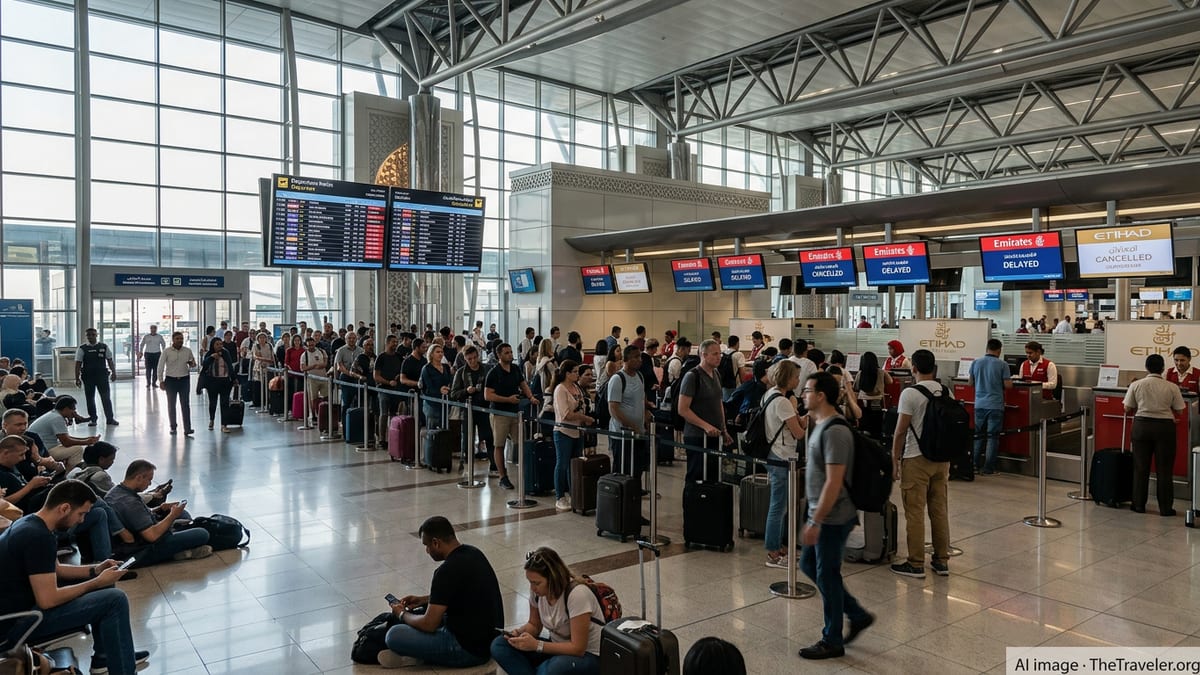
Confirmed-Only Policies Redefine Who Gets to Fly
UAE-based carriers are rebuilding their schedules day by day after airspace closures and missile strikes across the region in late February led to mass cancellations. Emirates, Etihad, flydubai and Air Arabia are now operating under a common baseline: only passengers with confirmed, operating flights are being accepted for travel, and walk-up demand or speculative bookings are effectively being shut out as the airlines prioritize those already in the system.
Daily flight-status bulletins and travel advisories circulated on 10 March underline the new reality. UAE hub carriers are explicitly instructing passengers not to travel to airports unless they have received confirmation that their flight is operating, and are warning that only ticketed customers on active services will be allowed through check-in and security. The policy is intended to prevent overcrowding in terminals and to protect limited capacity as airlines navigate shifting airspace permissions and security assessments.
For many residents and visitors, the change is immediately felt in how trips are planned. Travelers who once relied on last-minute bookings or on-the-day standby upgrades are being told that upgrades using frequent-flyer miles are largely frozen, and that rebooking flexibility is focused on moving disrupted passengers onto the few flights that are still running rather than opening new seats to discretionary travel.
Flight Cancellations and Reduced Schedules Ripple Across Networks
Since the first wave of missile and drone strikes and subsequent airspace closures, airlines across the Gulf have cancelled or rerouted thousands of services. Analysis of flight data for late February and early March shows tens of thousands of flights affected across the Gulf Cooperation Council states, with the UAE’s hub airports in Dubai and Abu Dhabi among the hardest hit. Entire stretches of regional airspace over Iran, Iraq, parts of the Gulf and the Levant were temporarily closed, severing some of the world’s busiest connecting corridors.
Emirates, which typically operates one of the largest long-haul networks globally, has been running a sharply reduced schedule, focusing on core trunk routes while it navigates longer routings around conflict zones. Abu Dhabi-based Etihad has adopted a similar approach, resuming only a limited commercial schedule from 6 March and rebuilding route by route as clearances are granted. Low-cost carriers flydubai and Air Arabia have restored only a portion of their services, with many flights from Sharjah and secondary UAE airports still operating at constrained frequencies or remaining suspended.
The operational impact extends far beyond non-stop routes to and from the UAE. Because Emirates and Etihad act as global connectors, their reduced schedules have broken itineraries for travelers linking Europe, Asia, Africa and the Americas through Dubai and Abu Dhabi. Industry analyses indicate that, under normal conditions, tens of thousands of passengers transit UAE hubs every day; with the conflict ongoing, a significant share of this connecting traffic is either cancelled outright or being pushed onto alternative routings via other regions.
New Travel Guidelines Transform the Passenger Experience
Alongside reduced schedules, airlines and UAE aviation authorities have introduced a suite of new travel guidelines designed to manage risk and keep airports functioning. Confirmed-booking rules now go hand in hand with strict terminal access measures, with authorities adopting what some bulletins describe as zero-tolerance policies: only passengers with same-day, operating flights and verifiable confirmations are being permitted into check-in halls at Dubai, Abu Dhabi and other UAE airports.
Pre-flight preparation has become more complicated. Travelers are being instructed to monitor airline apps and SMS notifications up to the last hours before departure, as flight status can change quickly in response to missile alerts, new overflight restrictions or congestion in regional control zones. Flexibility policies from UAE carriers typically allow passengers booked between late February and the end of March to rebook once within about 30 days without penalty, but these waivers come with fine print, including limited fare-bucket availability and the possibility of having to accept alternative routings or dates.
On board, the experience is also shifting. With fuel burn higher on detoured routings and fleet planning in flux, carriers are trimming non-essential services and warning that seating, meal offerings and in-flight amenities may vary from what was originally advertised. For many travelers, the priority has narrowed to simply getting a seat on a confirmed, operating flight out of or into the region, rather than optimizing cabin class or soft-product perks.
UAE Travelers Face Uncertainty, From Holiday Plans to Family Emergencies
For UAE residents and visitors, the practical consequences reach well beyond inconvenience. Families planning school-holiday trips, expatriates travelling for visa runs, and business travelers heading to regional meetings are all confronting sudden cancellations, extended layovers or multiday delays while waiting for re-accommodation. Social media threads and community forums are filled with accounts of passengers stranded in third countries, or of itineraries split across multiple carriers as travelers stitch together routes around the closed or constrained airspace.
Those with urgent medical or family reasons to travel are facing some of the toughest choices. While airlines are prioritizing confirmed passengers, the scarcity of seats on operating flights means that even ticketed customers may have to accept lengthy reroutes via more distant hubs in Europe or Asia. Passengers flying to high-demand destinations such as London, Mumbai or Manila report that rebooking queues can stretch for hours, and that alternative travel dates sometimes fall days beyond their original plans.
At the same time, travel demand has not evaporated. The UAE remains a key hub for South Asian, African and European diaspora communities, and many residents cannot simply postpone trips home. This tension between essential travel and constrained capacity is contributing to elevated fares on remaining routes, particularly in premium cabins where business travelers and wealthier leisure passengers are competing for scarce seats.
Industry Outlook: Prolonged Disruption and a Slow Rebuild
Analysts tracking regional aviation warn that the disruption could extend well beyond the immediate crisis window. Economic forecasters have suggested that international arrivals to the broader Middle East could fall by double-digit percentages in 2026 if hostilities and airspace uncertainty persist, with the UAE’s tourism-dependent economy and its airlines directly exposed. At the same time, previous shocks, including the pandemic and earlier regional diplomatic rifts, have shown that Gulf carriers can rebuild networks relatively quickly once conditions stabilize.
For now, though, the industry narrative is one of cautious, incremental resumption rather than rapid normalization. UAE carriers are leaning on their experience with contingency planning, dynamically reassigning aircraft, leaning on cargo revenues where possible, and working closely with regulators and air navigation authorities to reopen key corridors. Yet each day’s progress remains contingent on security developments well beyond the control of airlines or airport operators.
For passengers, the message is equally measured. Confirmed-booking rules, reduced schedules and strict airport-access guidelines are likely to remain in place at least through the end of March and potentially longer. Travelers looking to fly to, from or through the UAE in the coming weeks are being urged to secure confirmed itineraries, build in generous buffers for connections and be prepared for last-minute changes. In the current phase of the Middle East crisis, certainty at 35,000 feet has become a scarce commodity, and confirmed-passenger loads are the airlines’ most reliable tool for managing through the turbulence.