

More news on this day
The United Arab Emirates has moved to cover hotel stays, meals, and rebooking assistance for tens of thousands of stranded travelers after temporary regional airspace closures forced sweeping flight suspensions at Dubai and other major airports across the country.
Mass Disruptions After Sudden Airspace Shutdown
Air travel across the Gulf ground to a halt over the weekend as a cascading series of airspace closures in the Middle East forced airlines to suspend services through some of the world’s busiest hubs, including Dubai International and Abu Dhabi’s Zayed International Airport. Authorities in the United Arab Emirates confirmed that the country’s airspace was temporarily closed as a security precaution, triggering widespread cancellations and diversions.
Emirates, Etihad Airways, Flydubai and Air Arabia all suspended flights to and from their UAE hubs, with many services halted through at least the afternoon of Monday, March 2. International carriers including Lufthansa and several European and Asian airlines also pulled back from UAE routes or chose to avoid the country’s airspace entirely, adding to the global knock-on effects.
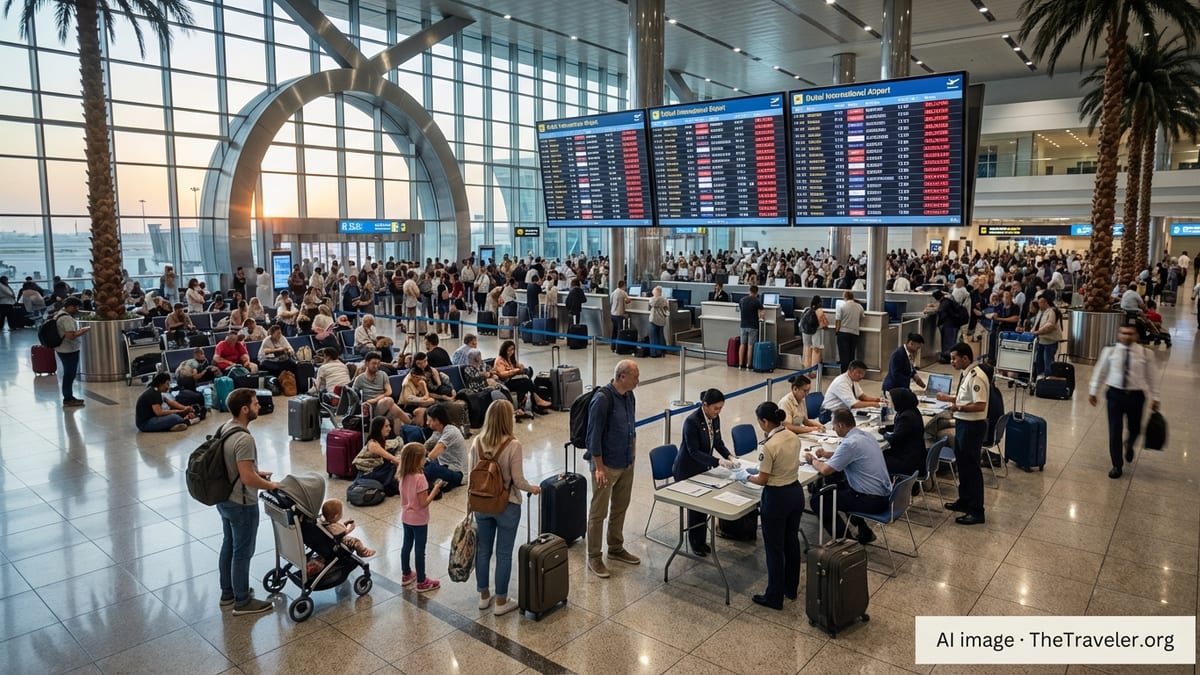
By Sunday night and into Monday, terminals in Dubai and Abu Dhabi were crowded with passengers stuck between flights or unable to begin their journeys. Many had already checked out of hotels or completed earlier legs of long-haul itineraries when the sudden closures took effect, leaving them in urgent need of accommodation and clear information on when they might be able to move on.
With key Gulf corridors shut and alternative routings limited, analysts warned that the disruption could ripple through airline schedules worldwide for days, even after airspace restrictions begin to ease. The UAE’s move to assume responsibility for passenger support was intended to buffer travelers from the worst of the operational chaos.
Government Steps In With Full Accommodation and Meal Support
The General Civil Aviation Authority announced that the UAE state would bear all costs for hosting and accommodating affected passengers, including transit travelers and tourists unable to depart on schedule. Officials said the program covers temporary hotel stays, meals and refreshments, and logistical support while travelers await rebooked flights.
According to initial tallies from aviation authorities, roughly 20,000 passengers were assisted in the first phase of the response, as airlines scrambled to reschedule services and reroute aircraft between airports inside the UAE. That figure is expected to grow as more travelers report delays and missed connections tied to the continuing airspace restrictions.
In Abu Dhabi, the Department of Culture and Tourism instructed hotels to extend stays for guests who had reached their checkout date but were unable to leave the country. The department said the extended nights would be covered by the state so visitors would not incur additional costs for circumstances beyond their control.
Officials emphasized that accommodation and meal support would remain in place for as long as is necessary while carriers work through backlogs and adjust flight schedules. The assistance is being coordinated closely with national airlines and airport operators to ensure passengers are identified quickly and transferred to available rooms with minimal wait times.
Rebooking, Refunds and Operational Workarounds
Alongside direct financial support, UAE authorities and airlines have focused on smoothing the complex rebooking process now facing stranded travelers. The General Civil Aviation Authority said national carriers are facilitating rebooking in line with preapproved operational plans, prioritizing passengers based on original travel dates and connection needs.
Emirates has allowed customers originally scheduled to travel on affected dates to rebook without penalty within a specified window or request refunds if they prefer to cancel. Etihad, Flydubai and Air Arabia have introduced similar waivers, giving passengers flexibility to shift their travel plans once airspace conditions allow flights to resume more broadly.
To keep traffic flowing when possible, the aviation authority detailed a series of workarounds that include rerouting certain flights between UAE airports, accelerating timetable rescheduling, and strengthening on ground coordination inside terminals. These measures are designed to prevent bottlenecks at immigration and baggage areas as operations gradually restart.
Passengers have been urged to monitor official airline channels and airport announcements for updated departure times rather than heading to terminals without confirmed bookings. Authorities also encouraged travelers to ensure their contact details are current in airline systems so they can receive real time notifications about changes, gate assignments, and transport to and from temporary accommodation.
Human Stories Amid Airport Uncertainty
Beyond official support, local businesses and residents across the UAE have stepped in to help ease the strain on stranded visitors. Holiday home operators in Dubai reported opening vacant apartments free of charge to families and solo travelers unable to secure hotel rooms as demand surged near major airports.
Social media posts from property companies and community groups described offers of spare rooms, discounted stays and free transfers for travelers caught between flights. Some hosts said they were motivated by personal connections to those affected, including friends and relatives stuck in terminals for hours with limited information about when they might fly.
Inside airports, passengers recounted long queues at customer service desks and hotel voucher counters, but also noted a significant on the ground presence from airline staff and volunteers directing crowds, managing expectations, and helping elderly travelers and families with children reach food outlets and rest areas.
Travel industry observers said the swift combination of government funding, airline flexibility and community initiatives could help preserve the UAE’s reputation as a reliable global hub at a time when geopolitical tensions have made long haul flying across the region more complex and unpredictable.
What Travelers Should Expect in the Coming Days
With airspace restrictions still in flux as of Monday, aviation planners warned that a full return to normal operations is unlikely to be instantaneous even after official reopening notices are issued. Airlines will need time to reposition aircraft and crew, clear multi day backlogs, and rebuild complex international networks that feed through Dubai and Abu Dhabi.
Travelers currently in the UAE or scheduled to transit through the country in the next several days should expect potential schedule changes, longer than usual layovers, and a higher risk of missed connections on onward flights. Industry experts advise booking longer connection windows where possible and avoiding tight turnarounds through affected hubs until flight patterns stabilize.
For those already stranded in the Emirates, authorities stress that state funded accommodation and meal support will remain available while the disruption continues. Passengers are being asked to remain in close contact with their airlines rather than making separate travel arrangements that could complicate eligibility for covered lodging and rebooking assistance.
As carriers gradually restore flights and governments reassess airspace restrictions, the UAE’s expansive response is emerging as a case study in how global hubs can use state resources and coordinated contingency planning to shield passengers from the most immediate financial and logistical shocks of a sudden aviation shutdown.