

More news on this day
Major flight disruptions across the United Arab Emirates are continuing to ripple through global air travel, with Emirates, Etihad Airways, Flydubai and Air Arabia cancelling more than 70 services in recent days and disrupting connections to Paris, Munich, Cairo, Hyderabad, Mumbai, Doha and other key destinations.
Get the latest news straight to your inbox!
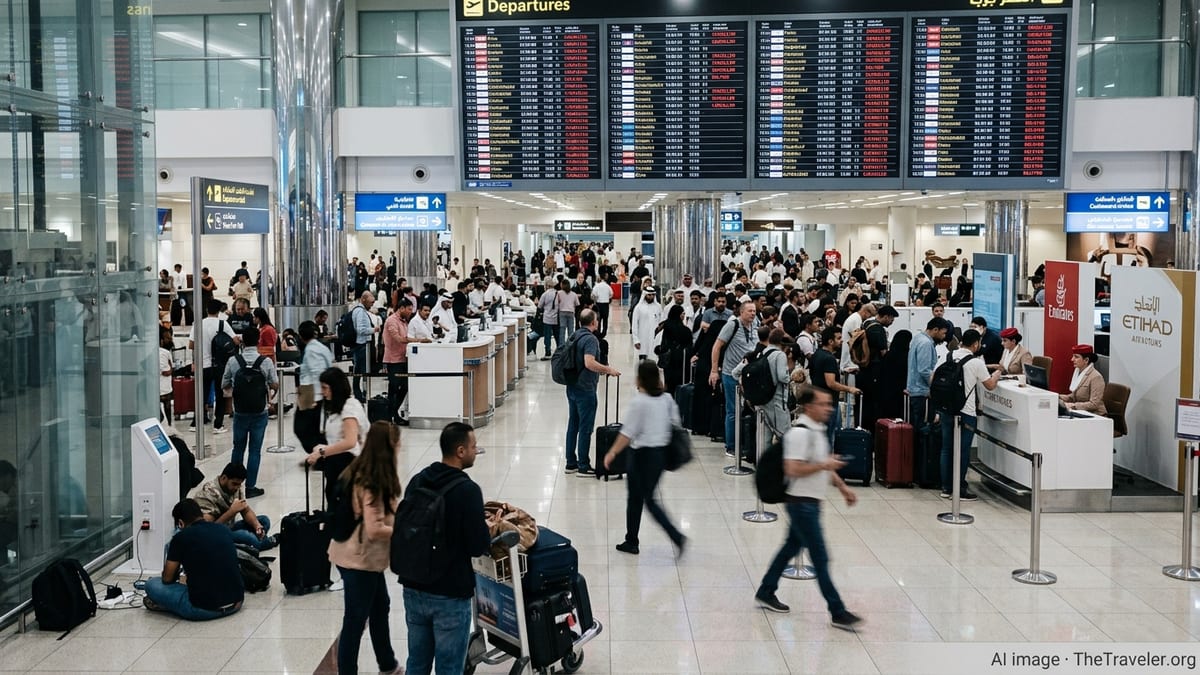
Regional Tensions Keep Pressure on UAE Aviation Hubs
Publicly available information shows that the latest wave of cancellations is linked to ongoing regional security tensions and associated airspace restrictions affecting parts of the Gulf. Since late February 2026, closures and constraints over portions of airspace in and around the UAE, Qatar and neighboring states have sharply reduced capacity at major hubs including Dubai International and Abu Dhabi’s Zayed International.
Analyses from industry observers indicate that, while outright airspace shutdowns have eased compared with the initial days of the crisis, corridors remain tightly controlled and subject to short-notice operational changes. This has forced airlines to repeatedly adjust schedules, concentrate operations on select trunk routes and cancel a significant number of flights that cannot be safely or reliably operated.
According to published coverage from regional and international media, more than 3,000 flights across the wider Gulf have been cancelled since the start of the disruption period, with UAE-based carriers accounting for a substantial share because of their hub-and-spoke business models. The latest figures of over 70 cancelled services by Emirates, Etihad, Flydubai and Air Arabia represent only a portion of the wider regional impact but underscore how fragile the recovery remains.
Key Routes to Europe, South Asia and the Middle East Affected
Operational updates shared by airlines and summarized in travel-industry forums show that the current phase of disruption is hitting a mix of European, African, South Asian and regional Middle Eastern routes. From Dubai, Emirates has cancelled or reshuffled flights serving Paris, Munich, Cairo, Hyderabad and Mumbai, with certain services operating on reduced frequencies while others remain suspended.
One recent operations notice listed selected Emirates flights to Paris Charles de Gaulle and Munich as among the services due to operate from Dubai, while others on the same city pairs were removed from schedules or flagged as cancelled. Similar patterns have been observed on Cairo, Hyderabad and Mumbai routes, where limited daily services are maintained but not all previously scheduled flights are operating, resulting in more than 70 cancellations across the network.
Disruptions are not limited to Emirates. Etihad Airways has faced continued suspensions on several Abu Dhabi departures while it gradually rebuilds its schedule. Low-cost sister carriers Flydubai and Air Arabia, which normally provide dense regional coverage from Dubai World Central, Dubai International and Sharjah, have also announced cancellations and limited operations on routes into the wider Middle East, including connections to Doha and other Gulf capitals.
Stranded Passengers Face Rebookings, Longer Journeys and Higher Fares
The fast-changing situation has left many travelers facing last-minute cancellations, extended layovers and complex rebooking processes. Reports from passenger communities and travel advisers describe cases in which itineraries involving Dubai or Abu Dhabi have been altered multiple times within a week, as airlines respond to shifting airspace permissions and slot availability.
With a high volume of cancelled services on routes such as Hyderabad, Mumbai, Cairo and Munich, seats on alternative flights are under intense pressure. Travel commentaries note that fares on some remaining long-haul options via alternative hubs have risen sharply, and availability for imminent departure dates is often limited. Travelers with non-essential trips are being encouraged by many advisory services to consider postponing journeys or accepting later travel dates once schedules stabilize.
For those already abroad, airlines are prioritizing rebooking for passengers whose flights have been cancelled, often placing them on the next available service to or through the UAE hubs. However, reduced frequencies and constrained capacity mean that some passengers are facing delays of several days before they can be accommodated. Travel experts suggest that affected customers should monitor their booking status frequently and use digital self-service tools where available, since call centers and airport desks remain under heavy strain.
Airlines Gradually Restore Networks but Warn of Ongoing Volatility
Despite the scale of the disruption, there are signs of gradual stabilization. Publicly available airline statements and schedule data indicate that Emirates is now operating a growing list of routes from Dubai, including selected services to Paris, Munich, Cairo, Hyderabad and Mumbai, albeit often at reduced frequencies. Some industry reports suggest the carrier aims to restore most of its pre-disruption network within days, provided airspace conditions do not deteriorate.
Etihad Airways is following a similar trajectory from Abu Dhabi, with limited flights resuming on select long-haul and regional routes. Flydubai and Air Arabia have moved from near-total suspensions to operating a leaner schedule focused on high-demand regional corridors and essential connections, particularly within the Middle East and to parts of South Asia.
Aviation analysts caution that, even as more flights appear on departure boards, the situation remains fluid. Any renewed military activity, changes to risk assessments, or capacity constraints in neighboring airspace could force carriers to adjust schedules again at short notice. Passengers are being widely advised in public travel guidance to check flight status repeatedly in the 24 hours before departure and to allow extra time for security and check-in procedures at UAE airports.
What Travelers Should Watch in the Coming Days
Travel-industry briefings suggest that the next week will be critical for determining whether the latest round of more than 70 cancellations represents a peak in disruption or a waypoint in a longer period of instability. Key indicators include the pace at which Emirates and Etihad restore their networks to near-normal levels, whether Flydubai and Air Arabia can sustain their limited schedules without further widespread cancellations, and how quickly connecting traffic through Dubai and Abu Dhabi rebounds.
Observers also highlight the importance of developments at other regional hubs such as Doha, where operational constraints can have knock-on effects for UAE carriers through shared airspace and traffic flows. If regional security conditions continue to improve and air navigation authorities maintain current safe corridors, airlines could be in a position to progressively normalize operations, easing pressure on heavily affected routes to cities like Paris, Munich, Cairo, Hyderabad, Mumbai and Doha.
Until that picture becomes clearer, passengers planning to travel via the UAE are being urged by publicly available advisories to remain flexible, keep contact details updated with their airline, and consider travel insurance that explicitly covers disruption from airspace closures and security events. Industry specialists note that, while the immediate shock of the crisis has passed, the lingering effects on schedules and connectivity are likely to be felt well beyond the current tally of cancelled flights.