

More news on this day
Air travel between the United Arab Emirates and the United States has been thrown into disarray as Emirates, Etihad, United, Saudia and other major carriers cancel and reschedule at least 20 flights, disrupting key routes to New York’s JFK, Newark, Boston and onward connections across North America, Europe and Asia amid a powerful winter storm hammering the US Northeast.
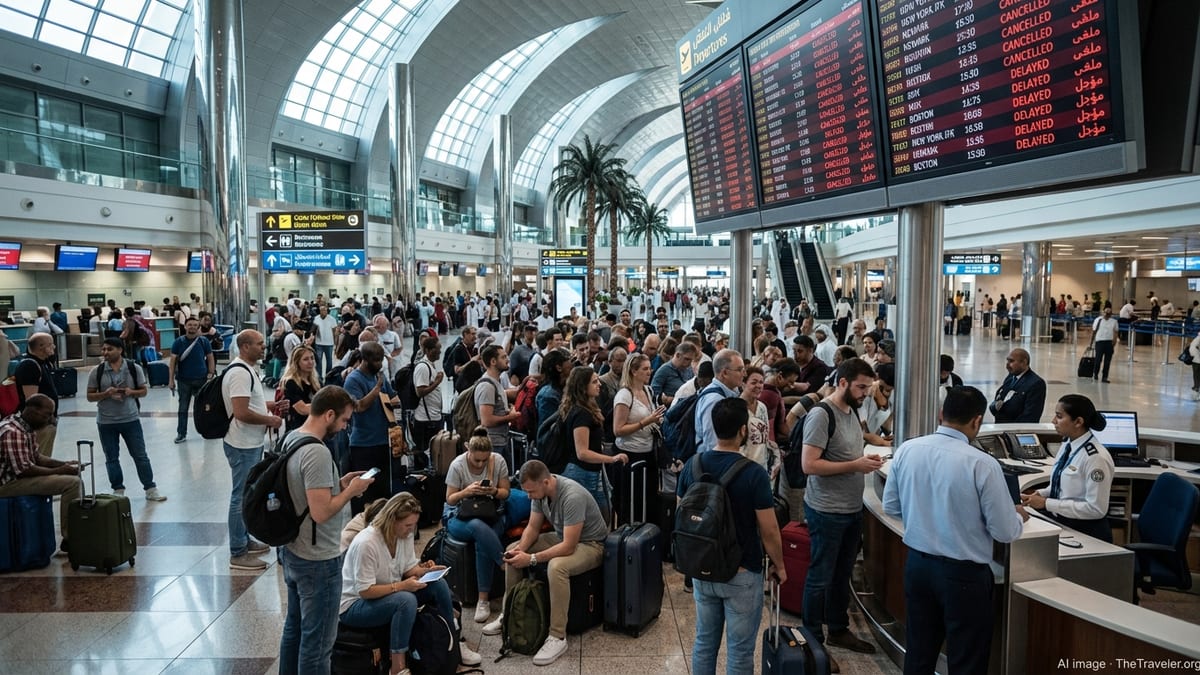
Winter Storm Hernando Ripples Across Global Flight Networks
A fast-moving winter system slamming the northeastern United States has quickly escalated into a global air travel crisis, with airports in New York, Boston and Newark bearing the brunt of severe snowfall, high winds and near-zero visibility. The storm, which intensified over the weekend and into Monday, has already triggered thousands of cancellations across the US domestic network and is now severely affecting long-haul operations from the Gulf.
For UAE-based carriers, the impact is immediate and far-reaching. Emirates and Etihad, which operate multiple daily services to the US East Coast, have been forced to cancel or significantly retime flights as air traffic control restrictions, runway closures and ground-handling challenges make normal operations impossible. Their adjustments are reverberating across codeshare partners such as United Airlines and alliance carriers that depend on these trunk routes for transatlantic and transpacific connectivity.
The knock-on effects extend beyond the United States. Passengers heading to and from Asia, Africa and Europe via Dubai and Abu Dhabi are seeing missed connections, forced overnight stays and last-minute rerouting as airlines race to reposition aircraft and crew. Industry analysts say the disruption is likely to be felt for several days, even after the worst of the weather clears.
Authorities in affected US states have imposed travel bans and urged residents to stay off the roads, with many major airports operating reduced schedules. For Gulf airlines, safety concerns and regulatory constraints leave little choice but to curtail operations, prioritising controlled cancellations over chaotic last-minute decisions at the gate.
Emirates Cuts New York, Newark and Boston Services
Dubai-based Emirates has announced a series of cancellations and schedule changes on its high-demand routes to New York and Boston, including services that operate via European gateways. Flights between Dubai and New York’s JFK, as well as services linking Athens and Milan to the New York and Newark area under the Emirates banner, have been particularly affected.
Key flights between Dubai and JFK have been pulled from the schedule as conditions deteriorate along the US East Coast. Services operating between Athens and Newark and between Dubai and Boston have also been cancelled or are under review, affecting passengers originating not only in the UAE, but also across the airline’s vast network who connect through Dubai.
Emirates has advised that customers with bookings on cancelled flights should contact their travel agents or the airline directly to arrange rebooking on later services once the weather stabilises. Passengers transiting through Dubai to reach New York, Newark or Boston on the affected flights are being proactively re-accommodated where possible, though capacity constraints mean that some travellers may face multi-day delays.
The carrier has also indicated that passengers connecting onward from the East Coast to other US cities may not be accepted at their initial point of departure if their transatlantic leg has been cancelled, a measure aimed at preventing large numbers of stranded customers at intermediate airports.
Etihad Scraps Multiple Abu Dhabi Flights to JFK and Boston
Abu Dhabi’s Etihad Airways has issued one of the most detailed disruption advisories, listing explicit cancellations on its flagship Abu Dhabi to New York JFK and Abu Dhabi to Boston routes. Services operating on February 23 and 24 have been hit hardest, with several rotations cancelled outright and others delayed by hours as the airline works around slot restrictions and weather-related closures in the United States.
Etihad has confirmed that key Abu Dhabi to New York and Abu Dhabi to Boston flights on February 23 will not operate, alongside their corresponding return legs from JFK and Boston back to the UAE. Additional flights between Abu Dhabi and New York on February 24 are also cancelled, underscoring the severity of the storm’s impact and the expectation that disruption will continue even after the heaviest snowfall passes.
Other services, including additional New York rotations, have been retimed with substantial delays to align with revised airport operating windows and air traffic control flow programs. Passengers are being told to monitor their booking profiles closely and ensure their contact details are up to date so that they can receive SMS or email notifications about last-minute changes.
Etihad is offering affected travellers the option to be rebooked on the next available flight or to request a full refund if travel is no longer necessary or practical. The airline has reiterated that passenger and crew safety remains its overriding priority and warned that further adjustments are possible as the storm evolves.
United, Saudia and Partner Airlines Face Network Strain
While Emirates and Etihad draw the most attention due to their central role in linking the UAE with North America, partner and codeshare airlines such as United and Saudia are also under pressure. United’s extensive domestic and transatlantic network is a critical onward link for passengers arriving from Gulf hubs into JFK, Newark and Boston, meaning cancellations on one side of the ocean can cascade across its entire schedule.
As airports in the Northeast reduce arrivals and departures to manage snow clearance and safety protocols, United has been forced to trim both domestic feeder flights and long-haul services. This is narrowing connection options for travelers who had planned to continue from New York or Newark to cities across the United States and Canada, compounding the difficulties faced by those flying from or via the UAE.
Saudia and other regional carriers are also grappling with the fallout. Passengers traveling between Jeddah or Riyadh and North American gateways are encountering cancellations and missed connections as airports in the storm’s path limit operations. With many Gulf and Middle Eastern airlines sharing interline and codeshare agreements, disruptions on US-bound flights from the UAE can easily spill over into neighboring markets including Saudi Arabia, Qatar and Bahrain.
Industry experts note that in such tightly interlinked global networks, it takes only a handful of major hub cancellations to create widespread imbalances in aircraft and crew positioning. As a result, even airlines whose home bases lie far from the storm zone are finding their schedules squeezed by a shortage of available aircraft or crew reaching the right airports at the right time.
Passengers Stranded as Cancellations Hit Jeddah, Hong Kong and Beyond
Although the primary trigger for the latest wave of cancellations is the US Northeast blizzard, the disruption is reverberating across long-haul corridors that use New York, Newark and Boston as critical interchange points. Travelers bound for cities as far afield as Jeddah and Hong Kong are finding their journeys upended as connecting flights are missed or re-timed at short notice.
Routes linking the Gulf to Saudi Arabia, particularly Jeddah, are experiencing heightened pressure as passengers seeking alternatives to disrupted US services attempt to re-route through regional hubs. Limited spare capacity means some travelers face extended layovers or the prospect of returning to their origin point to wait for new itineraries.
In Asia, flights that depend on smooth transpacific and transatlantic connectivity are feeling the strain. Connections from Hong Kong and other Asian capitals through Gulf hubs to the US East Coast are being rebooked over different gateways or on later dates as airlines try to preserve at least partial network integrity. Airport terminals in Dubai and Abu Dhabi have reported unusually high numbers of transfer passengers spending unplanned nights in the terminal or nearby hotels while waiting for new departures.
For many affected travelers, the most frustrating aspect is the uncertainty. With the storm’s path and intensity still evolving, carriers are cautious about reinstating full schedules too quickly, opting instead for rolling adjustments that can change multiple times in a single day.
What Affected Travelers in the UAE Should Do Now
Travel advisors and airline officials are urging passengers in the UAE to act quickly but calmly if their itineraries involve the US Northeast in the coming days. The first step for anyone booked to or through New York, Newark or Boston is to check the status of their flight using the airline’s official channels and to sign up for real-time notifications.
Travelers whose flights are marked as cancelled should contact their airline or travel agent as soon as possible to explore rebooking options. Given the scale of the disruption and limited spare capacity on alternative dates and routes, flexibility on travel dates, departure airports and even final destinations may significantly improve the chances of securing a seat.
Passengers with non-urgent travel plans are being encouraged to postpone their trips where feasible. Many carriers, including Emirates and Etihad, have introduced temporary waivers that allow ticket changes without additional fees, although any fare differences may still apply. Those who opt not to travel at all may be eligible for refunds or credit vouchers depending on the fare rules.
Experts also recommend that travelers avoid heading to the airport unless their flight is confirmed as operating. With check-in counters and service desks already under heavy strain, arriving early for a cancelled or severely delayed flight is likely to add to congestion without improving rebooking prospects.
How Airlines Are Managing Crew, Fleet and Safety
Behind the scenes, airline operations teams in Dubai, Abu Dhabi and other hubs are engaged in complex planning exercises to balance safety requirements with commercial realities. Aircraft that would normally spend only a few hours on the ground in the United States are instead remaining parked in the Gulf or being reassigned to other routes, altering the entire daily rotation pattern.
Crew scheduling is another major challenge. Flight and cabin crew are subject to strict duty time regulations, which storms and extended ground holds can easily push to the limit. To avoid crews timing out mid-operation, airlines often prefer to cancel or consolidate flights in advance rather than risk unplanned diversions or lengthy onboard delays once passengers have boarded.
Safety considerations extend to ground operations at the affected airports. Snow removal, de-icing, taxiway visibility and wind conditions all factor into the decision to permit landings and takeoffs. With multiple agencies involved, including airport operators, air traffic control and local authorities, Gulf carriers are heavily reliant on real-time updates from their partners in the United States before making final go or no-go calls.
Aviation analysts note that modern fleets and advanced meteorological tools have made airlines more adept at managing such events, but they also point out that intense storms like the current system can still overwhelm even the best-laid contingency plans. For passengers, this translates into shorter notice periods for cancellations and rapid shifts in available options.
Outlook for UAE–US Travel in the Coming Days
With storm conditions expected to persist for at least another 24 to 48 hours, airlines and airports are cautioning that disruption to UAE–US travel will not end immediately once snowfall tapers off. Clearing backlogs, repositioning aircraft and restoring crews to their regular rotations typically takes several days after a major weather event of this magnitude.
Emirates, Etihad, United, Saudia and their partners are reviewing schedules on a rolling basis, with further cancellations or retimings possible as the operational picture becomes clearer. Travelers with departures through the remainder of the week should anticipate the possibility of continued changes, particularly on the most heavily affected corridors into JFK, Newark and Boston.
In the medium term, the storm is likely to prompt renewed scrutiny of winter-weather contingency planning among Gulf and US carriers alike. Questions about minimum turnaround times, the resilience of hub schedules and the communication of real-time updates to passengers are expected to feature prominently in internal reviews once operations have stabilised.
For now, industry watchers say the priority remains getting stranded passengers to their destinations as safely and efficiently as possible. As aircraft gradually begin to move again between the UAE, the northeastern United States and onward markets such as Jeddah and Hong Kong, travelers are being advised to stay informed, remain flexible and build extra time into any essential journeys.