

More news on this day
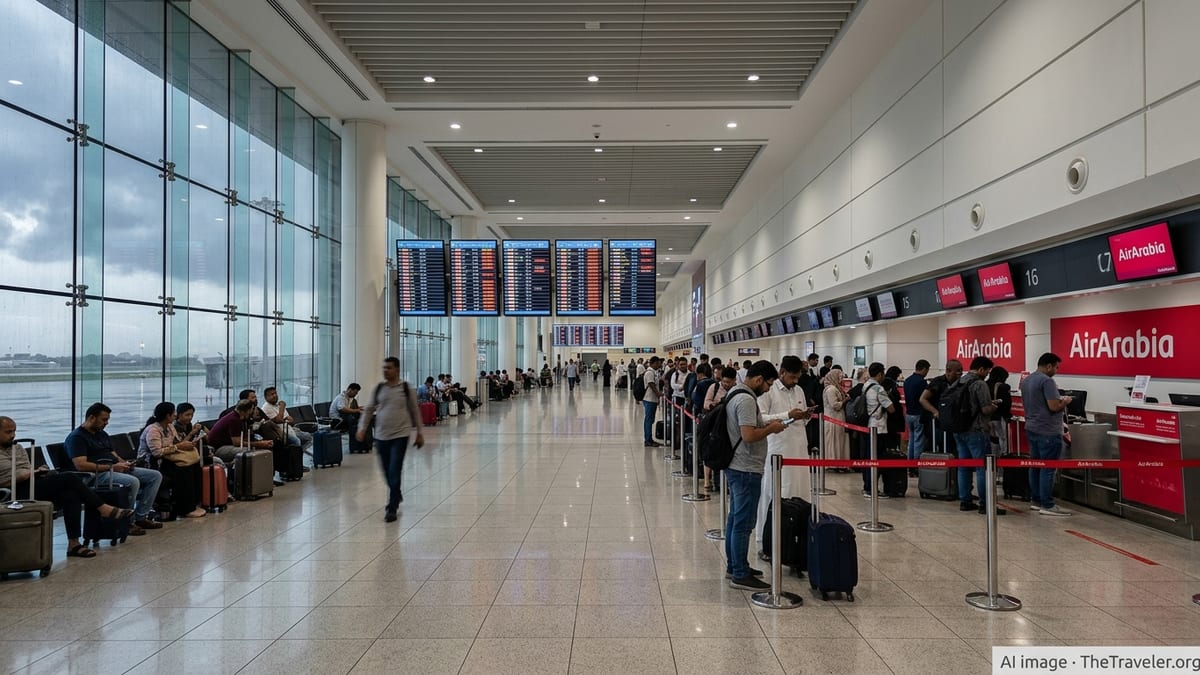
Hundreds of passengers were left waiting in terminals across the United Arab Emirates today as a fresh wave of flight cancellations and delays at Dubai, Ras Al Khaimah and Sharjah disrupted operations for major regional and international carriers.
Get the latest news straight to your inbox!
Fourteen Cancellations, 150 Delays Hit UAE Hubs
Published coverage and live flight tracking data indicate that at least 14 flights were cancelled and around 150 were delayed today across Dubai International Airport, Ras Al Khaimah International Airport and Sharjah International Airport. The disruption has affected a broad mix of regional and international services, catching many travelers off guard at the start of the busy spring travel period.
Operational data reviewed for Dubai show a pattern of rolling delays through the day, with departure boards dominated by extended boarding times and revised departure slots rather than outright suspensions. While the number of fully cancelled services remains limited relative to the usual daily schedule at Dubai, even a small proportion of cancellations quickly cascades through connecting itineraries, leaving transit passengers particularly exposed.
At Sharjah and Ras Al Khaimah, schedules are thinner in normal times, so each cancellation or extended delay has a more visible impact. Several departures in and out of these airports were either pulled from the schedule or retimed by several hours, contributing to a patchwork of irregular operations across the northern emirates.
The uneven pattern of disruption reflects how airlines are still recalibrating networks and crew rosters after weeks of regional airspace restrictions and evolving security assessments. Even as more routes reopen, operational buffers remain tight, meaning relatively small schedule shocks can translate into long waits at the gate.
Emirates, Flydubai, Air Arabia and Others Forced to Adjust
Carriers with major UAE footprints, including Emirates, flydubai, Air Arabia, IndiGo and EgyptAir, all appeared in today’s list of affected services. Publicly available schedules show that Emirates is continuing to operate a reduced network through Dubai, with frequencies and destinations fluctuating day by day as safe routings and airport slots are confirmed.
Flydubai has been running a thinner timetable than usual in recent weeks, and today’s delays further compressed its point to point services from Dubai. Reports indicate that flight times on some routes were extended by rerouting around sensitive airspace, increasing block times and complicating crew scheduling. This has translated into knock on delays for aircraft cycling through multiple rotations in a single day.
From Sharjah, Air Arabia has been rebuilding its operation in phases after earlier suspensions on selected days and routes. While more of its flights are now back in the air, today’s irregular operations show that the carrier is still navigating tight constraints on both aircraft and route planning. Even modest delays on early morning departures can ripple through later services out of Sharjah and Ras Al Khaimah.
Indian low cost giant IndiGo and Egypt’s flag carrier EgyptAir have also been adjusting their Middle East schedules. Media and airline updates over recent days point to a mix of non scheduled and ad hoc flights into the UAE, alongside cancellations on certain city pairs. For travelers, that has meant frequent timetable changes, late night updates and a greater need to monitor flight status right up to departure.
Regional Tensions and Airspace Limits Keep Operations Fragile
Today’s disruption cannot be seen in isolation. It follows several weeks in which regional tensions and temporary airspace closures around parts of the Middle East have forced airlines and airports to rethink routings and capacity. Aviation tracking platforms and recent industry coverage show that carriers into and out of the Gulf have had to cancel or divert flights on short notice on multiple occasions in March.
The immediate impact has been most visible on routes crossing contested or restricted airspace, where longer routings have added fuel burn and pushed aircraft and crew closer to regulatory limits. For hub carriers such as Emirates and partners feeding traffic through Dubai, that has made it more difficult to maintain tightly banked waves of connections, particularly during overnight peaks.
UAE airports and airlines have repeatedly stated in public updates that safety remains the overriding priority, and that schedules would only be restored progressively as conditions allow. Today’s pattern of limited cancellations but extensive delays suggests that operators are trying to preserve as many services as possible while still leaving room for last minute rerouting.
While some travel advisories now describe conditions as more stable than during the height of the recent airspace closures, the irregular status of individual flights indicates that operations remain fragile. A single new restriction or control measure on a key corridor can quickly undo days of careful schedule rebuilding.
Stranded Passengers Face Long Waits and Patchwork Rebooking
For passengers on the ground, the operational complexity translates into long lines at check in counters and customer service desks. Social media posts and traveler reports from Dubai, Sharjah and Ras Al Khaimah today describe crowded terminals, rolling gate changes and repeated boarding announcements as airlines work through rescheduling options.
Most UAE based carriers have published flexible policies throughout the period of disruption, allowing free date changes or refunds when flights are cancelled by the airline. However, publicly available guidance also makes clear that travelers who proactively cancel before an airline modifies or cancels a flight may face more restrictive fare conditions. That distinction has left some passengers choosing to wait at the airport in the hope their original service operates, rather than risk losing refund rights.
Rebooking has also been complicated by high load factors on the flights that are operating. With many services still running at reduced frequency, seats on alternate departures can be scarce, particularly on core routes between the UAE, India and major European gateways. Travelers with urgent onward connections or time sensitive commitments have reported particular difficulty securing same day alternatives.
Travel experts monitoring the situation continue to advise passengers to check live departures and arrivals information directly with airports and airlines before leaving home, and to build in additional time for transit connections through Dubai and Sharjah. Given the fluid environment, even flights that appear “on time” early in the day may ultimately depart late if upstream services encounter delays.
Outlook: Gradual Normalization, But Further Disruptions Likely
Industry commentary suggests that airlines serving the UAE are steadily moving toward fuller schedules compared with the most severe period of disruption in early March. Emirates has recently expanded the number of destinations served from Dubai, while carriers such as Air Arabia and IndiGo are operating more services into Sharjah and Dubai than just a few weeks ago.
Nevertheless, today’s wave of 14 cancellations and around 150 delays across Dubai, Ras Al Khaimah and Sharjah underscores how quickly conditions can deteriorate. With regional geopolitics and airspace controls still in flux, aviation analysts caution that further short notice timetable changes remain a real possibility through the coming weeks.
Travelers planning to route through the UAE are being encouraged to opt for longer connection windows, keep contact details updated with their airlines and monitor booking management tools closely. Those steps cannot prevent a flight from being cancelled or delayed, but they can improve the chances of securing timely rebooking options when disruption does occur.
For now, the situation at UAE airports remains one of cautious recovery rather than full normality. As carriers balance safety, regulatory constraints and commercial pressures, passengers are likely to face a period in which day to day flight status can change rapidly, and flexibility becomes an essential part of any itinerary through the region.