

More news on this day
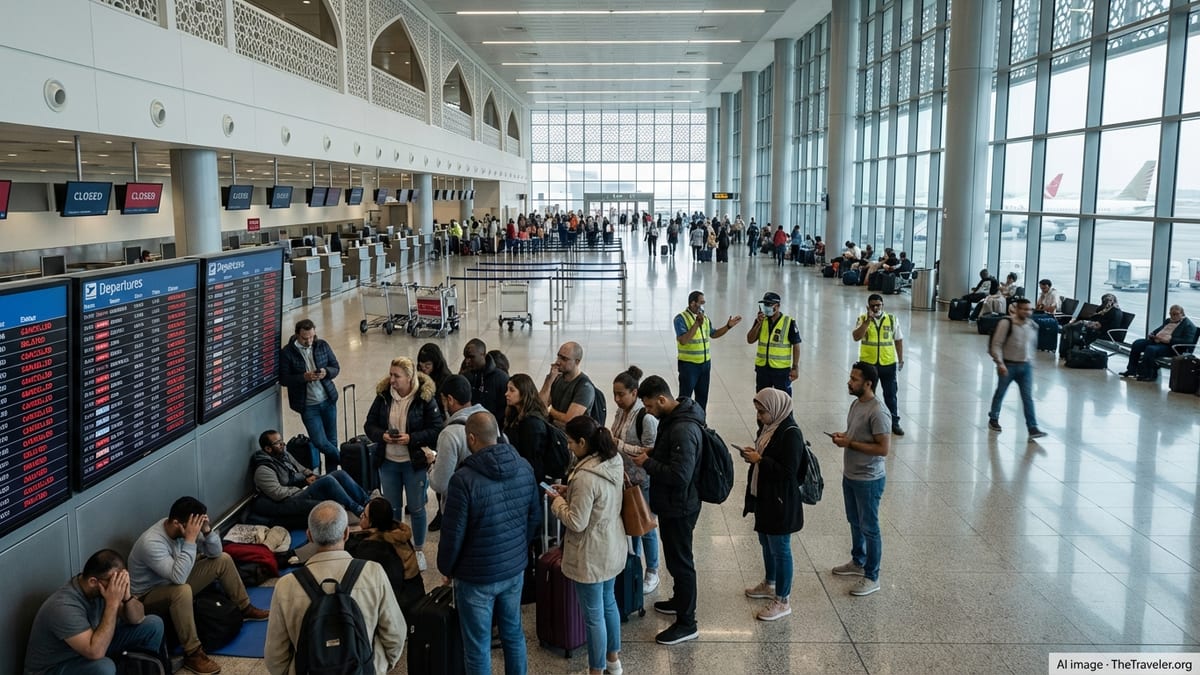
Passengers travelling through Dubai, Sharjah and Ras Al Khaimah faced fresh disruption today as at least 14 flights were cancelled and around 150 delayed across the three UAE airports, affecting services operated by Emirates, flydubai, Air Arabia, IndiGo, EgyptAir and several other regional and international carriers.
Get the latest news straight to your inbox!
Uneven Recovery Meets New Wave of Disruptions
The latest round of cancellations and delays comes just as the Gulf’s aviation sector has been attempting a cautious recovery following weeks of regional tension and intermittent airspace restrictions. Industry analysis for late March showed carriers such as Emirates, flydubai and Air Arabia gradually rebuilding schedules from UAE hubs, while still warning of occasional operational interruptions linked to security conditions and weather variability.
Operational data and airport boards today indicated that Dubai International, Sharjah International and Ras Al Khaimah International were all operating, but on an irregular basis. Flights to and from key regional markets, including parts of the Middle East and South Asia, continued to show a pattern of last minute rescheduling, extended ground times and rolling gate changes.
While the current total of 14 cancellations is modest relative to pre-crisis daily traffic volumes at Dubai International alone, the broader tally of roughly 150 delayed movements illustrates how even a limited number of schedule changes can cascade across tightly timed hub operations. Passengers on connecting itineraries were particularly exposed, with missed onward flights and unplanned overnight stays reported across multiple carriers.
Impact Spreads Across Major Gulf and South Asian Carriers
Publicly available flight trackers and airport status pages showed disruptions affecting a broad mix of airlines. Emirates, which has been steadily rebuilding its long haul network from Dubai, saw selected departures and arrivals marked as cancelled or significantly delayed, especially on routes interlining with other Middle Eastern gateways where airspace and slot availability remains constrained.
Flydubai, whose low cost network spans the Gulf, South Asia and parts of Eastern Europe, continued to operate the bulk of its schedule but flagged a series of delayed departures from Dubai. The airline has in recent weeks maintained passenger advisories that encourage travellers to check real time flight status and operational updates before heading to the airport, reflecting the continued volatility in regional operations.
From Sharjah, Air Arabia’s services were similarly uneven, with a mix of on time departures and extended delays. The carrier has been running a reduced schedule to several high demand destinations following earlier suspensions and capacity limits related to airspace congestion, which means each additional disruption has an outsized effect on passenger flows and available rebooking options.
Indian budget carrier IndiGo and Egypt’s flag carrier EgyptAir also appeared among the affected operators on UAE routes today. Recent advisories from Indian airlines for Middle East flights have already highlighted selective suspensions and curtailed frequencies to cities such as Ras Al Khaimah, Sharjah and Dubai, leaving travelers with fewer alternatives when irregular operations occur.
Security Tensions and Weather Keep Schedules Fragile
Today’s difficulties are unfolding against the backdrop of continuing regional security concerns that have periodically disrupted air traffic across the Gulf since late February. Risk assessments published in recent days describe a complex environment in which missile and drone incidents, temporary airspace closures and rerouted corridors have forced airlines to adjust timings, increase flight times and in some cases suspend certain routes altogether.
Although UAE airports have progressively reopened to commercial traffic under heightened safety protocols, analysts note that the overall system remains fragile. Limited spare capacity in both aircraft and crews, plus the need to work around shifting no fly zones, means that any new constraint, whether operational or meteorological, can trigger a chain reaction of delays stretching across several days.
Weather has added an additional layer of uncertainty this week. Forecasts from the national meteorological authorities point to scattered rain, periods of low cloud and morning fog through the first week of April, with warnings of reduced visibility on some routes. Such conditions can slow arrivals and departures at busy hubs, prompting short term flow control measures and further testing the resilience of already stretched schedules.
What Today’s Numbers Mean For Travelers
For individual passengers, the distinction between a cancellation and a delay of several hours often makes little difference to the overall experience. With at least 14 outright cancellations across Dubai, Sharjah and Ras Al Khaimah today and around 150 delayed operations, many travelers have faced missed connections, long queues at customer service desks and difficulty securing timely alternative flights in an already busy holiday and business travel period.
Industry practice in the current environment has increasingly shifted toward advising passengers not to rely solely on printed or pre trip itineraries. Airlines serving the UAE, including Emirates, flydubai, Air Arabia and IndiGo, have been directing customers to use official websites and mobile apps for the most current information on departure times, gate changes and disruption handling options such as rebooking or refunds.
Travel forums and social media posts today highlighted the practical challenges of navigating fragmented information. In some instances, airline channels and airport displays showed differing status for the same flight, reflecting the rapid evolution of operational decisions as airspace permissions, crew duty limits and weather conditions changed throughout the day.
For those with imminent travel to or through the UAE, the pattern emerging from today’s disruptions suggests the need for flexible itineraries, additional connection time where possible, and a close eye on real time status updates. While the overall trajectory for Gulf aviation still points toward gradual normalization, the combination of regional tensions, unsettled weather and tight capacity means that sudden bouts of cancellations and delays, like those seen today, remain a significant risk.