

More news on this day
Thousands of travellers across the United Arab Emirates are facing severe disruption as Dubai, Abu Dhabi and Sharjah airports grapple with 462 flight cancellations and 321 delays linked to the escalating conflict in the wider Middle East, hobbling key carriers including Emirates, flydubai, Etihad and Qatar Airways.
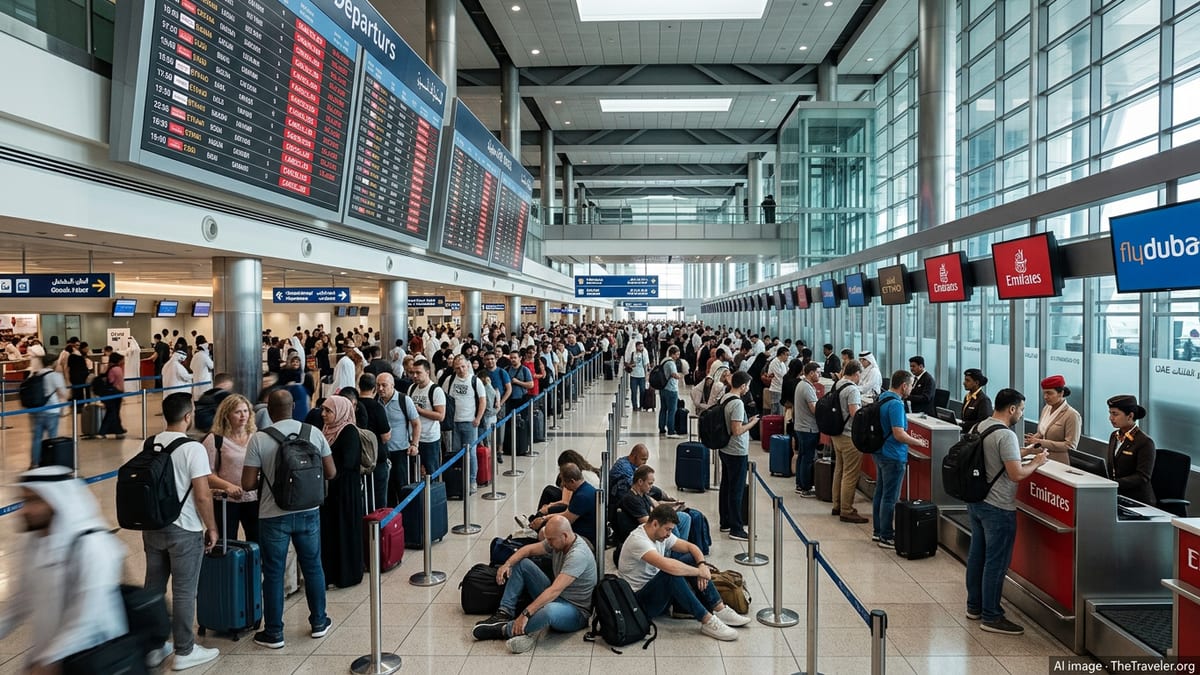
Major Gulf Hubs Struggle Under Unprecedented Strain
The UAE’s three primary international gateways are working under exceptional operating conditions after regional airspace closures and security restrictions forced widespread schedule cuts. Aviation and airport authorities have confirmed that only a limited number of commercial services are running, with priority given to repatriation, essential connectivity and cargo operations.
Operational data compiled from airline schedules and airport movements indicate that a combined 462 flights to and from Dubai International, Abu Dhabi’s Zayed International and Sharjah International have been cancelled during the current phase of the crisis, with a further 321 departures and arrivals experiencing significant delays. The knock-on impact has rippled across long-haul networks connecting Europe, Asia, Africa and the Americas through the Gulf’s hub-and-spoke model.
Dubai International, one of the world’s busiest international airports, has seen the largest single share of cancellations, as Emirates and flydubai trim or temporarily suspend services across affected corridors. Abu Dhabi and Sharjah, home to Etihad Airways and Air Arabia, have faced similar pressure as flight plans are rewritten around closed or restricted skies across parts of the Middle East.
Airspace constraints have compelled airlines to re-route aircraft over longer corridors where possible, while many services remain on hold entirely. Even where flights operate, passengers report extended journey times, missed connections and last-minute gate changes as airlines adjust operations in real time.
Flag Carriers Cut Schedules and Prioritise Stranded Passengers
Emirates, Etihad, flydubai, Qatar Airways and other regional airlines have rolled out reduced schedules, emergency waivers and rolling travel advisories as they attempt to stabilise operations. Emirates has confirmed a scaled-back programme from Dubai, with a focus on repatriating stranded travellers and maintaining a skeleton network on core routes while wider airspace restrictions remain in place.
Etihad Airways in Abu Dhabi has followed a similar pattern, extending suspensions on many scheduled departures before gradually reintroducing a limited number of flights to key destinations in Europe, Asia and the wider Middle East. Flydubai has consolidated frequencies and temporarily halted selected regional services, while Sharjah-based Air Arabia has largely focused on limited departures once its initial suspensions were lifted.
Qatar Airways, which funnels a significant share of regional and intercontinental traffic through Doha, has also been drawn into the disruption as route structures across the Gulf are reworked. With multiple carriers sharing overlapping markets and air corridors, changes implemented by one major airline can have immediate consequences for others, compounding the complexity of recovery planning.
Across the board, airlines have urged customers not to proceed to airports unless they have received a direct confirmation that their flight is operating. Waiver policies typically allow for free rebooking or refunds where flights have been cancelled, though travellers report long waits to reach call centres and limited availability on alternative dates due to high demand and reduced capacity.
Thousands of Travellers Stranded Across the UAE
The acute disruption has left thousands of travellers marooned in the UAE and in transit points worldwide. Passengers describe spending nights on terminal floors or in crowded airport hotels as they wait for scarce seats on outbound services, while others remain stuck overseas, unable to reach the UAE because inbound flights are grounded or heavily curtailed.
At Dubai International, images and eyewitness accounts depict departure halls that swung from heavily congested at the onset of the closures to markedly quieter once airlines began actively discouraging non-ticketed or unconfirmed passengers from arriving at the airport. Those already airside have been processed under contingency protocols, while new arrivals with unconfirmed flights are being advised to delay travel to the terminals.
Abu Dhabi’s Zayed International and Sharjah International have reported similar scenes, with stranded tourists, expatriate workers and residents attempting to rearrange onward journeys. Some travellers have opted to route through alternative hubs in Oman or Saudi Arabia, while others have secured seats on charter or special flights organised by employers or travel management companies.
Travel advisers note that the disruption has been particularly painful for passengers on complex itineraries involving multiple connections, as a single cancellation in the Gulf can invalidate a sequence of onward flights. Families with children, elderly travellers and those with limited financial resources are especially vulnerable when forced to pay for unexpected extra nights of accommodation and daily living expenses.
Gradual, Uneven Recovery as Limited Flights Resume
While the overall picture remains highly fluid, the past 48 hours have seen limited signs of recovery as UAE authorities and airlines coordinate a phased resumption of services. Dubai International, Abu Dhabi’s Zayed International and Sharjah International have each restarted select passenger flights, with schedules adjusted day by day based on security assessments and airspace availability.
Industry sources indicate that carriers are initially prioritising routes with the highest concentration of stranded passengers, as well as strategically important links to major European and Asian hubs. Freight capacity is also a key consideration, given the volume of cargo that usually travels in the bellies of passenger jets operating via the Gulf.
Despite these early steps, aviation analysts warn that the backlog created by 462 cancellations and 321 delays will take days, and potentially longer, to absorb. Aircraft and crew are often out of position, slotted departure times must be renegotiated with air traffic control, and airlines must rebuild carefully sequenced rotations while ensuring regulatory compliance on crew duty hours and maintenance checks.
The recovery is further complicated by the possibility of additional, short-notice airspace changes if the security situation shifts again. Airlines are therefore planning conservatively, resisting pressure to restore full schedules until they are confident that newly filed routes can operate consistently.
What Travellers Should Do Next
With conditions changing rapidly, industry experts stress that the most important step for travellers is to verify their flight status directly with their airline before leaving for the airport. Mobile apps and airline notifications are being updated frequently, while airport websites and customer service channels provide additional confirmation on whether specific flights are operating, delayed or cancelled.
Passengers whose flights are among the 462 cancellations should receive rebooking or refund options, though processing may be slow due to the volume of cases. Travellers are encouraged to keep all receipts for additional accommodation, meals and transport, in case they are able to claim reimbursement via travel insurance or, where applicable, under consumer protection regulations.
For those not yet departed, some travel agents recommend postponing non-essential trips through the region until schedules stabilise and more predictable patterns of operation emerge. Where travel cannot be deferred, booking flexible tickets, avoiding tight connection windows, and considering alternative routings that bypass the most constrained airspace may help reduce risk.
Although the UAE’s aviation sector is experienced in managing large-scale disruptions, the scale and geopolitical nature of the current Middle East conflict means uncertainty will likely continue to affect flight operations in the short term. For now, patience, flexibility and close attention to official updates remain vital for anyone planning to pass through Dubai, Abu Dhabi or Sharjah.