

More news on this day
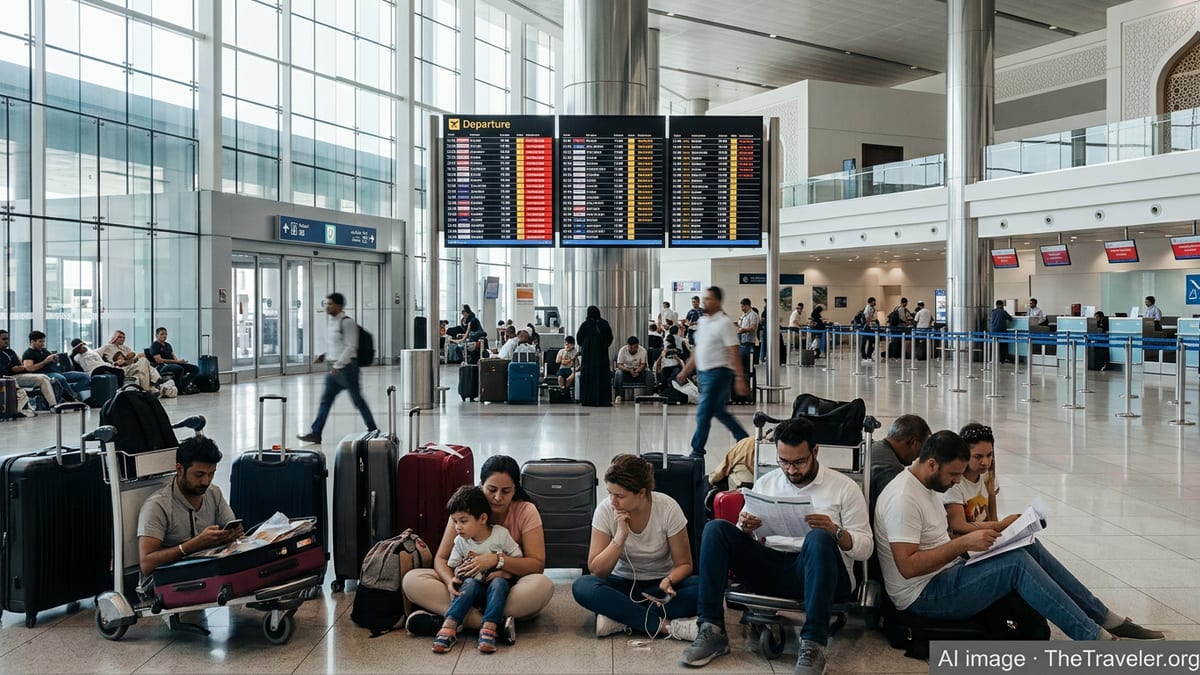
Hundreds of travellers were left stranded across the United Arab Emirates today as Dubai, Abu Dhabi and Sharjah airports cancelled 190 flights and delayed a further 286, sending shockwaves through already fragile global air networks.
Major Gulf Hubs Hit by Fresh Wave of Disruptions
The latest wave of cancellations affected services at Dubai International Airport, Abu Dhabi’s Zayed International Airport and Sharjah International Airport, three of the region’s busiest hubs. The scale of today’s disruption underscores how vulnerable tightly wound airline schedules remain after weeks of turbulence in Middle East airspace.
Airport and airline operations teams spent the morning consolidating schedules, reassigning aircraft and crew, and prioritising stranded passengers with earliest booking dates. Despite these efforts, departure boards across the three airports showed long columns of red and amber status updates as cancellations and rolling delays continued through the afternoon.
While authorities have described current operations as “exceptional” and limited in scope, today’s figures highlight the distance still to go before normality returns. Airlines are attempting to rebuild their networks while navigating evolving airspace restrictions and stringent safety assessments, leaving travellers facing last minute changes and uncertain onward connections.
Capacity constraints at these key transit hubs have knock-on effects far beyond the Gulf. With Dubai and Abu Dhabi acting as vital connectors between Europe, Asia, Africa and Australasia, a single cancelled rotation can cascade across multiple continents, compounding delays and forcing emergency rescheduling for carriers and passengers alike.
Etihad, Emirates and IndiGo Among Most Affected
National carriers Etihad Airways and Emirates were among the hardest hit by today’s disruptions, alongside Indian low cost giant IndiGo, Turkish carrier Pegasus Airlines, Egypt’s flag carrier EgyptAir and several regional operators. Many of these airlines rely heavily on the UAE’s hubs for both origin and transfer traffic, magnifying the operational impact when schedules are cut back.
Etihad, based in Abu Dhabi, has focused much of its limited capacity on reuniting transit passengers with onward flights and operating selective long haul sectors, but a number of today’s cancellations involved previously rescheduled services that could not be operated as planned. Travellers in mid journey, particularly those connecting between South Asia, Europe and North America, faced extended waits in airports and hotels as the airline worked through rebooking backlogs.
In Dubai, Emirates has continued to rebuild its network from a reduced base, but the carrier was still forced to cancel and retime multiple departures today as aircraft and crews remained out of position from earlier disruptions. Passengers connecting through the airline’s global hub reported abrupt schedule changes and tight connection windows, with some flights leaving significantly earlier or later than originally advertised.
IndiGo, Pegasus Airlines and EgyptAir, which all operate dense schedules linking the UAE with South Asia, Turkey, North Africa and beyond, also recorded a spate of cancellations and multi hour delays. Their reliance on narrow connection windows at UAE hubs meant that even minor timetable changes rippled quickly through their networks, leaving travellers scrambling to secure alternative routings.
Passengers Urged Not to Travel to Airports Without Confirmation
Airport authorities in Dubai, Abu Dhabi and Sharjah reiterated that passengers should not travel to the airport unless they have been directly contacted by their airline with a confirmed departure time. With operating capacity reduced and terminal access in some areas still restricted, officials warned that turning up without a confirmed booking risks adding to congestion without improving a traveller’s chances of boarding a flight.
Instead, travellers are being advised to monitor official airline channels and apps closely, with many carriers issuing rolling schedule updates throughout the day. Customer service teams are prioritising passengers whose flights have been cancelled outright, working to rebook them on the limited services now operating or on partner airlines where possible.
For those already at the airports, temporary assistance centres and additional staff have been deployed to manage queues, arrange hotel accommodation where required and provide food and basic amenities to those facing long waits. However, capacity limits and the volume of affected travellers have left some passengers reporting lengthy lines at service desks and uncertainty over when they will be able to depart.
Travel agents in key source markets, particularly in South Asia and Europe, reported a sharp rise in calls from customers seeking clarification or alternative itineraries. In many cases, options remain constrained by reduced flight frequencies across the wider Middle East region, leaving little flexibility for last minute changes.
Hotels, Ground Transport and Tourism Plans Disrupted
The disruption radiated beyond the airport terminals into the UAE’s broader tourism and hospitality ecosystem. Hotels close to Dubai International, Zayed International and Sharjah airports reported elevated occupancy as airlines arranged accommodation for stranded transit passengers and independent travellers booked extra nights while they waited for confirmed flights.
Tour operators and destination management companies fielded cancellation and amendment requests from visitors whose carefully planned itineraries had been thrown off by missed arrivals or delayed departures. Excursions, desert safaris and city tours often had to be rescheduled at short notice, while some guests opted to cut trips short once outbound seats became available.
Ground transport networks also felt the strain, with last minute surges in demand for taxis, ride hailing services and intercity transfers between Dubai, Abu Dhabi and Sharjah as travellers tried to reposition for scarce seats from neighbouring airports. In some cases, passengers accepted flights from alternate UAE cities, prompting late night and early morning journeys on already busy highways.
Retailers and food and beverage outlets in terminal buildings saw mixed impacts. While extended dwell times meant more customers remained airside for longer, spending patterns shifted as many stranded travellers prioritised essentials, such as meals and phone chargers, over discretionary shopping. Some premium lounges temporarily relaxed access rules to accommodate passengers facing overnight stays in the terminal.
What Travellers Should Do if Their Flight Is Affected
With schedules still volatile, aviation authorities and airlines are encouraging travellers to adopt a conservative approach to any upcoming journeys through Dubai, Abu Dhabi or Sharjah. The most consistent message is to check flight status repeatedly in the 24 hours before travel and to rely only on direct airline communications, rather than third party apps or screenshots shared on social media.
Passengers whose flights are cancelled are typically being offered free rebooking on the next available service, travel vouchers or, in some cases, refunds, depending on fare rules and the carrier. However, with seat capacity still constrained, the next available flight may be several days away, particularly on popular long haul routes linking the Gulf with Europe and South Asia.
Travellers already in the UAE who hold flexible tickets or can postpone non essential trips are being advised to consider delaying their departure until airlines publish more stable schedules. Those embarking on complex itineraries involving multiple connections may wish to discuss alternative routings with their carrier, including options via hubs outside the currently affected region.
As airlines gradually restore capacity over the coming days, operational stability is expected to improve, but today’s cancellation and delay figures underline that the recovery remains fragile. For now, patience, flexibility and constant communication with airlines will be essential for anyone planning to pass through the UAE’s major airports.