

More news on this day
Emirates is diverting and restructuring segments of its long-haul network after fuel supply and operational disruptions at Dubai International Airport forced the UAE carrier to rework how jets refuel and route through its global hub.
Get the latest news straight to your inbox!
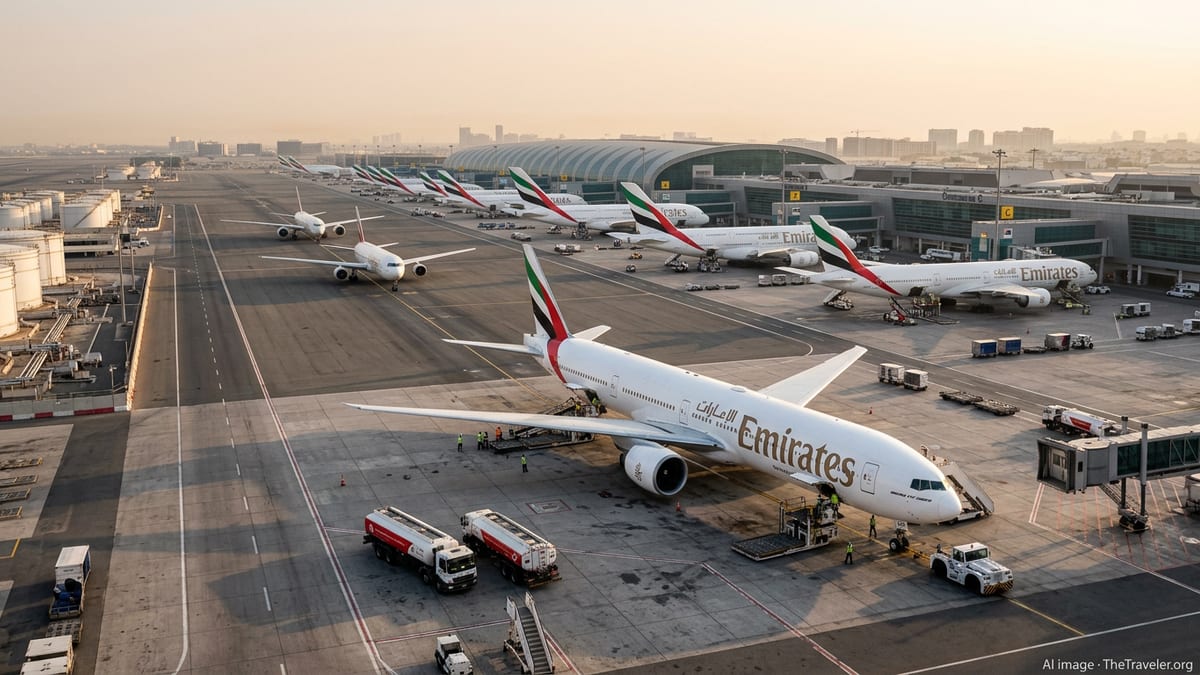
Fuel Supply Constraints Hit Dubai’s Global Hub
Dubai International Airport, one of the world’s busiest intercontinental hubs, has entered a period of constrained operations following recent regional conflict that damaged aviation and energy infrastructure. Publicly available information indicates that a drone strike and subsequent fire near fuel facilities contributed to short-term interruptions in jet fuel availability and handling capacity at and around the airport.
In parallel, broader disruptions to Gulf oil output and refining, combined with elevated global jet fuel prices, have tightened supply chains feeding major aviation hubs, including Dubai. Industry analyses describe the current shock as one of the most severe fuel-related challenges facing airlines since the pandemic, with refiners, storage operators, and carriers all recalibrating flows.
The resulting constraints have not fully halted operations at Dubai International, but they have reduced flexibility. Airport updates and aviation advisories describe a patchwork reopening, with limits on flight numbers and ground handling capacity, and an emphasis on prioritising specific long-haul and repatriation services as fuel and airspace conditions allow.
For Emirates, which typically relies on Dubai as a high-frequency, single-hub model, any reduction in refuelling and turnaround capacity at DXB immediately reverberates across its global network, particularly on routes that require maximum fuel loads for ultra-long sectors.
Emirates Diverts and Restructures Long-Haul Flights
To keep widebody aircraft moving while fuel and operational constraints persist in Dubai, Emirates has begun diverting and restructuring portions of its long-haul flying. Airline communications and flight-tracking data show a pattern of selected services being routed via alternative hubs where refuelling is more reliable, including airports across the Gulf, Red Sea region, and parts of Europe.
On some intercontinental routes, aircraft are operating with technical stops, effectively splitting what would normally be a nonstop Dubai–long-haul sector into two stages. This allows the airline to manage fuel uplift more conservatively at DXB while topping up tanks at airports with less strained supplies. In other cases, long-haul departures from Dubai have been reduced in frequency, with priority given to key trunk routes and repatriation demand.
Operational updates from regional travel management firms and freight specialists also point to increased use of nearby hubs such as Muscat, Jeddah, and selected European gateways as intermediate points for passengers and cargo that would typically transit exclusively via Dubai. For travellers, the result is longer journey times and less predictable routings, even when flights remain available.
These tactical adjustments mark a significant shift for Emirates, which built its brand on seamless, high-capacity connections through a single mega-hub. The present crisis is forcing a more fragmented, multi-stop model, at least temporarily, as the carrier trades scheduling simplicity for operational resilience.
Impact on Passengers, Schedules, and Fares
Passengers with long-haul itineraries touching Dubai are experiencing a mix of outright cancellations, rolling delays, and rerouted journeys. Aviation data services tracking the Middle East note that thousands of flights have been cancelled or diverted since late February, with connecting flows between Asia, Europe, Africa, and the Americas particularly affected.
Travel advisories circulating among corporate travel managers and consumer platforms emphasise that even flights listed as operating may be subject to last-minute schedule changes, aircraft swaps, or additional technical stops. Because crews and aircraft are out of their normal rotations, the network remains vulnerable to knock-on delays that can ripple for days.
The crisis is also feeding through to fares. Reports from airline analysts and booking platforms show sharp increases on alternative routings that bypass Dubai entirely, as well as on limited Emirates and partner services that are still operating. Some Asia–Europe and Asia–North America journeys are now taking significantly longer as they detour around restricted airspace and juggle fuel considerations, increasing operating costs that are often passed on to travellers.
Passenger compensation is anticipated to be constrained, as carriers are framing the disruption as the result of extraordinary geopolitical events outside their direct control. However, many airlines, including Emirates, are offering flexible rebooking policies, waiving some change fees and allowing travellers to alter routings or defer trips as the situation evolves.
Operational and Financial Pressure on Emirates
The combination of fuel supply constraints, regional airspace closures, and infrastructure damage is placing considerable operational and financial pressure on Emirates. Industry commentary notes that the airline has already absorbed several days of full or near-full suspension of regular Dubai operations, followed by a cautious, phased restart with a reduced schedule.
Each diverted long-haul flight incurs extra fuel burn, handling charges, and crew costs, particularly when aircraft must reposition empty or operate non-revenue sectors to rebalance the network. Analysts estimate that rerouting long-haul flights by adding hours to each sector can add tens of thousands of dollars in additional fuel and operating expense per rotation, at a time when global jet fuel benchmarks are already elevated.
The disruption is also testing Emirates’ customer service systems and loyalty strategy. Social media posts and traveller forums reflect both frustration and understanding as the airline works through large backlogs of stranded passengers seeking rebooking or refunds. Maintaining brand trust during this period may prove as critical as managing the immediate operational crisis.
Nevertheless, aviation consultants point out that Emirates entered the crisis with a relatively strong balance sheet and a diversified fleet of A380 and Boeing 777 aircraft, giving it more options to consolidate capacity, upgauge on key routes, and restore frequencies once fuel and airspace conditions stabilise.
Broader Implications for Gulf Aviation and Travel
The fuel-related disruption at Dubai International is unfolding against a backdrop of wider airspace closures and regional security tensions, magnifying its impact on global aviation. Gulf carriers have traditionally leveraged open skies and plentiful fuel to dominate long-haul transit markets connecting Asia, Europe, and the Americas. The current crisis underscores how exposed that model is to shocks affecting energy infrastructure and overflight corridors.
Industry bodies and economic analysts are already drawing comparisons with earlier episodes when conflicts forced airlines to reroute around closed airspace over Russia or parts of the Middle East. In each case, airlines faced longer flight times, higher fuel burn, and compressed margins. The present situation adds the additional complication of physical damage to fuel infrastructure in and around a major hub, raising questions about redundancy and contingency planning.
For the UAE, where aviation is a pillar of economic strategy and tourism development, sustained disruption at Dubai International could weigh on visitor numbers, hotel occupancy, and conference activity if not resolved relatively quickly. However, the country’s parallel investment in alternative hubs, including Dubai World Central and expanded capacity at other regional airports, may help absorb some of the strain if those facilities can support increased refuelling and transit operations.
Travel stakeholders are watching closely for signs of stabilisation in fuel supply chains, airspace permissions, and security risk assessments. Until those elements improve, Emirates and its regional peers are expected to continue relying on diversions, route adjustments, and limited schedules, leaving long-haul passengers facing a period of sustained uncertainty when flying through the Gulf.