

More news on this day
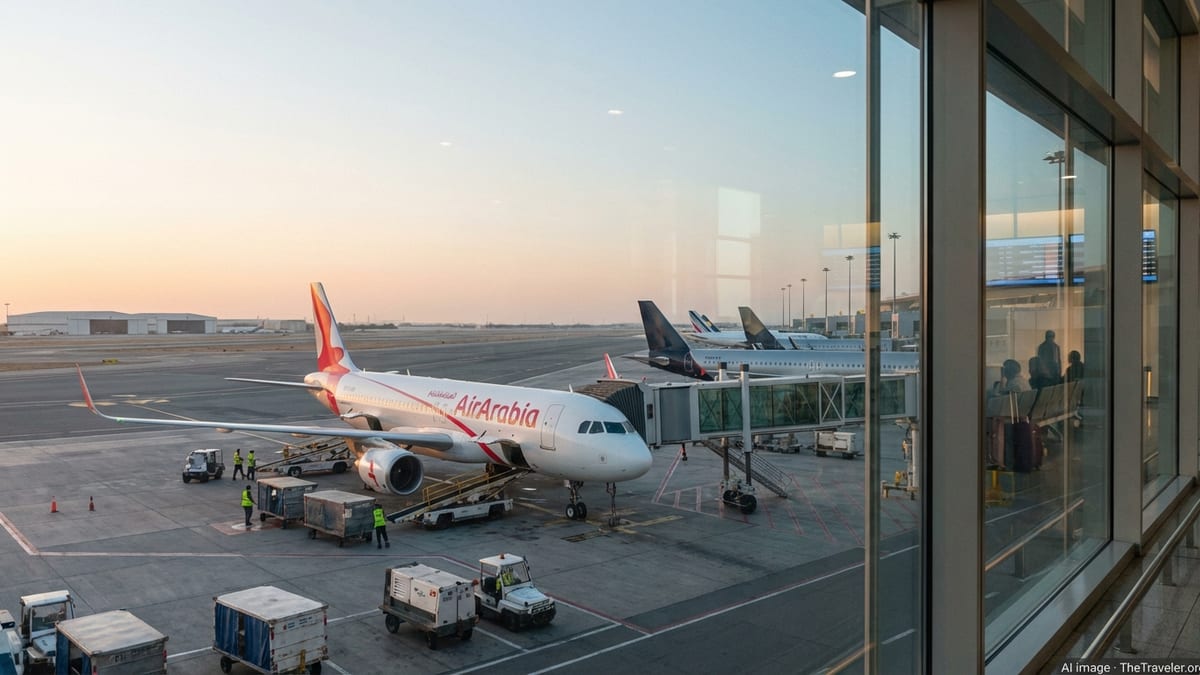
Air travel to and from the United Arab Emirates remains severely disrupted, with Emirates, Flydubai, Etihad, Air Arabia and other carriers still cancelling and reshuffling flights on key routes linking Dubai and Abu Dhabi to cities across Europe, Asia and Africa.
Get the latest news straight to your inbox!
Ongoing Disruptions Hit a Wide Network of Routes
Published coverage from aviation and travel outlets indicates that schedules at Dubai International Airport and Abu Dhabi International Airport are still far from normal at the end of March 2026. While traffic has gradually increased since the most intense regional airspace closures in late February and early March, a mix of cancellations, diversions and rolling delays continues to affect passengers.
Recent reports show Flydubai grounding multiple services and triggering more than one hundred delays in a single day, with cities such as Budapest, Alexandria, Colombo, Tunis and Frankfurt among those affected. Further disruptions are being reported on links to Amsterdam, Cairo, Entebbe, Larnaca, Venice, Istanbul, Kabul, several Saudi Arabian destinations and major South Asian and East Asian hubs including Islamabad, Karachi, Lahore, Tokyo, Manila, Shanghai and Beijing.
Network adjustments are not limited to Flydubai. Emirates, Etihad and Air Arabia have all been operating reduced or reconfigured schedules in recent weeks, prioritising certain trunk routes while still suspending or thinning out others. Flight-tracking data cited in international media shows overall frequencies from the UAE dropping sharply in early March before climbing back only gradually.
The cumulative impact is being felt globally. Because Dubai and Abu Dhabi function as major connecting hubs between Europe, Africa, Asia and Oceania, a cancellation or delay on a UAE sector often leads to missed onward connections in cities as far apart as Auckland, Hong Kong, Manchester, Johannesburg and New York.
Security Tensions and Operational Constraints Weigh on Airlines
The lingering disruptions are closely linked to the wider security crisis in the Gulf region. Open-source reporting on the recent conflict involving Iran and several Gulf states details repeated missile and drone incidents, including strikes that damaged infrastructure in and around Dubai. Dubai International Airport, one of the world’s busiest hubs for international travel, was forced to curtail operations as a result of nearby impacts and precautionary closures of airspace.
Analyses cited in regional and international media indicate that major Middle Eastern carriers such as Emirates, Etihad, Flydubai, Qatar Airways and Air Arabia saw flight numbers fall close to zero in the immediate aftermath of the first large-scale strikes on 28 February. Subsequent days brought a cautiously managed restart focused on limited repatriation services and a handful of trunk routes, rather than a rapid return to full commercial schedules.
Even as more flights return, airlines are operating within tighter constraints. Rerouted flight paths to avoid conflict zones have increased block times and fuel burn, while temporary slot restrictions at key hubs have limited how many arrivals and departures can be handled each hour. Carriers are therefore trimming frequencies, consolidating services and in some cases cancelling routes outright when operational complexity or demand weakness makes them difficult to sustain.
This environment has also pushed airlines to hold more aircraft and crews on standby rather than fully deploying them, which in turn reduces the margin for recovery when weather, technical issues or further security alerts arise. The result for passengers is an unusually fragile network in which a single disruption can cascade rapidly across multiple continents.
Selective Restarts on Flagship Routes, Continued Gaps Elsewhere
In the past three weeks, Emirates and Etihad have signalled a cautious restoration of their global networks. Publicly available timetables and airline communications show Emirates moving from a skeleton operation back toward a broad long-haul schedule, including repatriation and limited commercial flights to cities such as Amsterdam, Cairo, Colombo and Hong Kong. Similar patterns are visible at Etihad, which has outlined a restricted but growing list of destinations from Abu Dhabi that again includes Amsterdam, Cairo, Colombo, Hong Kong and Lahore among many others.
Despite those positive developments, capacity is still below pre-crisis levels on several corridors. Travel industry bulletins and schedule snapshots highlight continued cancellations or ad hoc operations on some services linking the UAE with secondary European cities such as Budapest and with regional points around the Middle East and North Africa. Some flights appear only intermittently, while others remain absent from booking systems.
Low-cost and regional operators, including Air Arabia, are also adjusting their networks. Although Sharjah-based services have resumed on many routes, the carrier continues to publish advisories about schedule changes, particularly on flights that rely on stable overflight permissions or close coordination with airports in neighbouring states. This creates an uneven picture where some markets enjoy near-normal connectivity while others still see limited or no service.
Industry observers suggest that airlines are prioritising routes with strong point-to-point demand or high-yield connecting traffic, while remaining cautious about thinner leisure destinations until geopolitical risks and airspace restrictions ease further. That dynamic helps explain why major hubs like Amsterdam, London and Hong Kong have reappeared more quickly than smaller or purely seasonal destinations.
Passenger Impact: Cancellations, Rebookings and Long Waits
For travellers, the most visible effects are last-minute cancellations and extended waiting times. Coverage from aviation-focused publications describes Flydubai passengers facing sudden groundings of several flights on the same day, leading to disrupted itineraries across Europe, North Africa and South Asia. Similar experiences have been reported by customers of other UAE-based and foreign airlines that transit through Dubai or Abu Dhabi.
Airlines have responded with a mix of flexible policies and practical guidance. Flydubai’s latest public advisories urge customers not to travel to the airport unless their flight shows as confirmed, and to rely on official digital channels for rebooking information. Emirates and Etihad have implemented temporary waivers for date and route changes on affected tickets, although the availability of alternative flights remains limited on some days and routes.
Given the reduced number of services and the ongoing adjustments to timetables, rebookings can sometimes stretch over several days, especially for long-haul journeys that depend on scarce connection options. Travellers connecting between Europe and Asia via the UAE, for example, may find that a cancelled Dubai to Amsterdam leg leaves them with few immediate alternatives, particularly when onward flights from Amsterdam or other European hubs are already heavily booked.
Travel experts quoted in consumer coverage advise passengers to monitor flight status frequently, keep contact details up to date in reservations, and consider contingency plans such as routing through alternative hubs if their schedule is inflexible. They also warn that airport conditions can change quickly, with queues lengthening when multiple delayed flights are cleared for departure at once.
Outlook: Gradual Normalisation but Persistent Uncertainty
Despite the ongoing turbulence, there are signs of gradual improvement. Social media updates and community flight trackers followed by frequent flyers in the Gulf show Emirates operating dozens of departures a day from Dubai, with enthusiasts noting that the carrier expects to restore most of its pre-crisis network in the near term if regional airspace remains open. Etihad and Flydubai are following similar paths, incrementally rebuilding their schedules as conditions allow.
Nonetheless, the overall outlook remains highly sensitive to geopolitical developments. Analysts cited in international business and travel media stress that any further escalation of regional tensions or additional airspace closures could quickly reverse recent gains, forcing airlines back into emergency schedules dominated by repatriation and essential services. Fuel price volatility and insurance costs linked to operating near conflict zones add further layers of uncertainty.
For the coming weeks, passengers planning to travel between the UAE and affected destinations such as Amsterdam, Budapest, Colombo, Alexandria, Auckland, Lahore, Cairo and Hong Kong are being encouraged by publicly available guidance to build in flexibility, avoid tight connections and remain prepared for short-notice schedule changes. While the direction of travel is toward normalisation, the experience of flying through Dubai or Abu Dhabi in late March 2026 is still markedly less predictable than it was just a few months ago.