

More news on this day
A fast‑moving blizzard battering the US East Coast has triggered a cascade of flight cancellations by Emirates, Etihad, United, Saudia and other major airlines, disrupting at least 20 services linking the United Arab Emirates with New York’s JFK, Newark, Boston, Jeddah, Hong Kong and other global hubs and stranding scores of passengers across multiple continents.
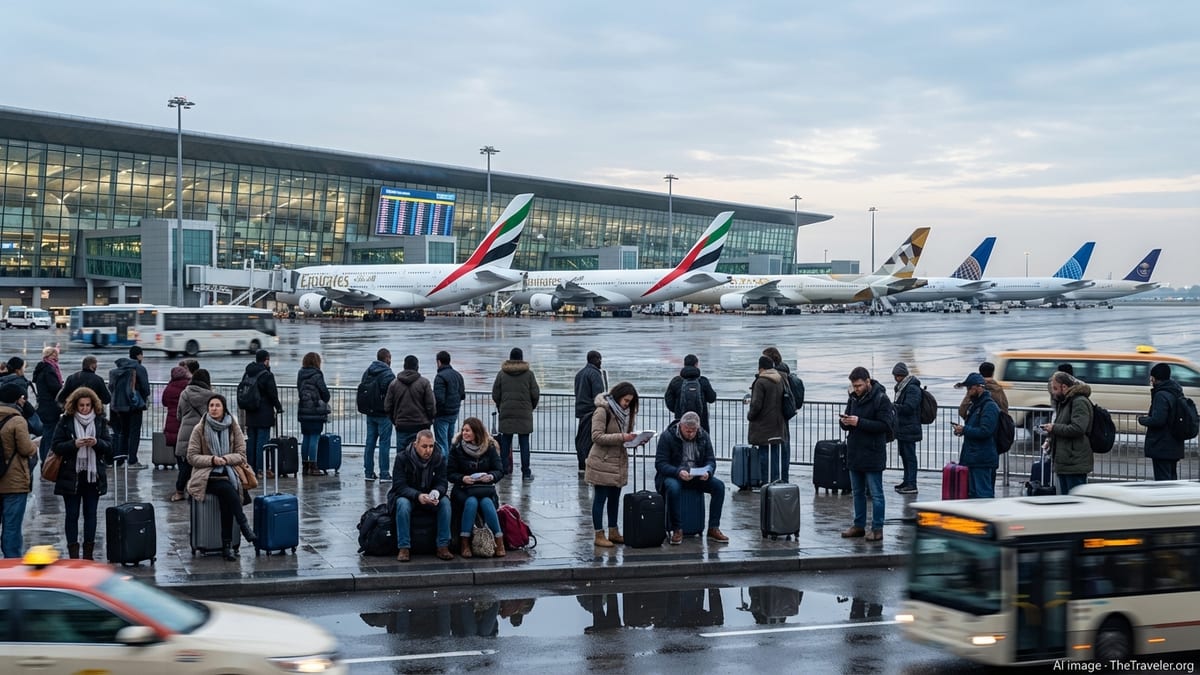
Severe US Winter Storm Sends Shockwaves Through UAE Flight Schedules
The latest round of travel turmoil stems from a powerful winter storm sweeping across the northeastern United States, where authorities have declared states of emergency and imposed travel bans in some areas as heavy snow, high winds and poor visibility cripple transport networks. New York City, Newark and Boston have been particularly hard hit, with airports struggling to keep runways open and ground operations moving as blizzard conditions intensify.
With conditions deteriorating on the ground and in the airspace above the northeastern corridor, carriers have opted to preemptively cancel and consolidate long haul services rather than risk extended airborne holding patterns, diversions or last minute turn backs. For the major Gulf and regional airlines that rely on these routes as key links in their global networks, the weather event has quickly translated into significant operational disruption felt in Dubai and Abu Dhabi.
Global carriers such as United and other transatlantic operators have also thinned their schedules and parked aircraft, creating a knock on effect for codeshare and connecting itineraries involving the UAE, Europe, the Middle East and Asia. As a result, travelers who were not initially booked on affected flights are now facing missed connections and extended layovers as airlines rebuild their timetables around the storm.
Industry analysts note that long haul operations are especially vulnerable when storms develop quickly over the US East Coast, because aircraft and crew rotations are tightly choreographed across multiple time zones. When one aircraft is grounded in New York, the impact can ripple through hubs like Dubai, Abu Dhabi and Jeddah within a matter of hours, affecting passengers bound for destinations as far away as Hong Kong.
Emirates Scraps New York, Newark and Boston Services Out of Dubai
Dubai based Emirates has been among the hardest hit in the Gulf region, with several key services on its high demand United States routes withdrawn from the schedule as the storm escalated. Flights linking Dubai with New York JFK, Newark via Athens and Boston have been cancelled over a 24 to 48 hour window, affecting both nonstop and one stop itineraries for passengers traveling to or transiting through the northeastern United States.
The cancellations include high profile services between Dubai and New York JFK, as well as flights operating on the Dubai Athens Newark corridor that normally provide a vital additional link into the New York metropolitan area. At least one Dubai Boston rotation has also been removed, limiting options for travelers bound for New England as Boston Logan Airport grapples with runway closures, deicing backlogs and widespread schedule cuts by domestic carriers.
Emirates has advised that customers who booked through travel agents should contact their agency for alternative arrangements, while those who purchased directly from the airline are being directed to its customer service channels to rebook or request travel credit options. The carrier has also stressed that passengers on connecting itineraries through Dubai will not be accepted for travel if their onward sector to New York, Newark or Boston is among the cancelled flights, a measure intended to prevent additional congestion in the hub during the disruption.
While the number of cancellations currently stands in the low double digits across the Emirates network, airline planners are continuing to monitor the evolution of the storm and airfield conditions at New York area airports and Boston. Further schedule changes remain possible if runway contamination, wind conditions or airport capacity constraints persist beyond the current forecast window.
Etihad’s Abu Dhabi Services to JFK and Boston Hit by Multiple Cancellations
Etihad Airways has enacted one of the most extensive sets of schedule changes among Gulf carriers in response to the storm, scrapping several key Abu Dhabi services to New York JFK and Boston and adjusting timings on others. The airline has confirmed that a cluster of flights between Abu Dhabi and the US Northeast over a two day period have been cancelled outright, including both eastbound and westbound legs.
Flights between Abu Dhabi and New York JFK, including premium heavy services that cater to both business travelers and high value leisure passengers, have been removed from the schedule on consecutive days. Parallel cancellations on the Abu Dhabi Boston route have further reduced capacity into the wider New England region, effectively pausing Etihad’s direct presence in that market until conditions improve along the US East Coast.
In addition to outright cancellations, Etihad has implemented significant retimings on other US bound flights, delaying some departures by several hours and moving others forward in a bid to land within weather and air traffic control windows that remain safe and operationally feasible. One earlier New York Abu Dhabi sector was advanced to an earlier evening departure to avoid the worst of the storm’s expected impact on airport operations and surface travel around JFK.
The Abu Dhabi carrier is offering affected customers the option to be rebooked on later flights once services resume, or to request a refund if their travel plans no longer align with the revised schedule. Passengers have been urged to ensure their contact details are updated in booking profiles so that text and email alerts about last minute schedule changes can be delivered promptly as the storm, and the airline’s response to it, continue to evolve.
United, Saudia and Other Global Carriers Adjust Networks Around UAE Links
While Emirates and Etihad are bearing the brunt of the immediate fallout in the UAE, the impact stretches well beyond the country’s borders. United Airlines and other US based carriers have thinned their own schedules into New York, Newark and Boston, stepping up cancellations on domestic feeder flights and long haul services alike as airport capacity shrinks and staffing constraints mount in the face of the storm.
The decision by US airlines to scale back has knock on effects for passengers traveling to and from the UAE via major European and North American hubs. Travelers booked on itineraries that combine a Gulf carrier segment with a United or other US airline domestic connection are seeing their onward legs cancelled or heavily delayed, even if their initial departure from Dubai or Abu Dhabi is still scheduled to operate. In many cases, that is prompting airlines and agents to proactively reroute customers on alternative routings through less affected gateways.
Regional carriers such as Saudia, which serves both US and Gulf markets, are also adjusting schedules and reallocating widebody aircraft as conditions evolve. Some services connecting Jeddah and Riyadh with US cities in the storm zone have been trimmed or retimed, while select intra Gulf flights that feed long haul departures have been rebalanced to accommodate passengers whose original itineraries have been disrupted.
In Asia, connections via Hong Kong and other major transit points are feeling indirect pressure as some travelers seek to bypass the US Northeast entirely, shifting to routings that enter North America through less affected gateways. Although there have been reports of schedule adjustments involving Hong Kong linked itineraries, the primary operational focus remains on moderating the immediate disruption on routes into the New York area and Boston.
Stranded Passengers Confront Long Waits, Hotel Scrambles and Visa Questions
For passengers caught in the middle of the disruption, the operational complexities translate into very real travel headaches. At Dubai International and Abu Dhabi International, travelers booked on now cancelled flights have reported lengthy queues at airline service desks as they attempt to secure new itineraries, along with challenges in arranging accommodation when overnight stays become unavoidable.
Airlines are working to provide hotel rooms, meal vouchers and ground transport where regulations and internal policies require, but with dozens of flights cancelled across the wider region and thousands of passengers affected, available inventory near major hubs has tightened. Some travelers are turning to online booking platforms to secure their own rooms when airline provided housing is not immediately available or does not meet personal preferences.
Visa and entry rules are adding another layer of complexity for some customers, particularly those traveling on short stay visas or transiting via countries where they do not normally clear immigration. A change from a same day connection to an overnight layover can trigger the need for additional documentation or approvals, and airlines are reminding passengers to check the visa implications of any rerouted travel before accepting new itineraries.
Families traveling with young children, elderly passengers and those with medical conditions are especially vulnerable during multi day disruptions. Airport authorities in the UAE say they are deploying additional customer service staff and volunteers to help direct people to quieter waiting areas, prayer rooms and family facilities, while also coordinating with airlines to prioritize those with special assistance needs for rebooking on the earliest available flights.
How the 20 Plus Cancellations Add Up Across Key Routes
Across the combined networks of Emirates, Etihad, United, Saudia and partner carriers, at least 20 individual flight legs have been cancelled over the current disruption window, many of them representing high capacity widebody services. Each cancellation covers both a departure and its corresponding return sector, effectively doubling the number of journeys affected in terms of passenger movements.
On the UAE to US axis alone, multiple daily rotations between Dubai or Abu Dhabi and New York JFK, Newark and Boston have been withdrawn or consolidated, removing thousands of seats from the market over just a couple of days. Additional cancellations on connecting services involving Jeddah, Riyadh and other regional gateways further amplify the overall impact, particularly for pilgrims and expatriate workers traveling between the Gulf, North America and South Asia.
The situation remains fluid, with airlines reluctant to commit to full reinstatement of their schedules until there is greater clarity around runway and taxiway conditions, air traffic control capacity and the speed at which snow and ice can be cleared at key US airports. Some carriers have already signaled that isolated cancellations and extended delays could continue even after the worst of the snowfall passes, as aircraft and crew positioning gradually return to normal.
For now, the disruptions underscore the interconnected nature of modern aviation. A single weather system centered over the northeastern United States has rippled across time zones to reshape departure boards in Dubai, Abu Dhabi, Jeddah and beyond, highlighting how fragile global schedules can be when storms hit densely trafficked air corridors.
What Affected Travelers Should Do Right Now
Travel and consumer advocates are urging passengers with upcoming trips between the UAE and North America to treat the next 48 to 72 hours as highly uncertain and to take proactive steps to protect their plans. The first and most important recommendation is to monitor flight status obsessively using airline apps, official websites and text alerts, rather than relying on static confirmation emails or printed itineraries that may no longer reflect reality.
Passengers whose flights are cancelled are typically entitled to rebooking on the next available service, though the definition of “next available” can vary significantly depending on seat availability and airline policy. In some cases, travelers may be able to request rerouting via alternative hubs that remain less affected by the storm, even if that means a longer journey time. Those with flexible travel dates may find it easier to accept departures several days later, reducing the stress of standby lists and overbooked flights.
Travelers are also being advised to review the terms of their tickets and any standalone travel insurance policies to understand what compensation, if any, may be available for costs such as hotels, meals and ground transport. While many airlines classify severe weather as an extraordinary circumstance that limits cash compensation obligations, some will still offer vouchers or goodwill gestures, and insurance policies may fill some of the remaining gaps.
Experts recommend that anyone yet to begin their journey consider postponing non essential trips to the US Northeast until airlines signal that normal operations have resumed. For those whose travel is time sensitive, such as business travelers with critical meetings or students returning to university, clear communication with airlines and employers can help manage expectations if arrival dates slip due to factors beyond the traveler’s control.
Forecast for the Days Ahead and the Long Haul Travel Outlook
Meteorologists expect the heaviest snowfall and strongest winds associated with the current storm system to ease gradually over the coming day, but not before leaving deep snow drifts, icy taxiways and a long queue of delayed aircraft at major US airports. Clearing that backlog and repositioning aircraft and crews to where they need to be will likely take several days, which in turn may keep pressure on UAE US routes and connecting services through the end of the week.
Airlines will be focused on slowly rebuilding their timetables in a way that balances demand, aircraft availability and crew duty time limits. That process may involve tactical cancellations of less busy flights to free up aircraft for routes with a higher concentration of stranded passengers, as well as the deployment of larger widebody aircraft on select services to move more people in a single rotation when slots become available.
In the longer term, the episode is likely to reignite debate about schedule resilience and contingency planning on some of the world’s busiest long haul corridors. Carriers operating from the Gulf, including Emirates, Etihad and Saudia, as well as US and European airlines with strong transatlantic and transpacific networks, may revisit how they build buffers into their winter schedules and how transparently they communicate with passengers when weather threats first appear in forecasts.
For now, travelers with plans involving the UAE, New York area airports, Boston, Jeddah, Hong Kong or other interconnected hubs should assume that schedules are subject to rapid change and plan accordingly. Building in extra time, remaining flexible on routings and staying closely connected to airline updates will be essential strategies until the storm’s grip on the US Northeast, and the ripple effects across the global aviation system, finally begin to loosen.