

More news on this day
Travelers flying to and from the United Arab Emirates are facing significant disruption after Emirates, Etihad and several international partners cancelled and rescheduled more than a dozen flights, snarling operations at Dubai and Abu Dhabi hubs and impacting key routes to New York JFK, Newark, Boston, Hong Kong, Jeddah and other major cities.
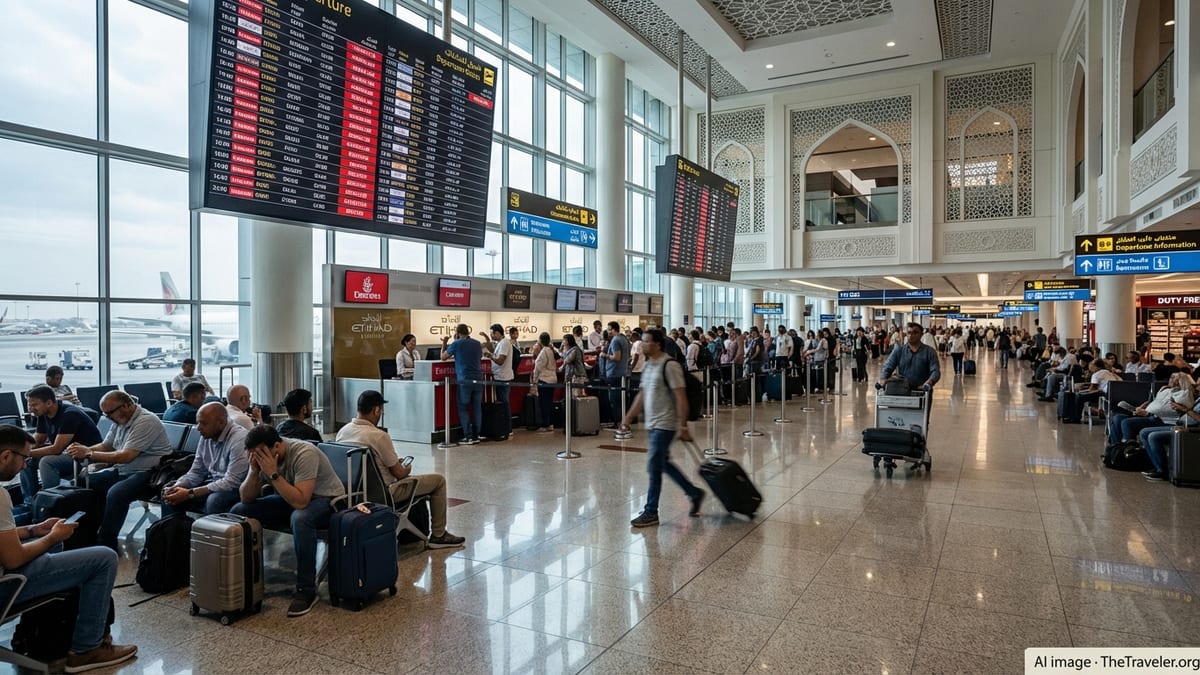
Severe US Winter Storm Triggers UAE Flight Cancellations
A powerful winter storm sweeping across the northeastern United States has emerged as the primary driver of the latest wave of cancellations affecting UAE carriers. The Nor’easter has brought blizzard conditions, heavy snowfall and gale-force winds to New York, Newark and Boston, making operations at some of the region’s busiest airports unsafe and forcing airlines to suspend or sharply curtail services.
Emirates and Etihad, the UAE’s two largest carriers, have both confirmed that multiple services between Dubai, Abu Dhabi and the US East Coast have been cancelled or retimed over the past 48 hours. Flights to New York’s JFK airport and Newark Liberty International have been particularly hard hit, with schedules repeatedly adjusted as the storm system moved up the Interstate 95 corridor and visibility and runway conditions deteriorated.
Industry sources in the Gulf aviation sector say the cancellations number well into double digits across the two airlines, as rotations in both directions are disrupted. With widebody aircraft and long-haul crews out of position, knock-on delays are being felt across each network, complicating efforts to restore normal operations even during short weather windows when airports briefly reopen.
In addition to New York and Newark, Etihad has also cancelled its Abu Dhabi services to and from Boston, while Emirates has trimmed capacity and cancelled selected departures on its New York routes as a precaution. Airline officials have stressed that safety remains the overriding priority and that services will only resume when local airport authorities signal that conditions have stabilised.
Passengers Stranded at Dubai and Abu Dhabi Hubs
The ripple effects of the storm-driven cancellations are being felt most acutely by passengers who found themselves unexpectedly grounded in Dubai and Abu Dhabi on February 23 and February 24. Long queues formed at transfer desks as travellers sought rebooking options, while airport hotels reported a surge in last-minute demand as stranded flyers were issued meal and accommodation vouchers.
Some passengers connecting through the UAE to destinations in North America, Europe and Asia reported waiting several hours for re-protection on alternative flights amid tightening seat availability. Families with onward itineraries to airports including JFK, Newark and Boston described uncertainty over when they would be able to depart, as new cancellations were announced in step with shifting storm forecasts in the United States.
Airline staff at both hubs have been deployed in increased numbers to help manage the disruption, directing passengers to customer service points and providing updates on revised departures. Contact centres have also reported heavy call volumes as travellers attempt to change travel dates or reroute via unaffected gateways, though options remain limited while the storm continues to affect a wide swath of the US East Coast.
Airport officials in the UAE said operations at Dubai and Abu Dhabi themselves were largely normal in terms of weather and runway conditions, underscoring how vulnerable global hubs are to events unfolding thousands of kilometres away on other continents. However, the sheer interconnectedness of long-haul networks means even a single major storm can leave aircraft and crew out of sequence for days.
Knock-On Impact on Routes to Hong Kong, Jeddah and Beyond
While the most visible disruptions are on transatlantic links to New York and Boston, the storm and subsequent schedule reshuffles are also affecting services on other long- and medium-haul routes from the UAE. Aviation analysts note that when widebody aircraft are grounded on one part of a network, airlines often redeploy or rotate equipment, which can lead to changes elsewhere, including Asia and the wider Middle East.
Travel and aviation industry updates indicate that some services connecting Dubai and Abu Dhabi with Hong Kong, Jeddah and select regional hubs have experienced delays or equipment swaps as carriers work to recover their schedules. In certain cases, departures have been consolidated, with passengers rebooked from cancelled flights onto remaining services in order to minimise total disruption.
Regional partners and codeshare airlines have also been drawn into the turbulence. Carriers operating connecting sectors into the UAE, including those feeding long-haul flights to the United States and East Asia, have had to adjust timetables and warn travellers of potential missed connections. The result is a patchwork of delays across the broader Gulf and Middle East airspace, even in locations not directly affected by adverse weather.
Travel agents in the region report a spike in last-minute itinerary changes as corporate and leisure customers look to reroute via unaffected hubs in Europe or Asia, or to delay departure by several days. Some passengers bound for Hong Kong, Jeddah and other non-US destinations have opted to postpone travel entirely rather than risk extended layovers or further uncertainty.
Airlines Roll Out Waivers and Flexibility Measures
In response to the scale of the disruption, Emirates, Etihad and several partner airlines have activated flexible rebooking policies for affected passengers. Travellers whose flights have been cancelled or significantly delayed are generally being offered complimentary date changes within a specified window, with some carriers also waiving standard change fees and fare differences for near-term travel.
Customer notices issued over the past two days urge passengers to verify that their contact details are up to date so they can receive real-time updates via SMS or email. Both Emirates and Etihad are directing customers to manage their bookings digitally where possible, in an effort to ease congestion at airport counters and call centres and to streamline the process of selecting new flights.
For those whose travel plans can no longer be fulfilled, airlines are offering refunds in line with fare rules, although processing times may be extended given the volume of requests. Industry observers say such flexibility is now standard practice during major weather events, but note that the concentration of traffic on popular UAE to US and Asia routes means that re-accommodating every passenger quickly will remain challenging.
Travel insurers are also fielding inquiries about coverage for additional accommodation and incidental expenses. Policies vary widely, and experts are advising travellers to keep receipts and documentation of airline communications in case they need to file claims related to weather-induced delays.
What Travellers Should Do Now
With the storm system in North America still evolving and airlines updating timetables on a rolling basis, aviation officials say the most important step for travellers is to stay informed and avoid heading to the airport without a confirmed flight. Passengers scheduled to fly between the UAE and affected US cities over the next 24 to 48 hours are being urged to check their flight status repeatedly on airline apps or official channels.
Experts recommend allowing extra time for check-in and security, particularly for those with complex itineraries involving connections to destinations such as Hong Kong, Jeddah and other onward points. Travellers whose journeys are not time-sensitive are being encouraged, where possible, to consider voluntarily rebooking to later dates, which can ease pressure on constrained capacity while also reducing the risk of extended airport waits.
For those already stranded, remaining in close contact with the operating airline is key, as seat availability can change rapidly when additional flights are added or when weather conditions briefly ease. Airport help desks, social media channels and mobile notifications are all being used by carriers to push last-minute information on gate changes and new departure times.
While industry forecasts suggest that conditions on the US East Coast should gradually improve once the current storm passes, the backlog created by days of cancellations means that disruptions to UAE routes may persist beyond the immediate weather event. For now, travellers are being urged to build flexibility into their plans and to monitor developments closely before setting out for the airport.