

More news on this day
As the United Arab Emirates continues to recover from weeks of regional airspace closures and security incidents, passengers traveling on or around March 15 are facing a patchwork of reduced flight schedules, last-minute timetable changes, and evolving advisories that affect both origin and transit journeys through Dubai and Abu Dhabi.
Get the latest news straight to your inbox!
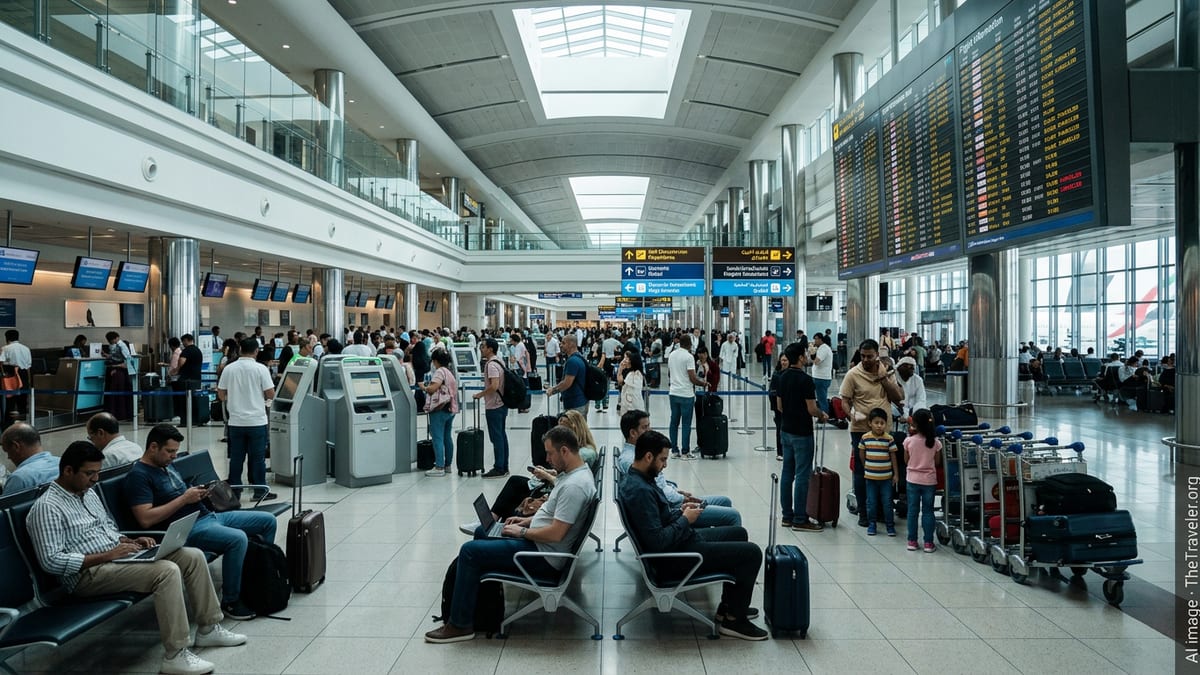
What Is Behind the Current UAE Flight Disruptions?
Published coverage over recent weeks shows that flight disruption in the UAE is being driven less by local weather or technical issues and more by the broader security picture in the Gulf. Airspace closures and restrictions across parts of the Middle East followed a series of strikes and missile and drone activity that affected airports and flight paths, including the busy hub at Dubai International Airport. In late February, reports indicated that operations at Dubai were temporarily curtailed after an incident that caused damage at the airport and injuries among ground staff, prompting evacuations and precautionary shutdowns.
By early March, publicly available advisories from aviation risk consultancies and travel management companies described a gradual reopening of UAE airspace with limited flights, rather than a full return to normal. These updates noted that Emirates, Etihad Airways, flydubai, and Air Arabia were incrementally restoring service as safety assessments allowed, while warning that schedules would remain constrained for some time. The overall picture for mid March, including March 15, is of a system that is running but still fragile, with airlines juggling aircraft rotations, crew availability, and altered routings.
Alongside security restrictions, the UAE’s usual operational challenges have not disappeared. Fog and occasional adverse weather earlier in the winter created additional knock-on delays, while long-haul services to North America and Europe have also been affected by storms at destination airports. For travelers, this combination means that even if a flight is operating, it may not follow the originally planned timetable or connection pattern.
Travel industry commentary suggests that passengers should treat mid March as an extended recovery period rather than a moment when all disruption ends. While more flights are taking off each day, there remains a significant risk of day-of-travel changes, particularly for those making complex connections through Dubai or Abu Dhabi.
How March 15 Schedules Look at Dubai and Abu Dhabi
As of the latest mid March updates, Dubai International Airport is handling more traffic than during the peak of the closures, but coverage points to a reduced and carefully managed schedule, especially on long-haul routes. Some travelers with March 15 departures report that flights originally scheduled for March 14 have been pushed back by roughly a day, effectively turning March 15 into an overflow window for services that could not operate earlier.
Emirates appears to be rebuilding its global network from Dubai with a focus on key trunk routes, while still operating fewer frequencies than normal to certain cities. Public posts from travelers with tickets on March 15 show that many flights are labeled as disrupted or under review until final approvals are confirmed. This creates a situation where a flight may appear in booking systems but remain subject to late change or cancellation.
At Abu Dhabi International Airport, Etihad Airways is also operating a limited schedule after an earlier period of suspended departures. Recent traveler reports suggest that selected connections through Abu Dhabi on March 15 are still under scrutiny, particularly for itineraries involving multiple legs or travel to regions with their own airspace restrictions. Some passengers are being encouraged through general advisories to consider alternative routings if their journeys are not time critical.
Low cost and regional carriers, including flydubai and Air Arabia, are gradually restoring operations from Dubai, Sharjah, and other UAE airports, but published information indicates that these services may be more vulnerable to short-notice changes. Travelers using these carriers around March 15 are being advised in public guidance to check departure boards and airline status tools repeatedly in the 24 hours before travel rather than relying solely on initial booking confirmations.
Delays, Cancellations, and Knock-on Effects for Transit Passengers
For travelers transiting through the UAE on March 15, the main risk is not necessarily outright cancellation, but missed connections caused by rolling delays. Because Dubai and Abu Dhabi function as major hub airports with tightly timed banks of arrivals and departures, even small shifts in departure times can cause inbound flights to arrive after onward services have closed boarding.
Travel commentary and advisories point to several common scenarios. Some passengers arriving late into Dubai or Abu Dhabi are being rebooked onto later same day or next day flights, depending on seat availability and the status of onward routes. Others are facing longer layovers than expected, particularly on routes to North America, where outbound capacity is still catching up with demand after earlier cancellations linked to both regional security concerns and winter weather in destination cities.
There are also reports of passengers whose flights technically still operate but follow altered routings or timings that disrupt ground plans at the final destination. For example, a late night arrival might become an early morning landing, affecting hotel check in and local transfers. In some cases, flights are re-timed a day later, turning what began as a short delay into an unplanned overnight stay.
Because flight programs remain fluid, industry guidance for March 15 emphasizes the importance of building flexibility into travel plans. This can include allowing longer self-connection windows if separate tickets are involved, avoiding tight same day meetings after arrival, and having contingency funds and documentation ready in case an overnight stop becomes necessary.
Rebooking Policies, Refund Options, and Passenger Rights
In response to the regional disruption, major UAE carriers have introduced or extended flexible rebooking and refund policies that cover travel dates in early and mid March. Airline travel updates show that many passengers booked to travel during the height of the closures were given the option to rebook free of charge or request travel vouchers or refunds, often within a defined time window reaching into mid March.
For flights specifically on or around March 15, travelers are encountering several different situations. Some still hold tickets on services classified as disrupted, in which case rebooking without penalty is often possible through airline self service tools. Others whose flights are scheduled to operate but under modified timings may need to contact the carrier or their travel agency if the new schedule no longer suits their needs. Where journeys involve multiple airlines on one ticket, the operating carrier usually manages the rebooking, but intermediaries such as online travel agencies may be responsible for processing refunds or changes.
Passenger rights vary depending on the point of departure and the legal framework that applies. Travelers flying from the European Union or United Kingdom into the UAE may benefit from compensation and assistance rules that are more detailed than those in some other regions, although security related airspace closures are often treated as extraordinary circumstances. For flights originating in the UAE, passenger protection is governed by local regulations and each airline’s conditions of carriage, which typically provide for rebooking or refund when a carrier cancels a flight for safety reasons.
Publicly available consumer guidance suggests that passengers should keep detailed records of disruption, including boarding passes, booking confirmations, and any written communication from airlines about cancellations or schedule changes. These documents can be important when seeking refunds, insurance claims, or goodwill gestures such as vouchers and mileage credits once operations stabilize.
Practical Steps to Minimize Hassle if You Are Flying on March 15
For anyone scheduled to travel to, from, or through the UAE on March 15, the most consistent piece of advice across travel advisories and passenger forums is to monitor flight status closely and rely on official channels. Airline websites and mobile apps, along with UAE airport departure and arrival boards, typically update faster than third party platforms or generic flight trackers. Notifications sent by email or app can lag behind, so manual checks in the hours before departure remain important.
Travel specialists also encourage passengers to avoid going to the airport until their flight is clearly shown as operating and on check in status. With some services still awaiting final approval even a day before departure, turning up early without confirmation can result in long waits with limited support options. For those who must travel regardless, arriving with printed or downloaded copies of bookings, alternative flight options, and local contact numbers can make it easier to resolve issues at check in desks.
Travel insurance conditions are another key consideration. Several insurers and government advisories have signaled that cover can be affected if travelers choose to transit through areas under elevated security warnings when reasonable alternatives exist. Passengers with March 15 itineraries should review policy wording and, where possible, obtain written clarification from insurers about how changes in routing or airport closures affect coverage for delays, missed connections, or emergency accommodation.
Finally, flexibility remains the most valuable asset. Where journeys are not essential, some travelers are choosing to defer trips until later in March or April, when airline networks are expected to be more stable. For those who must fly on March 15, building extra time into connections, traveling with carry on luggage where feasible, and preparing for the possibility of rebooking can help reduce the stress of navigating a system that is still in recovery mode.