

The UAE Golden Visa is a long-term residence option designed to attract investors, highly skilled professionals, entrepreneurs, and outstanding students by offering renewable 10-year residency under preferential conditions. For individuals evaluating a medium to long-term move to the United Arab Emirates, understanding who qualifies for this status and what concrete benefits it delivers is critical to planning a viable relocation strategy.
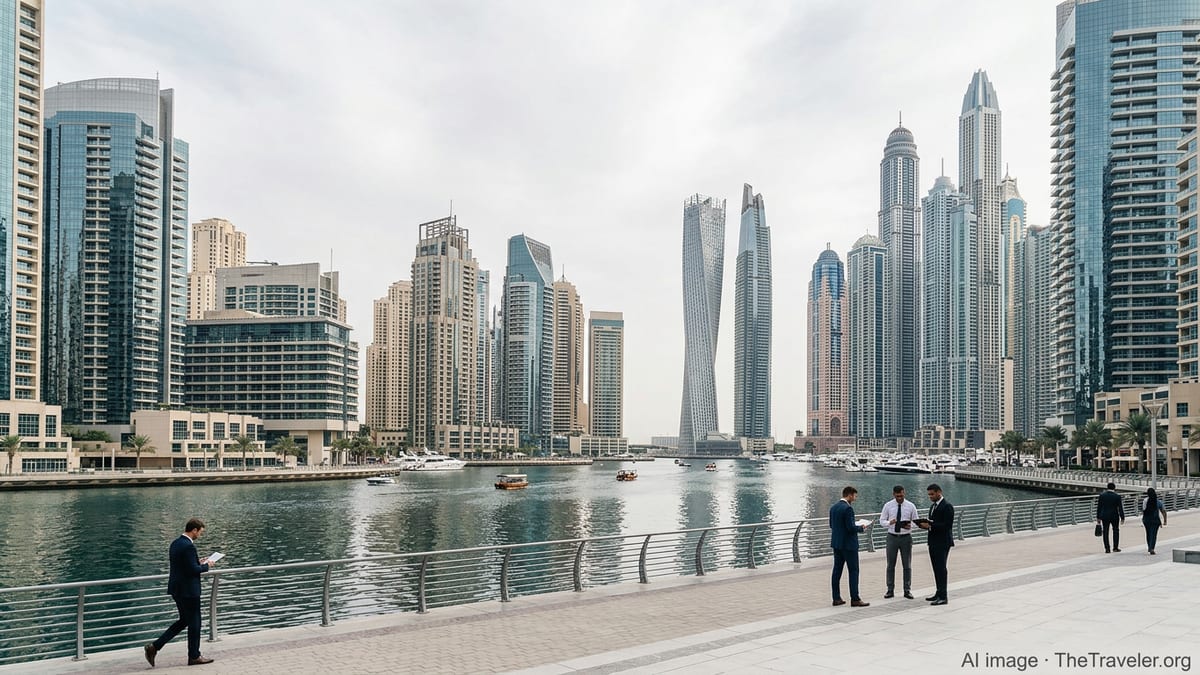
Overview of the UAE Golden Visa Framework
The UAE Golden Visa is a long-term residence permit, typically issued for 10 years and renewable subject to continued eligibility. It was first introduced nationally in 2019 and has since been progressively refined to broaden the range of qualifying profiles and tighten compliance around investment and employment criteria. The programme runs alongside standard employment, family, and investor visas but is positioned as a premium, longer-horizon status.
The Golden Visa does not confer citizenship, voting rights, or a UAE passport. It is a residence-by-investment or residence-by-credentials framework. Holders remain foreign nationals, but gain a more stable and autonomous residency position compared with regular employment-dependent visas, which are normally issued for two or three years at a time and tied directly to a single sponsor.
Administration of the Golden Visa is shared between federal and emirate-level authorities. Applications are processed through the Federal Authority for Identity, Citizenship, Customs and Port Security (ICP) or emirate immigration departments, most notably the General Directorate of Residency and Foreigners Affairs in Dubai. While there is a common legal basis, individual emirates can fine-tune implementation and documentary requirements, particularly for property and business investment categories.
Recent years have seen active policy adjustment. Thresholds for property investors, clarifications on salary definitions for skilled professionals, and category expansions to additional specialist fields have all been introduced or updated between 2022 and 2025. Potential applicants should expect periodic recalibration of criteria and processing practices, and should treat published rules as a baseline rather than a static framework.
Main Eligibility Pathways Under the Golden Visa
The Golden Visa is not a single path but a framework covering a series of defined categories. While official wording and sub-labels differ slightly between emirates and over time, the main channels can be grouped into investors, entrepreneurs, highly skilled professionals, exceptional talents, scientists and researchers, outstanding students and graduates, and certain retirees or long-term residents under specific schemes.
Investor routes typically cover public-investment fund contributions, share capital in UAE-registered companies, and qualifying real estate holdings. These usually carry the highest financial thresholds but provide relatively clear, objective criteria. Entrepreneur tracks focus on founders and owners of innovative or high-growth enterprises, often requiring a combination of minimum capital, revenue, or valuation indicators and endorsements from a UAE-incubator, free zone, or government-backed entity.
Skilled professional and talent-based routes rely more on qualifications, salary, and professional track record than direct capital injection. Doctors, engineers, IT and AI specialists, academics, and certain creative professionals can qualify based on advanced degrees, current role, salary level, and sometimes sector-specific approvals. Separate but related are scientist and researcher categories, where recognition from bodies such as national science councils or applied research institutions plays a central role.
Student and graduate pathways target top performers from UAE universities and some high-ranking foreign institutions. These routes focus on academic performance indicators such as grade point averages or university ranking brackets. While they often start with a shorter-term status, they can transition into longer-term Golden Visa residency for individuals who maintain qualifying employment or research roles in the UAE.
Financial Thresholds and Investment-Oriented Categories
Investor eligibility remains one of the most prominent features of the Golden Visa. Broadly, the UAE expects Golden Visa investors to demonstrate substantial, non-leveraged capital at risk in the local economy, maintained for a defined holding period. Public investment routes generally require an investment in a UAE-regulated investment fund or company share capital in the low- to mid-seven-figure dirham range, with a common benchmark of around AED 10 million for certain classic investor structures, and lower but still substantial thresholds where the focus is on specific emirate-level schemes.
Real estate has become a central qualifying asset class. As of late 2024 and into 2025, typical thresholds publicised by advisory firms and emirate land departments cluster around property holdings with a total value of approximately AED 2 million or more, subject to valuation confirmation. Some emirates and free zones layer additional conditions, such as minimum equity levels, no-objection certificates from mortgage lenders, or a requirement that joint owners each meet the threshold individually if they wish to qualify in their own right.
Bank deposits and local fixed-income instruments can also be used in certain structures, with minimum fixed-deposit levels in the low millions of dirhams and an obligation to keep funds locked for at least several years. Authorities emphasise that the investment must be genuinely at risk and not financed through loans or circular arrangements. In practice, this means providing bank confirmations, audited financial statements, or investment fund letters confirming unencumbered capital of the required magnitude.
These capital-focused criteria make the Golden Visa particularly attractive to individuals who are already allocating significant funds to UAE property or businesses as part of a broader wealth or corporate strategy. For those relocating primarily for employment, however, investment requirements may represent an additional optional route rather than the primary qualification channel.
Professional, Talent, and Academic Eligibility Channels
Highly skilled professionals represent another major target group for the Golden Visa. The UAE defines this segment through a combination of occupation type, educational attainment, and salary level. Examples of eligible fields include medicine, engineering, information technology, artificial intelligence, data science, education, and management roles at a sufficiently senior level. In general, a university degree and a current employment contract in the UAE are expected, alongside a minimum salary that is materially higher than the threshold for ordinary work visas.
Policy developments in 2023 and 2024 highlighted the importance of salary composition. Authorities have clarified at times that the qualifying salary must be a minimum basic salary figure, excluding housing, transport, and other allowances, even though such allowances are commonly used in UAE employment packages. This has had a practical impact on professionals whose total income meets or exceeds indicative thresholds, but whose basic salary line item falls below that level. Some employers have adjusted contract structures in response.
Exceptional talent and creative professional categories rely less on salary benchmarks and more on documented achievement. These may include international awards, peer-reviewed publications, patents, creative portfolios, or senior roles in recognised cultural or innovation institutions. Official endorsements or nomination by competent UAE entities, such as culture ministries, media councils, or scientific bodies, are frequently required to substantiate eligibility.
For students and graduates, eligibility is linked to academic excellence. High-achieving students from UAE secondary schools and local universities, as well as graduates from top-ranked global universities meeting specified ranking thresholds, can access Golden Visa status or precursor residency that transitions into longer-term status. Grade point averages above a set cut-off and graduation within a recent time window are common conditions, reflecting the programme’s emphasis on attracting early-career talent with strong potential.
Core Benefits of Holding a UAE Golden Visa
The central benefit of the Golden Visa is long-term, renewable residency generally granted in 10-year blocks, compared with shorter two- or three-year cycles for standard residence permits. This extended horizon reduces renewal frequency, lowers the risk of status disruption due to employer changes, and supports longer-term personal and business planning. For many professionals and investors, the additional predictability is a key factor in committing capital or building a career platform in the UAE.
A defining feature is self-sponsorship. Golden Visa holders are typically not tied to a specific employer or local sponsor to maintain their basic residency status. While separate work permits or professional licences may still be required to work legally in certain sectors, the residence right itself is anchored to the individual rather than an employer. This provides greater flexibility to change jobs, establish companies, consult, or pause employment, subject to labour and licensing rules.
Family sponsorship rights are substantially expanded when compared with standard visas. Golden Visa holders can usually sponsor spouses and children, with some emirates allowing sponsorship of children without the age caps that apply under ordinary residence permits. In many cases, parents can also be sponsored under the same framework subject to minimum income or insurance conditions. Importantly, some emirates permit dependants to retain residence rights for the remainder of the visa validity even if the primary holder dies, reducing vulnerability for accompanying family members.
Additional benefits may include longer periods permitted outside the UAE without automatically cancelling residency, streamlined procedures for driver licensing and local registrations, and in some cases access to preferential queues or dedicated service channels. Specific emirates and free zones occasionally attach more granular advantages for Golden Visa holders, such as eligibility for certain property purchase schemes or preferential access to business licensing packages, though such incentives can evolve frequently.
Practical Constraints and Compliance Considerations
While marketed as a long-term stability tool, the Golden Visa is not an unconditional status. Authorities reserve the right to cancel or decline renewal if core qualifying conditions are no longer met or if the holder breaches immigration or public-order rules. For investors, key risks include divesting below minimum thresholds, failing to maintain required holding periods, or restructuring ownership in ways that dilute qualifying stake sizes.
Professionals and talent-based holders face potential scrutiny if they leave the UAE for very extended periods, exit the sector that formed the basis for their visa, or see their salary and job level materially downgraded. In practice, enforcement often coincides with renewal windows or major status changes, such as employer transfers or reclassification of professions, but applicants should anticipate a need to continue evidencing that they meet headline criteria over time.
Another practical consideration is processing fluidity. Policy updates in recent years have occasionally led to pauses or slowdowns in specific emirate processing streams while systems and guidelines were updated. Applicants relying on time-sensitive transitions, for example when changing status from an expiring employment visa to a Golden Visa, should factor in sufficient buffer time and maintain alternative fall-back options where possible.
Finally, while Golden Visa residency can be a powerful relocation enabler, it does not by itself override sectoral licensing rules, foreign ownership regulations in certain strategic areas, or professional registration requirements. Doctors, teachers, engineers, and other regulated professionals still need to comply with their sector’s licensing and competency frameworks, and business owners must observe corporate and free zone rules, irrespective of their residency category.
The Takeaway
The UAE Golden Visa is a structured long-term residency mechanism that rewards capital investment, advanced skills, and exceptional achievement with more stable and autonomous residence rights. It sits between traditional short-term work visas and citizenship, offering extended security of stay without altering nationality. For potential relocators, the programme is particularly relevant where there is a plan to invest substantially in UAE property or business assets, or where an employment profile clearly fits into highly skilled, specialist, or academic excellence brackets.
Decision-making around pursuing a Golden Visa should focus on two core questions. First, whether the applicant can meet and sustainably maintain the relevant capital, professional, or performance thresholds over a multi-year period. Second, whether the enhanced benefits in terms of long-term residence stability, self-sponsorship, and family flexibility provide sufficient additional value when compared with more conventional visas. Given the pace of rule adjustments, individuals should also build in an expectation of regulatory change during their stay.
For those who qualify and maintain compliance, the Golden Visa can materially reduce immigration-related uncertainty and support longer-term commitments to living, working, and investing in the UAE. For others, it may serve as an aspirational pathway to target as professional status or investment capacity grows, rather than an immediate entry route.
FAQ
Q1. How long is the UAE Golden Visa valid?
The Golden Visa is typically issued for 10 years and can be renewed, provided the holder continues to meet the relevant eligibility criteria at renewal.
Q2. Do I need a local sponsor or employer to hold a Golden Visa?
No. One of the main benefits of the Golden Visa is that it is self-sponsored, meaning residency is not tied to a single employer or local individual sponsor.
Q3. What are the typical investment amounts required for Golden Visa eligibility?
Investment thresholds vary by route, but property and public investment options usually require capital in the low- to mid-seven-figure dirham range, with common benchmarks around AED 2 million for real estate and higher for broader investor categories.
Q4. Can skilled professionals qualify without making a large investment?
Yes. Highly skilled professionals in fields such as medicine, engineering, IT, and education can qualify based on occupation, advanced degrees, and minimum salary levels, without mandatory capital investment.
Q5. Can Golden Visa holders sponsor their family members?
Yes. Golden Visa holders can generally sponsor spouses and children, and in many cases parents, with some emirates allowing children to be sponsored regardless of age under Golden Visa rules.
Q6. Does the Golden Visa lead directly to UAE citizenship?
No. The Golden Visa is a long-term residence permit only. It does not automatically lead to citizenship or a UAE passport, and separate naturalisation rules apply.
Q7. What happens if my investment falls below the required threshold?
If qualifying investments are reduced below the minimum or required holding periods are not respected, authorities may refuse renewal or in some cases cancel the Golden Visa, subject to individual review.
Q8. Can I stay outside the UAE for long periods with a Golden Visa?
Golden Visa holders generally benefit from more flexible absence rules than standard residents, but extended stays abroad can still trigger review, so planned long absences should be considered carefully.
Q9. Are Golden Visa rules the same in all emirates?
The core framework is federal, but emirates may interpret and implement certain aspects differently, especially around property valuation, documentation, and additional incentives for holders.
Q10. Is the Golden Visa programme stable, or do rules change often?
The overall framework is established, but specific thresholds and conditions are adjusted periodically. Applicants should expect incremental updates and verify current criteria close to applying.