

More news on this day
Major hotels across the United Arab Emirates are rolling out unusually steep discounts, with room rates in some prime beachfront and city locations dropping to off-peak lows as regional travel disruption shakes what is normally a strong spring season for tourism.
Get the latest news straight to your inbox!
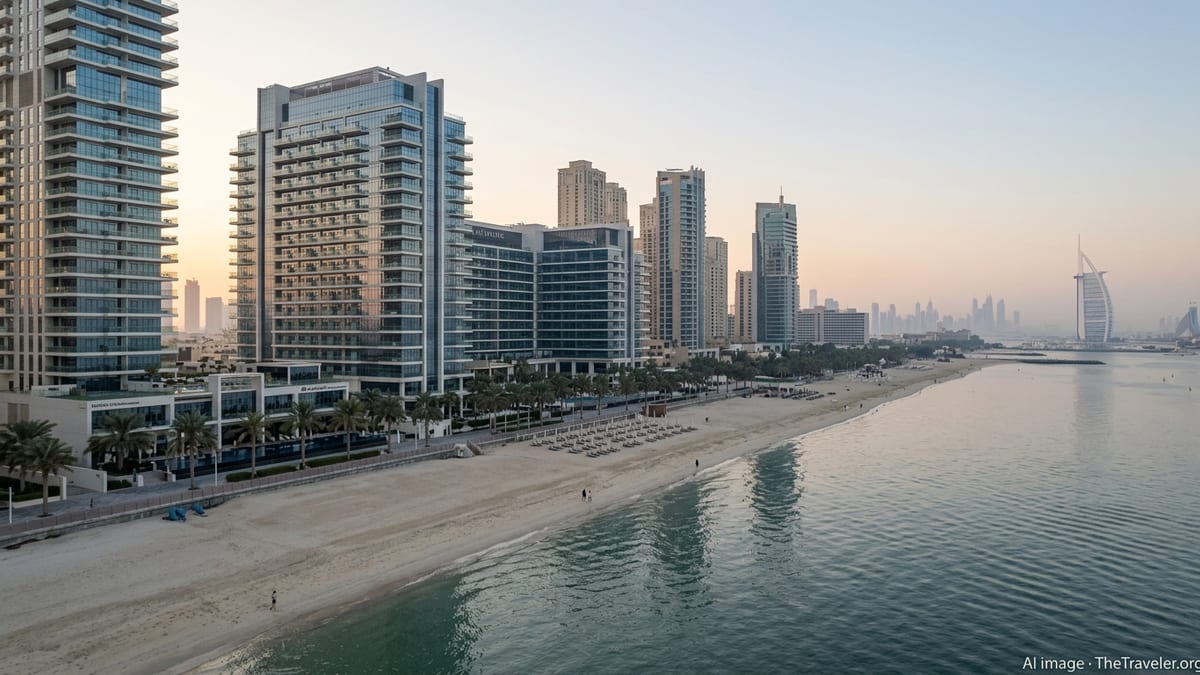
Regional Travel Crisis Ripples Through UAE Tourism
Published coverage in recent weeks points to a sharp cooling in regional travel demand as geopolitical tensions and flight disruptions unsettle would-be visitors across the Middle East. Travel industry reporting on the wider region highlights reduced flight schedules, route diversions and higher airfares, developments that are weighing on short-haul and long-haul bookings alike.
The UAE, which has spent the past few years outperforming many global destinations on occupancy and revenue growth, is now feeling the knock-on effects. Airlines using Gulf hubs have adjusted operations, while some travelers are opting to postpone or reroute trips. Analysts note that these shifts are arriving just as the industry would normally be preparing for a busy late winter and early spring period.
Hotel benchmarking data released over 2024 and 2025 showed Dubai and Abu Dhabi pushing occupancy close to or above the 80 percent mark, supported by robust international arrivals and a solid domestic market. As the latest travel crisis unfolds, operators are moving quickly to defend those hard-won gains, using aggressive pricing and promotions to stimulate demand and keep room nights from slipping too far below recent norms.
Market observers also point out that the UAE entered this turbulent period with a much larger room inventory than before the pandemic. New luxury supply in Dubai, Abu Dhabi and Ras Al Khaimah has raised the competitive stakes, meaning any softening in inbound tourism is magnified across a bigger network of hotels that must now fight harder for each booking.
Price Cuts Bring Peak-Season Stays Down to Shoulder-Season Levels
According to recent consumer-facing travel coverage, several high-end properties in Dubai have begun advertising rate cuts that bring what are typically peak-season prices down to levels more commonly associated with quieter summer months. A mix of beachfront resorts, urban luxury hotels and branded residences are promoting discounts of 20 to 50 percent on selected dates, particularly across March and April.
Reports on the Dubai market describe limited-time offers where standard rooms that might recently have commanded premium rates are now being sold at prices closer to shoulder-season averages. In some cases, nightly costs reported by travelers appear to have fallen into the low to mid three-figure range in US dollars, a notable shift for internationally recognised brands along flagship corridors such as Dubai Marina and Downtown.
Similar patterns are emerging in Abu Dhabi, where local media and hospitality analysts have tracked a narrowing gap in average room rates compared with Dubai. Market commentary suggests that some capital-city properties are also easing prices to sustain healthy occupancy, especially on weekdays when corporate and group travel has become more volatile.
Industry reports from 2024 and 2025 showed average daily rates in Dubai trending higher on the back of strong demand, even as thousands of new rooms came online. The current wave of discounting signals a pivot in strategy, with many operators prioritising volume and cash flow over headline rate growth until flight schedules and traveler sentiment stabilise.
Staycations and Residents Become the Safety Valve
With segments of international demand under pressure, UAE hotels are leaning once again on the domestic market. Published coverage from national and regional outlets highlights that residents have become an increasingly important buffer for the hospitality sector since the pandemic, and this latest crisis is accelerating that shift.
Travel features in early 2026 describe a surge in staycation-focused marketing, with hotels framing discounts as limited offers for UAE residents and Gulf-based guests. Packages commonly include reduced room rates bundled with food and beverage credit, spa discounts and late checkout, designed to encourage multi-night stays and midweek bookings.
Data released over the past year showed that staycations in the UAE were already on a strong upward trajectory, particularly around school holidays and long weekends. Even before the current disruption, research cited by local media indicated that room prices often spiked during domestic peak periods compared with traditional off-peak dates. The new round of promotions is effectively reversing that pattern on selected days, offering residents peak-season experiences at closer to off-peak prices.
Observers note that this strategy does more than fill empty rooms. By keeping resorts animated with local guests, hotels are able to support ancillary revenue streams such as dining, wellness and entertainment, which are vital for maintaining staffing levels and service standards during uncertain times for international travel.
Operators Balance Occupancy Targets With Profit Pressures
Despite the visible price competition, sector data and corporate updates shared through public channels suggest that many UAE hotels are starting from a relatively strong financial base. Industry reports on 2024 and 2025 performance in Abu Dhabi and Dubai highlighted double-digit revenue growth and rising revenue per available room, reflecting years of solid results leading into the current disruption.
However, operators are now walking a tightrope between defending occupancy and protecting margins. Analysts point out that deep discounting can undermine average daily rate benchmarks if it persists for too long, while costs from utilities, staffing and financing remain elevated. The challenge is to calibrate promotions so that they smooth out short-term shocks without eroding the premium positioning that many UAE properties have worked to build.
Recent hospitality research on Dubai’s market performance indicates that hoteliers had already been prioritising occupancy over rate in certain segments as new supply ramped up. The travel crisis has accelerated that approach, encouraging more flexible pricing across both luxury and upscale categories. Some reports suggest that properties are using targeted offers and closed-user-group rates to avoid a visible collapse in publicly listed prices.
Sector specialists also highlight the importance of events and business travel in determining how long discounts remain in place. Large conferences, exhibitions and sporting events scheduled over the coming months could provide pockets of strong demand, giving hotels room to dial back promotions on specific dates even if broader travel sentiment remains cautious.
Outlook: Volatile Demand, Agile Pricing
Forward-looking commentary from market analysts portrays a period of heightened uncertainty for Gulf tourism, with booking windows shortening and travelers waiting longer to commit. Airlines and tour operators are monitoring the security situation and adjusting capacity, which in turn feeds through to hotel demand forecasts across key UAE destinations.
Yet the underlying appeal of the Emirates as a hub for leisure, business and stopover travel remains intact in most assessments. Over the medium term, the combination of major infrastructure investment, expanded room inventory and a track record of quickly adapting to shocks is expected to support a rebound once flight patterns normalise.
In the near term, industry watchers anticipate that agile pricing will remain the main tool for managing volatility. Hotels are likely to continue experimenting with off-peak-style rates, flash sales and resident-only deals, adjusting offers week by week as booking data flows in. This environment could create opportunities for flexible travelers able to navigate changing air schedules.
For now, the travel crisis is reshaping what peak season looks like in the UAE. Instead of steadily climbing tariffs and sold-out weekends, the market is defined by nimble discounting, growing reliance on domestic guests and a renewed focus on value, even at the most luxurious ends of the spectrum.