

More news on this day
Escalating conflict centered on Iran and the Strait of Hormuz is rapidly reshaping how travelers can reach and move around the United Arab Emirates, Iran and Oman, with flight suspensions, reworked maritime routes and sweeping government warnings now defining trips to some of the Middle East’s most visited destinations.
Get the latest news straight to your inbox!
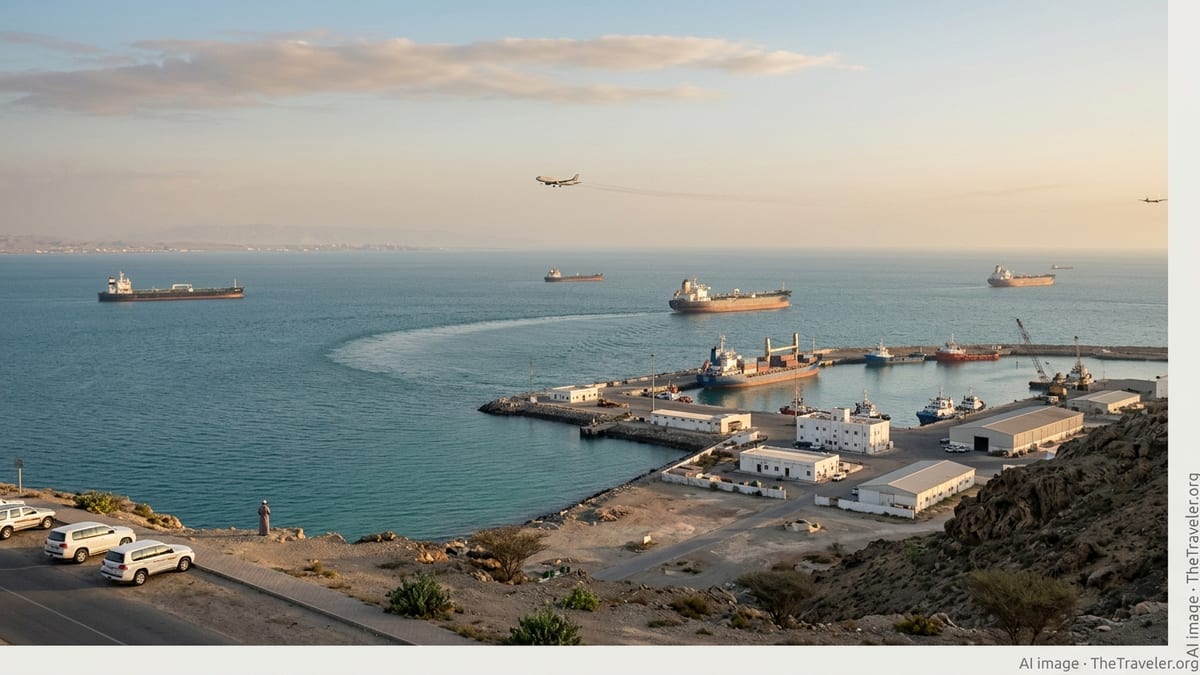
Region on Edge as Conflict Closes Key Air and Sea Corridors
Since late February 2026, joint United States and Israeli strikes on Iranian targets and Iran’s response have pushed parts of the Gulf region into an active conflict zone, according to multiple international news reports and open government advisories. Fighting has spilled across borders, affecting not only Iran but also neighboring Gulf states and vital energy and shipping infrastructure. Publicly available coverage describes the situation as a fast-moving security crisis rather than a localized flare-up.
The Strait of Hormuz, a narrow waterway that sits between Iran and Oman and connects Gulf ports with the wider world, has become the central chokepoint. Analysis from maritime security groups and media outlets indicates that Iran’s military activity and warnings have sharply reduced commercial traffic through the strait. At the same time, a separate but related threat persists in the Red Sea and Bab el Mandeb Strait, where Yemen’s Houthi movement has previously targeted commercial shipping and is again being cited in reports as a potential spoiler for any attempt to reroute vessels away from the Gulf.
These overlapping risks are directly influencing tourism and business travel. Airlines, shipping companies and cruise operators are adjusting operations at short notice in response to missile launches, drone activity and evolving risk assessments. Travelers bound for popular hubs such as Dubai, Abu Dhabi and Muscat are now navigating a landscape shaped not only by schedules and prices but also by overflight restrictions, diversions and potential port delays.
Security analysts note that this uncertainty is likely to continue as long as Iran’s confrontation with the United States, Israel and various regional actors remains unresolved. Even if a cease-fire is reached, reopenings of airspace and sea lanes may lag behind while operators test conditions and governments recalibrate their travel advice.
What Travelers Need to Know About UAE: Flights, Routes and On‑the‑Ground Safety
The United Arab Emirates remains one of the world’s top long-haul destinations, but its role as a regional aviation hub has made it particularly exposed to the latest turbulence. In early March, international media and specialist aviation outlets reported that many commercial flights into and out of the wider Middle East were suspended, with only a limited number of evacuation or special services operating from airports in the UAE. Some long-haul carriers began routing aircraft along longer paths over Africa or the polar regions to avoid contested airspace, extending flight times by several hours.
Publicly available industry notices show that major Gulf carriers have repeatedly adjusted schedules at short notice, temporarily halting some services before cautiously restoring a subset of routes under revised flight paths. For travelers, this has translated into last-minute cancellations, extended layovers, missed connections and challenges securing alternative itineraries. Travel insurance coverage has also come under strain, as some policies exclude disruptions linked to armed conflict.
On the ground, widely reported security incidents involve intercepted missiles and drones targeting the broader Gulf region rather than direct attacks on tourist districts in cities such as Dubai and Abu Dhabi. Nonetheless, many Western governments have updated their advisories to urge a higher degree of caution, highlighting the risk of spillover strikes and the possibility of further airspace closures. Travel guidance stresses the importance of monitoring airline apps, embassy alerts and local news, as conditions can shift within hours.
Visitors currently in the UAE are being encouraged, in publicly available guidance, to keep travel documents accessible, maintain flexible departure plans and register contact details with their embassy where possible. Those planning future trips are advised to book tickets and accommodation with changeable terms, check whether airlines allow free rebooking during the crisis period and confirm that their travel insurance explicitly covers war-related disruptions in the region.
Iran: Heightened Risk Environment and Severely Disrupted Tourism
Iran itself has become the focal point of the conflict, and most Western governments now classify travel there as high risk or not recommended except in exceptional circumstances. A recent worldwide caution notice from the United States government, alongside similar updates from European and other authorities, singles out Iran and neighboring states as areas where the security situation can deteriorate rapidly and where consular assistance may be limited or constrained.
Commercial aviation into and out of Iran has been severely disrupted. International news coverage describes widespread airport closures, cancellations by foreign carriers and restrictions on overflights, leaving many would-be visitors unable to reach the country even if they are willing to accept the security risks. Domestic transportation has also been affected by fuel supply issues and periodic infrastructure damage related to strikes on energy facilities and military sites.
For tourism, this effectively amounts to a temporary shutdown. Organized tours have largely been suspended, cruise operators have removed Iranian ports from itineraries, and independent travelers are finding that previously straightforward arrangements such as hotel bookings or internal flights are no longer reliable. Online travel forums and agency advisories point to communication challenges as well, including periodic internet disruptions and difficulties reaching local partners.
Prospective visitors are being urged in open-source guidance to postpone nonessential travel until there is a sustained improvement in security and connectivity. Those who are still in Iran are advised to follow local instructions, avoid demonstrations or military facilities, maintain a low profile and stay alert to any opportunities for safe, documented exit via commercial flights or coordinated evacuation efforts arranged by their home country.
Oman and the Strait of Hormuz: Relative Calm but Growing Maritime and Insurance Risks
Compared with Iran and some of its Gulf neighbors, Oman has so far experienced fewer direct security incidents, and its major tourist centers have remained calm. Government communications and local media in Muscat continue to promote the country as a safe, welcoming destination, reflecting long-standing efforts to position Oman as a stable alternative in the region. However, its geographic proximity to the Strait of Hormuz and the Gulf of Oman means that travelers and tourism operators cannot ignore the broader maritime and airspace situation.
Maritime security advisories issued in early March recommend heightened vigilance for all vessels transiting the Gulf of Oman and northern Arabian Sea, citing the risk of misidentification and potential retaliatory strikes as regional tensions grow. Insurance circulars referring to the wider conflict have raised the security level for shipping in the Persian Gulf, Strait of Hormuz, Gulf of Oman and parts of the Red Sea, prompting many commercial operators to reconsider routes and timetables. This has knock-on effects for cruise itineraries and yacht movements that would normally include Omani ports.
Port circulars and shipping agency bulletins show that Oman’s airspace has generally remained open, even as some foreign airlines have voluntarily canceled or rerouted flights for their own risk-management reasons. This can lead to fragmented connectivity, where some carriers maintain near-normal schedules to Muscat and Salalah while others suspend operations, leaving passengers with fewer options and higher prices. Travelers with tight connections between Oman and other Gulf hubs such as Dubai or Doha face the added challenge of coordinating ground and air segments that may change at the last minute.
Travelers heading to Oman are advised, based on publicly accessible guidance, to verify that their chosen airline is still operating, check the latest port and airport advisories if arriving by sea, and ensure that any cruise or expedition company has contingency plans should the security posture in the Strait of Hormuz shift again. Booking fully flexible tickets and confirming that travel insurance covers both maritime incidents and airspace closures can reduce financial exposure if plans need to be altered.
Practical Planning Tips for Visiting or Transiting the Region
With conditions evolving quickly, experts and official advisories emphasize preparation and flexibility for anyone considering travel to the UAE, Iran or Oman in the coming weeks. The first step is to consult the latest travel advisories issued by one’s own government, paying close attention not only to headline risk levels but also to specific notes about airspace status, maritime threats and the availability of consular services. These notices are being updated more frequently than usual and can directly influence airline and insurance decisions.
Air travelers should treat all itineraries involving the Gulf as provisional. Guidance from airlines and travel-industry analysts suggests booking through carriers with a demonstrated track record of proactive communication and flexible rebooking policies during this crisis. Passengers are encouraged to download airline apps, enable notifications and check flight status repeatedly in the 48 hours before departure, as reroutings can lengthen journeys or require unexpected overnight stops.
For maritime travel, including cruises and sailings that pass near the Strait of Hormuz or through the Gulf of Oman and northern Arabian Sea, travelers should seek written confirmation of how operators intend to respond to changing security alerts. Maritime advisories highlight the possibility of rerouting or skipping ports at short notice to avoid higher-risk areas, and some operators may adjust itineraries without compensation if the changes are framed as safety measures under contract terms.
Across all three countries, travelers are being encouraged by publicly available guidance to keep accommodation and ground transport bookings as flexible as possible, maintain copies of key documents both digitally and in print, and share itineraries with family or friends at home. Given the unusual combination of airspace restrictions, maritime tension and heightened political risk, prospective visitors may wish to weigh the appeal of near-term travel against the benefits of postponing trips until the region’s security and transport networks show clearer signs of stabilization.