

More news on this day
Travelers heading to the United Arab Emirates are facing heightened security warnings after a deadly series of missile and drone strikes connected to the Iran conflict, prompting urgent guidance for those planning trips to Dubai and Abu Dhabi.
Get the latest news straight to your inbox!
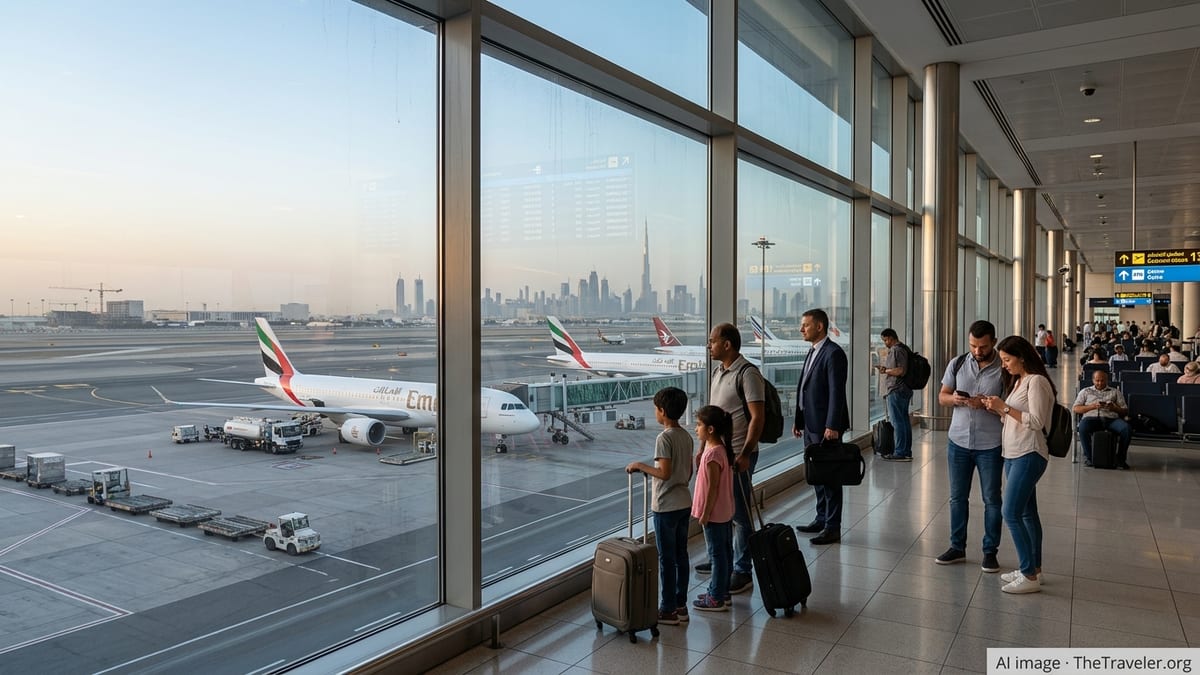
What Happened in Dubai and Abu Dhabi
Publicly available reporting indicates that since late February 2026, the United Arab Emirates has been targeted by multiple waves of Iranian missiles and drones as part of a wider regional escalation. A number of projectiles have been intercepted over or near major population centers, including Dubai and Abu Dhabi, with falling debris linked to fires, infrastructure damage and at least one confirmed fatal incident.
Open-source timelines describe missiles and drones being launched toward key economic and transport hubs, with debris linked to fires at energy facilities and older airport infrastructure around Abu Dhabi, as well as disruptions at Dubai International Airport. In one widely reported incident, an Indian national in Abu Dhabi was injured by falling debris after a ballistic missile was intercepted over the city, underscoring the risks posed even when defense systems are largely successful.
Regional conflict intensified after strikes on Iranian territory at the end of February, followed by Iran’s retaliatory attacks on several Gulf states. The United Arab Emirates has publicly reiterated that it is not participating directly in offensive operations, but the scale of subsequent Iranian threats and launches toward the country has drawn international attention and triggered a series of foreign travel advisories.
Though the majority of incoming missiles and drones appear to have been intercepted before impact, the volume of launches and the presence of tourism sites, airports and expatriate communities near targeted areas have raised concerns among foreign governments assessing the safety of nonessential travel.
How Foreign Travel Advisories Have Changed
According to recent updates in international travel coverage, several governments have revised their guidance for the United Arab Emirates in March 2026, with a particular focus on Dubai and Abu Dhabi. Reporting on the United States travel advisory shows that the UAE rating was raised from a moderate “exercise increased caution” level to a stronger “reconsider travel” designation as of early March, citing the ongoing threat of missile and drone attacks and the potential for rapid escalation.
Analysis in global travel media notes that the updated American advisory explicitly links its change to Iran’s stated intentions to target locations in the UAE associated with Western interests. It also highlights the risk of further attacks on airports, energy infrastructure and other high-profile sites, and warns of possible short-notice airspace closures and flight diversions that could leave travelers stranded or require abrupt itinerary changes.
Specialist risk consultancies and aviation bulletins have echoed similar concerns, describing a fluid situation in which alert levels can change quickly in response to new launches, interceptions or intelligence about planned strikes. Some advisories emphasize that even if day-to-day life in parts of Dubai and Abu Dhabi appears calm, the technical travel risk profile has shifted because of the possibility of renewed long-range attacks and resulting disruption.
Travel industry analyses stress that advisory upgrades do not constitute a ban on visiting the UAE but may influence insurance coverage, corporate travel approvals and the willingness of airlines or tour operators to maintain normal schedules.
Flight Disruptions and Airspace Restrictions
The most immediate impact for visitors has been on air travel. Aviation data cited by business and travel outlets indicates that, after the first major strikes on February 28, flight numbers across major Gulf hubs dropped sharply as airspace was temporarily closed or tightly restricted. Dubai International, Dubai World Central and Abu Dhabi’s Zayed International Airport all curtailed regular operations, with many airlines suspending flights or operating only limited repositioning and repatriation services.
Travel alerts from global corporate travel managers and airline notices describe a patchwork recovery, with some carriers resuming a reduced schedule into Dubai and Abu Dhabi while others extend suspensions due to continuing uncertainty. One major European airline has been reported as suspending flights to both cities for an extended period, while Gulf-based carriers have gradually restored selected routes under strict operational approvals.
Coverage in consumer travel media notes that, as of the third week of March, UAE airspace is partially open, with a limited number of commercial flights operating. However, travelers are being advised to expect rolling delays, last-minute cancellations and rerouting via alternative hubs in Saudi Arabia or further afield. Advisories recommend that passengers avoid going to the airport unless they hold a confirmed ticket and have been explicitly told their flight is operating, as local airport authorities seek to manage congestion and security checks.
Industry analysts point out that even when attacks are not occurring, the threat environment can trigger temporary suspensions while risk assessments are updated. This means that the situation for flights into and out of Dubai and Abu Dhabi may remain unpredictable over the coming weeks.
Practical Safety Advice for Travelers
Risk experts and travel-security firms are advising prospective visitors to the UAE to treat the current period as one of elevated but managed risk. Travelers are being urged to monitor both their home government’s travel advisories and official UAE announcements, as well as to keep in close contact with their airline, hotel and tour operator in case of sudden changes to flight schedules or local restrictions.
Common recommendations include building additional flexibility into itineraries, such as allowing extra days for potential delays or rebookings, and ensuring that accommodation and tickets are purchased with changeable or refundable terms where possible. Travelers are also encouraged to verify that their travel insurance explicitly covers disruptions and cancellations caused by conflict-related airspace closures or missile and drone activity, as some standard policies may exclude such events.
For those already in Dubai or Abu Dhabi, guidance compiled from risk advisories suggests paying attention to any emergency alerts issued via mobile networks or local media and knowing the location of designated shelter areas in hotels or residential buildings. While daily life in many districts reportedly continues with a degree of normality, the possibility of sporadic interception events means visitors should be prepared to follow shelter-in-place instructions at short notice.
Travelers are further encouraged to avoid attempting to capture or share images of defensive operations or impact sites, as local authorities have signaled that spreading unverified or misleading conflict-related content may lead to penalties. Focusing instead on official updates can reduce confusion during tense periods.
Should You Postpone a Trip to Dubai or Abu Dhabi?
Whether to proceed with travel to the UAE in the current climate depends largely on individual risk tolerance, the purpose of the trip and the availability of flexible arrangements. Publicly available assessments from travel media and security consultancies generally characterize the threat of a direct strike on tourist areas as mitigated, given the effectiveness of missile defense systems so far, but they acknowledge that the risk from falling debris and sudden disruption remains higher than in typical periods.
Leisure travelers with highly discretionary plans may wish to consider postponing until regional tensions ease and flight schedules normalize, particularly if traveling with young children or individuals with health conditions that make extended time in airports or shelters difficult. Business travelers with essential commitments may still choose to proceed, provided that their employers conduct a structured risk assessment and put contingency plans in place.
Observers note that Dubai and Abu Dhabi have previously demonstrated an ability to restore a sense of normality relatively quickly after security incidents or global shocks. However, analysts also caution that the current situation is part of a wider conflict whose trajectory remains uncertain, meaning conditions could improve or deteriorate with limited warning.
For now, the consensus among many travel-risk commentators is that anyone planning a trip to the UAE should stay closely informed, remain flexible and be prepared for a travel experience that may be more unpredictable and security-conscious than visitors typically associate with Dubai and Abu Dhabi.