

More news on this day
The United Arab Emirates has issued an urgent travel advisory covering Israel and a growing list of West Asian destinations, as intensifying conflict, missile strikes and political turmoil across the region disrupt airspace, unsettle tourism flows and rattle travellers from India to Japan.
Get the latest news straight to your inbox!
Regional Conflict Pulls More States Into the Line of Fire
Published coverage on the current crisis indicates that the security map of West Asia has been radically redrawn since late February 2026. A surge in hostilities involving Iran, Israel and the United States has triggered missile and drone strikes across the Gulf, with the United Arab Emirates, Saudi Arabia, Qatar, Bahrain and other states experiencing direct or threatened attacks. Analysts note that what began as a targeted confrontation has evolved into a broad regional conflict that now complicates civilian travel and commercial aviation.
Reports on the Iranian strikes describe salvos of ballistic missiles and unmanned aerial vehicles aimed at military facilities, energy infrastructure and, in some cases, locations in and around major cities. Israel has been both a participant in and a target of this escalation, while Gulf states aligned with Western security partners have found themselves on the frontline of retaliatory action. Israel’s inclusion alongside India, Qatar, Japan, Saudi Arabia, China and Bahrain in the latest round of advisories reflects how widely the perceived risk has spread for residents, expatriates and transit passengers.
Security assessments from risk consultancies and regional media describe a patchwork of closed or restricted airspace across parts of Iran, Iraq and Israel, together with temporary closures or tight controls affecting Gulf corridors. Aviation regulators in multiple countries have issued notices advising carriers to avoid specified air routes. The resulting rerouting of long-haul services, especially those linking South Asia, East Asia and Europe via Gulf hubs, has created a knock-on effect that extends well beyond the immediate conflict zone.
At the same time, governments in countries such as India, Nepal and Kenya have circulated their own alerts for citizens working or travelling in the Gulf. These advisories often list Israel, the UAE, Qatar, Bahrain and Saudi Arabia together, underlining the view that the current confrontation in West Asia is a single, interconnected security environment rather than a series of isolated flashpoints.
UAE Travel Advisory Targets High-Risk Corridors
According to publicly available information, the UAE’s latest guidance urges residents to defer non-essential travel to areas experiencing active missile or drone activity, particularly Israel and territories directly involved in the exchanges with Iran. The advisory also calls for heightened vigilance for those who must travel for work, family or transit reasons, recommending that itineraries be continually checked against airline updates and official bulletins from foreign ministries.
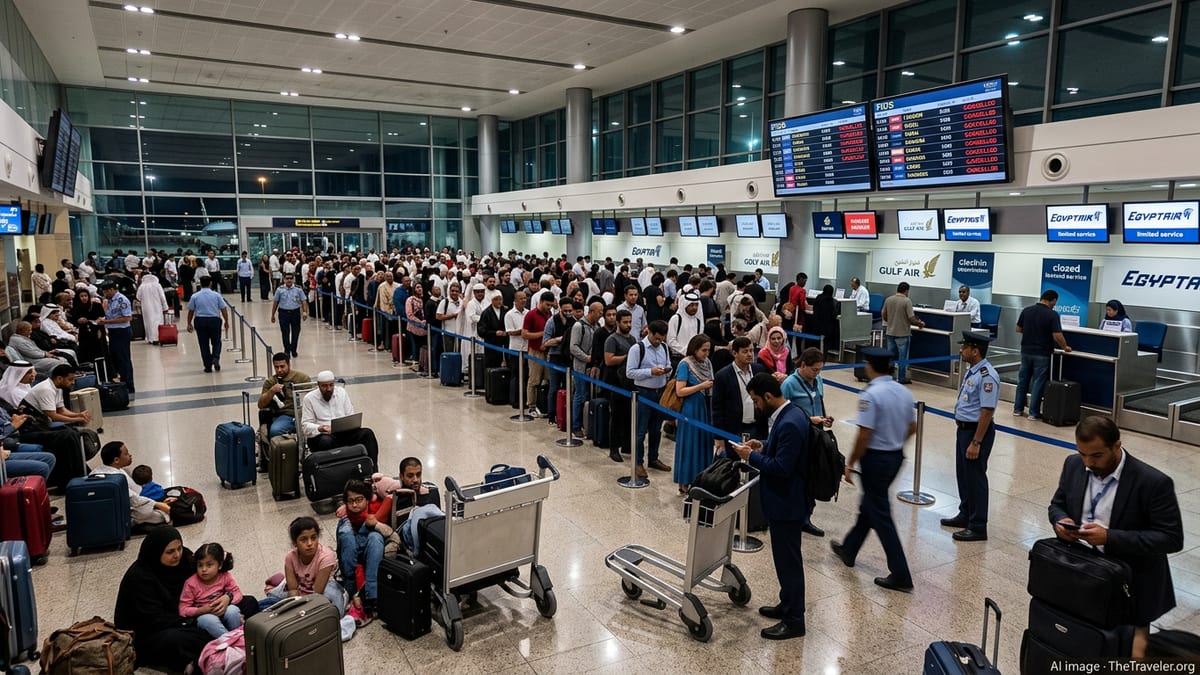
The advisory comes as Dubai International and Abu Dhabi International, two of the world’s busiest hubs, manage the aftermath of temporary airspace closures and repeated security alerts. Data referenced in industry briefings shows that inbound and outbound traffic has been periodically suspended or rerouted since late February, leading to clusters of stranded travellers, aircraft repositioning challenges and mounting pressure on airport operations. Carriers based in the UAE have adjusted schedules, consolidated flights and issued flexible rebooking policies as they navigate changing overflight permissions.
Independent travel risk assessments note that the UAE is treating the region as a fluid risk zone rather than issuing a blanket ban, but the inclusion of countries as varied as Israel, Qatar, Bahrain, Saudi Arabia, India, Japan and China in its messaging speaks to the global nature of the disruption. Many passengers bound for or originating in East and South Asia normally transit through Gulf hubs, meaning that any sustained restrictions in UAE airspace reverberate through itineraries connecting Tokyo, Delhi, Mumbai, Shanghai and beyond.
Foreign travel advisories directed at the UAE have shifted in parallel. One major Western government recently raised its own guidance level for travel to the Emirates, citing the threat of armed conflict and the risk that facilities associated with Israeli or Western interests could be targeted. Such language further underscores how civilian tourism flows, including those purely focused on leisure in Dubai or Abu Dhabi, are now entwined with a complex security calculus.
Tourism and Hospitality Face a Sudden Shock
Tourism operators across the UAE and wider Gulf are reporting an abrupt change in sentiment. Coverage from regional business outlets describes noticeable declines in hotel occupancy and new bookings in Dubai since the first wave of Iranian strikes reached the vicinity of major urban centers. Travel agencies speak of group cancellations from key source markets, including India and European countries, as travellers weigh the appeal of West Asian holidays against nightly images of airstrikes and missile interceptions.
Industry analyses suggest that the hospitality sector in Dubai, Abu Dhabi and Ras Al Khaimah is experiencing a twofold squeeze. On one side, airlines are trimming capacity or rerouting flights, limiting the volume of incoming visitors. On the other, travellers who continue with their plans face higher airfares as carriers absorb longer flight paths and operational risk costs. This has made spur-of-the-moment city breaks and shopping trips for regional visitors from Saudi Arabia, Qatar and Bahrain less attractive, eroding an important segment of Gulf intra-regional tourism.
Published estimates from tourism councils and economic think tanks had projected record visitor spending in the Middle East for 2026, fuelled in part by new attractions and marketing campaigns in the UAE and Saudi Arabia. Those expectations are now being revised as conflict drags on. Hotels and attractions in Dubai are responding with discounted packages, extended-stay offers and reassurance campaigns focused on safety protocols, but experts caution that confidence is hard to rebuild while air raid alerts and missile interception footage continue to dominate the news cycle.
The impact reaches beyond the Emirates. Reports from India highlight a slump in outbound tourism tied to West Asia, particularly for religious travel and stopover-based leisure trips, with some operators in Kashmir and other Indian destinations also feeling secondary effects as international visitor numbers soften. Similar patterns are emerging in Nepal and Thailand, where analysts link falling hotel bookings and rising airfares to the broader West Asia conflict and the uncertainty surrounding Gulf transit routes.
Airlines, Travelers and Transit Hubs Recalculate Routes
Major international airlines are recalibrating their networks in response to operational restrictions and perceived threats in West Asian airspace. Travel advisories issued by carriers and global travel management firms outline extended suspensions or adjusted frequencies on routes touching Bahrain, Qatar, Saudi Arabia, Kuwait and the UAE, along with a continued avoidance of Iranian and Iraqi skies. Several European and Asian airlines are reported to be overflying the Red Sea or Central Asia as alternatives for connecting Europe with India, Southeast Asia, Japan and China.
These changes have immediate implications for passengers accustomed to smooth, one-stop connections through Dubai, Abu Dhabi and Doha. Some travellers bound for Israel, India or other regional destinations are experiencing multi-leg journeys that involve additional screening checks and overnight layovers. Others have opted to postpone or cancel travel entirely, particularly as insurance companies tighten coverage related to war and civil unrest, and as governments caution against non-essential trips into the conflict zone.
For travellers already in the UAE, the advisory environment has led to more thorough pre-departure planning. Consular notices and independent risk bulletins recommend that visitors register their details with their home governments where such services exist, monitor local media for updates on missile alerts or temporary curfews, and maintain contingency plans for extended stays in case return flights are delayed. Airport authorities in the UAE have emphasized crowd management and passenger assistance as they work through backlogs created by short-notice cancellations.
Regional aviation analysts point out that the current disruptions are testing the resilience of Gulf carriers that built their business models on the stability and neutrality of West Asian air corridors. While airlines in India, Japan and China are also adapting, they tend to rely more on diversified routings that can avoid the Gulf. This shift could temporarily weaken the competitive edge of traditional transit hubs, at least until a more durable security arrangement is established in the skies above the region.
Political Turmoil Casts a Long Shadow Over Future Travel
Beyond the immediate security and logistical challenges, the crisis has revived questions about political risk and long-term planning in West Asia’s tourism-dependent economies. Commentators note that states such as the UAE and Saudi Arabia have invested heavily in branding themselves as safe, modern and globally connected destinations. The sight of missile debris near major cities and the closure of strategic bridges and transport corridors in parts of the Gulf cut sharply against that narrative.
Diplomatic efforts to de-escalate have so far produced limited tangible change on the ground, according to international policy analyses. Iran continues to signal that it sees Gulf-based infrastructure as a legitimate pressure point in its standoff with Israel and Western allies, while Israel maintains that it will respond to any threats to its territory or maritime routes. This cyclical pattern keeps risk at an elevated level for airlines, cruise operators and tour companies trying to plan schedules weeks or months ahead.
For now, the UAE’s urgent travel advisory serves as both a warning and a barometer. Its inclusion of Israel alongside key partners and markets such as India, Qatar, Japan, Saudi Arabia, China and Bahrain illustrates how thoroughly the conflict has entangled trade, migration and tourism networks. Even travellers whose itineraries merely touch West Asian hubs en route to other continents must now factor regional geopolitics into their decisions.
Travel experts suggest that the eventual recovery of tourism in the UAE and across West Asia will depend on more than just a ceasefire. Restoring consumer confidence is likely to require sustained periods of calm, predictable airspace access and visible investment in civil defense and crisis management. Until then, the region’s position at the crossroads of global travel remains as much a vulnerability as an asset.