

More news on this day
Airlines across the Gulf are bracing for fresh disruption as the United Arab Emirates moves in step with Saudi Arabia, Qatar and Bahrain to tighten airspace planning and prepare alternative routes amid rising tensions between the United States and Iran.
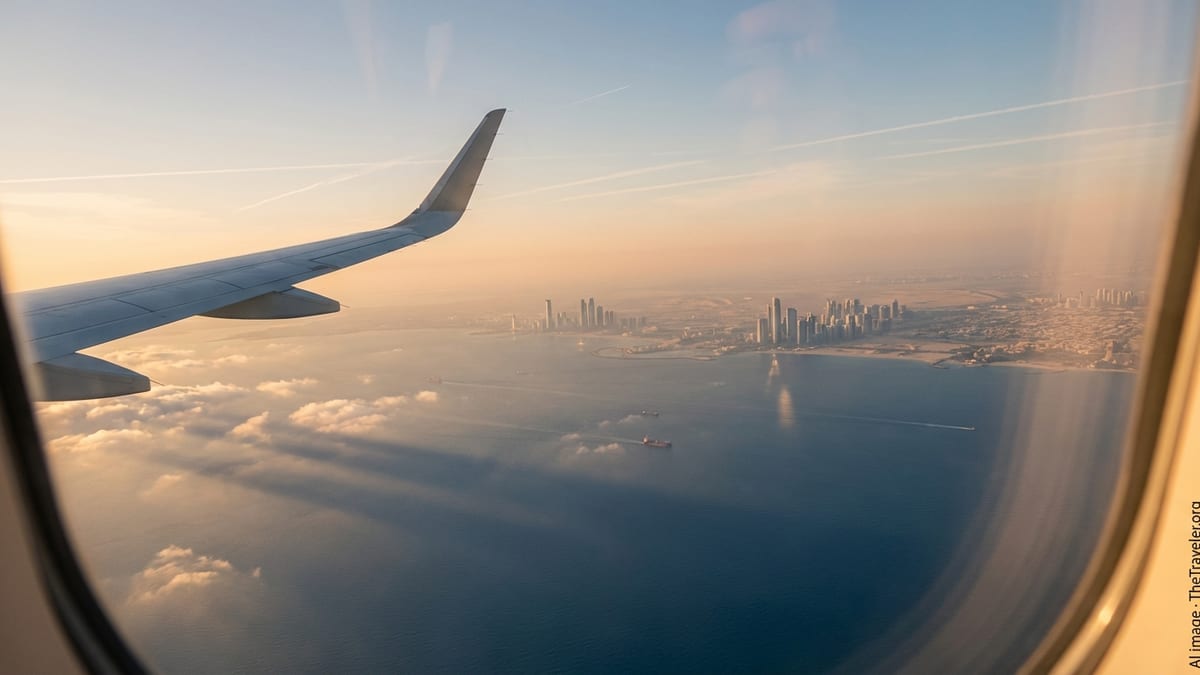
Regional Tensions Spill Into the Skies
For weeks, the prospect of a military confrontation between Washington and Tehran has been creeping steadily into airline control rooms. A series of Iranian airspace restrictions, missile drills near the Strait of Hormuz, and warnings from US officials have jolted carriers that rely on the Gulf as a crossroads between Europe, Asia, Africa and the Americas. What had been a largely geopolitical standoff is now a concrete operational problem for aviation planners.
The current phase of uncertainty intensified in mid January, when Iran briefly closed its airspace to most commercial flights and later suspended visual flight rules and general aviation activity nationwide. Major international airlines began diverting around Iranian and Iraqi skies, adding time, fuel burn and complexity to routes that had already been reworked during earlier rounds of regional conflict. As the US weighs further options and Iran signals its willingness to respond, Gulf states have quietly shifted focus from diplomacy alone to detailed contingency planning for their skies.
Within this landscape, the UAE has emerged as a central player. Its carriers, led by Emirates, Etihad Airways and flydubai, were already among the world’s heaviest users of east–west corridors skirting Iran. Now they are recalibrating schedules, crew rosters and fuel strategies in coordination with neighbors Saudi Arabia, Qatar and Bahrain, all of which sit astride the main alternatives when Iranian airspace becomes risky or unavailable.
UAE Activates Contingency Corridors and Costly Detours
UAE aviation officials and airline executives have spent recent days refining plans that would push more long haul flights south and west if conflict further constrains routes near Iran. Dispatchers in Dubai and Abu Dhabi are preparing to lean more heavily on corridors over Saudi Arabia and the Red Sea, as well as deeper overflight through Egypt and North Africa, to keep links to Europe and North America intact even if the usual tracks over the Gulf and western Iran are severely restricted.
Industry analysts say this rerouting is possible but expensive. Detours of two to three hours on some wide body services could add thousands of dollars in extra fuel, crew and maintenance costs to each flight. That burden is magnified across the dense networks of Emirates and Etihad, which operate dozens of daily services that typically pass near or over Iranian territory on their way to European, Atlantic and some African destinations. Cargo operators based in the UAE, particularly those moving time sensitive perishables via Dubai’s freight hubs, are facing similarly tight margins for delay.
Officials in Abu Dhabi have not announced blanket closures of Emirati airspace, but they have quietly aligned their risk posture with neighboring Gulf states. This means heightened monitoring of military activity, rapid response mechanisms to implement route changes, and close coordination with global safety regulators and aircraft manufacturers. The UAE’s civil aviation regulator has emphasized that safety remains the overriding priority, even if that means accepting longer routings and schedule disruption in the short term.
Saudi Arabia, Qatar and Bahrain Harden Their Airspace Posture
While the UAE fine tunes its own detour options, neighboring Gulf states have been equally active in reassessing how their skies might be used in a crisis between the US and Iran. Saudi Arabia, which commands vast swaths of airspace from the Red Sea to the Gulf, is a crucial link in most contingency plans. Riyadh has privately signaled to Washington and Tehran that it does not want its territory used for offensive operations, even as it quietly prepares to absorb more civil air traffic if corridors around Iran narrow.
Qatar, home to Al Udeid Air Base and a major global hub for Qatar Airways, has recent experience with snap closures. During Iranian missile strikes on the base in 2025, Qatar briefly shut its airspace and diverted traffic away from Doha. That episode, together with more recent drills and warnings, has left Qatari authorities wary of becoming the epicenter of any fresh airspace shock. Their current planning assumes short notice restrictions around key military assets and rapid rerouting of commercial flows via alternative corridors through Saudi Arabia and deeper into the Arabian Peninsula.
Bahrain, which hosts a US naval presence and controls a strategically tight band of airspace along the Gulf, has followed a similar path. Past flare ups saw Manama temporarily suspend air navigation as a precaution, and officials have signaled that they are prepared to repeat such steps if risk levels rise. For carriers in the UAE and Qatar, Bahrain’s airspace is often a gateway to the wider Gulf corridors; any blackout there forces immediate and sometimes dramatic adjustments to flight paths within a very confined region.
Echoes of Earlier Closures and the Al Udeid Missile Strikes
The preparations unfolding today are shaped by recent shocks that exposed how quickly regional skies can change. When Iran launched missiles at Al Udeid Air Base in June 2025, Qatar shut its airspace for several hours and neighboring states including the UAE and Bahrain also restricted or closed sections of their skies. Flight tracking data from that night showed aircraft performing abrupt turns over the Gulf, returning to origin airports, or diverting to secondary hubs as air traffic controllers implemented emergency protocols.
In the months that followed, airlines and aviation authorities across the region conducted internal reviews of their crisis playbooks. Dispatch teams in Dubai, Doha, Manama and Riyadh built new mapping tools to simulate how different conflict scenarios would affect core routes. Carriers refined their diversion airport lists and coordinated more closely with airports in Oman, Kuwait and Jordan that might receive unexpected long haul arrivals if airspace closures cascaded across the Gulf.
Those lessons are being applied again as Iran tests missiles near the Strait of Hormuz and temporarily closes segments of its own airspace. The Gulf states now have a lived understanding that even a few hours of restrictions can ripple across global schedules for days. As a result, today’s contingency plans emphasize pre emptive adjustments and conservative risk thresholds, rather than waiting for an incident to unfold before pulling aircraft off vulnerable routes.
International Airlines Reduce Exposure to Iranian Skies
While Gulf carriers focus on maintaining their hub roles despite regional turbulence, many international airlines have opted for a more cautious approach. Over the past month, a growing list of European and North American carriers has reduced or suspended flights that would normally transit Iranian or nearby airspace. Some have paused services to Dubai, Riyadh or Doha altogether, while others have reintroduced them with longer routings that steer clear of conflict sensitive zones.
Airlines from Europe have been particularly vocal about the operational challenges of rapidly shifting airspace access. Carriers that once flew near straight lines across the Middle East now face complex detours that eat into block time and narrow connection windows at their home hubs. The need to keep crews within duty time limits means flights that depart late because of airspace uncertainty can trigger rolling cancellations deeper into the schedule.
For travelers from North America, Asia and Europe heading to the Gulf, that caution translates into fewer nonstops, tighter connection banks and a higher likelihood of last minute changes. Travel agents and corporate travel managers report that some passengers are choosing routings via alternative hubs in Turkey, Central Asia or Southern Europe, spreading the impact of the US Iran standoff beyond the immediate region.
Economic Stakes for Gulf Hubs and Global Trade
The stakes for the UAE, Saudi Arabia, Qatar and Bahrain extend well beyond passenger inconvenience. Dubai and Doha in particular have built their economic models around serving as mega hubs for global aviation, with airport cities, logistics zones and tourism sectors all closely tied to the smooth flow of flights through their airspace. Any sustained disruption or perception of heightened risk threatens to erode that competitive advantage.
Air freight is especially vulnerable. The Gulf sits astride key lanes for time sensitive cargo moving between Asia, Europe and Africa. Perishables, pharmaceuticals, electronics and high value spare parts often transit through UAE and Qatari airports on tight schedules. Even relatively short detours around closed or risky airspace can push shipments beyond their planned temperature or delivery windows, prompting costly rejections or insurance claims. Logistics firms are already warning clients to build in extra lead time and consider alternative routings where feasible.
At the macro level, Gulf governments are acutely aware that repeated airspace scares could feed into broader investor anxiety about regional stability. With energy markets still sensitive to any hint of disruption in the Strait of Hormuz and neighboring shipping lanes, the image of aircraft diverting around the Gulf resonates far beyond the aviation industry. It underscores how any escalation between the US and Iran would quickly spill into trade, tourism and financial flows that are vital to Gulf diversification strategies.
Regulators, Insurers and Safety Advisories Shape Decisions
Behind every visible route change lies a dense web of guidance from regulators, insurers and international aviation bodies. Safety notices from agencies such as the European Union Aviation Safety Agency and national civil aviation authorities play a central role in determining whether airlines can operate over certain regions. These advisories, often based on classified intelligence as well as open source information, are updated as tensions rise or fall.
Insurance markets add another layer of constraint. Underwriters that cover war and terrorism risks can raise premiums sharply for operations through airspace deemed high risk, or in some cases decline to insure certain routes altogether. That financial calculus feeds directly into airline network planning. When risk surcharges rise beyond a certain point, airlines may find that even heavily booked flights are no longer economically viable if they must traverse contested skies.
For Gulf states, staying closely aligned with global regulatory standards is part of a broader effort to reassure partners that, despite being on the frontline of regional tension, they remain committed to the highest levels of safety and transparency. Aviation authorities in the UAE, Saudi Arabia, Qatar and Bahrain have stepped up their communication with foreign regulators and carriers, sharing technical data on radar coverage, contingency procedures and threat assessments.
What Travelers Should Expect in the Coming Weeks
For travelers with tickets to or through the Gulf in the coming weeks, the message from airlines and travel experts is to expect flexibility rather than certainty. Schedules published months in advance are being reviewed day by day as political signals shift and new military exercises or airspace notices emerge. Even if flights operate on time, routings may change, extending flight times and altering connection windows.
Passengers are being advised to monitor airline apps and alerts closely, allow extra time for connections, and consider booking itineraries with longer layovers through regional hubs. Some carriers have loosened change and refund policies for journeys that would ordinarily cross Iranian or nearby airspace, acknowledging that risk perceptions and personal comfort levels vary widely. Travel insurance providers are also updating guidance on what level of disruption is covered when airspace restrictions arise from geopolitical tensions rather than weather or technical issues.
Despite the uncertainty, aviation analysts note that Gulf carriers and regulators are now far better prepared for sudden airspace shocks than they were even a few years ago. Investments in alternative corridors, improved crisis coordination and more conservative risk thresholds mean that, while disruption is likely if US Iran tensions escalate further, outright isolation of Gulf hubs is less probable. For now, the UAE’s decision to move in lockstep with Saudi Arabia, Qatar and Bahrain signals a region seeking to protect its vital aviation lifelines while navigating one of its most sensitive security tests in years.