

More news on this day
IndiGo’s latest move to add the United Arab Emirates to its growing list of restored routes, alongside Saudi Arabia, Oman, the UK and other key markets, is emerging as a rare bright spot for passengers left stranded by the sudden Middle East airspace closures that began on February 28.
From Cancellations to Carefully Phased Comeback
For several days after hostilities flared across parts of the Middle East on February 28, Indian carrier IndiGo was among the airlines forced to ground or reroute services touching Gulf and European airspace. Hundreds of flights linking Indian cities with hubs in the UAE, Saudi Arabia, Oman, Qatar and beyond were cancelled as safety regulators moved quickly to close or restrict key air corridors.
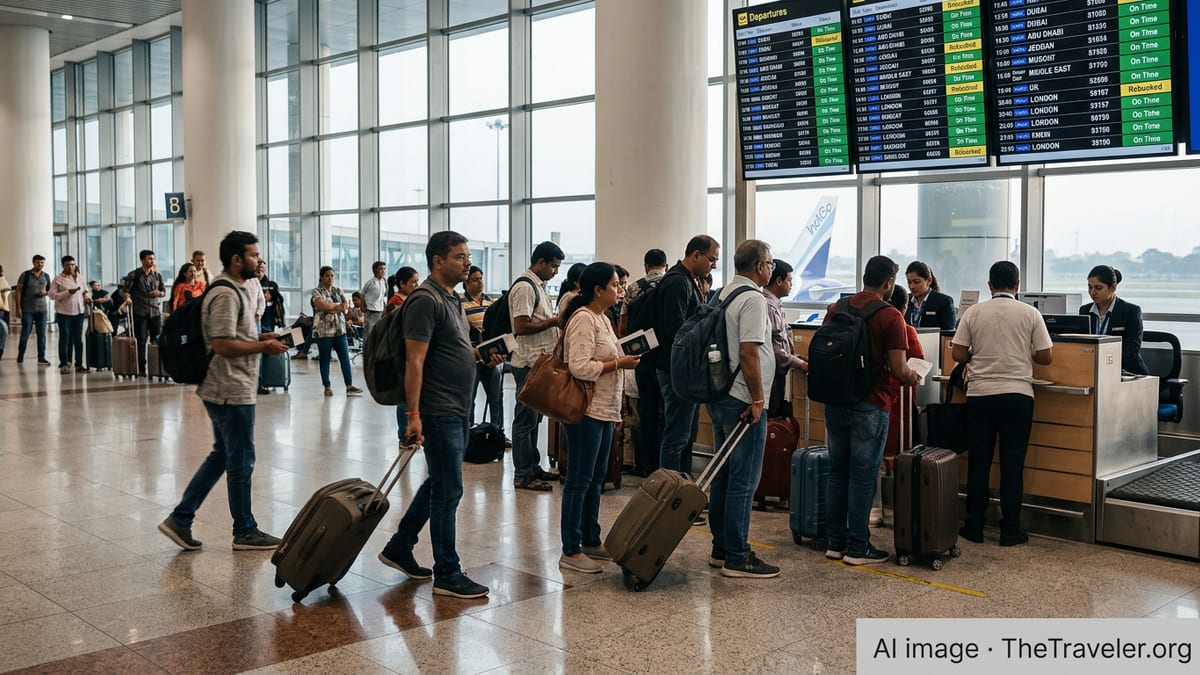
The impact on travellers was immediate and severe. Business passengers found themselves stuck in transit hubs, students were stranded en route to exams and families were separated as onward connections collapsed. Airports from Jeddah to Muscat and Dubai saw long lines at customer service desks as airlines scrambled to rebook disrupted journeys or provide hotel accommodation.
By the start of March, however, IndiGo had shifted gears from reactive cancellations to a more structured restoration plan. The airline announced a phased relaunch of select services, prioritising routes where the greatest numbers of Indian nationals and resident workers were waiting to return home.
Central to that plan were special repatriation services into Saudi Arabia and Oman, alongside a commitment to gradually rebuild the broader network that connects India with the UK, Europe and multiple Gulf states once security assessments allowed.
Saudi Arabia and Oman Lead the Relief Effort
Saudi Arabia and Oman became the first major Gulf markets to see IndiGo’s recovery strategy in action. On March 3, the airline operated four dedicated repatriation flights to Jeddah, carrying passengers who had been marooned after earlier services were scrapped. A further special flight to Muscat was scheduled the same day to bring back travellers caught in the disruption.
These operations were designed less as a return to normal commercial schedules and more as humanitarian-style corridors focused on clearing the backlog of stranded fliers. Passenger lists were coordinated with Indian authorities and local airport partners, with priority often given to families, elderly travellers and those with urgent medical or visa-related timelines.
In parallel, IndiGo signalled that Jeddah, Madinah and Muscat would form the backbone of its initial restoration phase. Limited scheduled services are being reinstated, subject to daily safety reviews and airspace availability, creating a template that can be adapted as more regional air corridors reopen.
While flight options remain far below pre-crisis levels, the message for passengers stuck in Saudi Arabia and Oman is that there is now a structured path home, rather than ad hoc one-off rescues.
UAE Flights Resume in Measured Steps
The real turning point for many Indian travellers has been IndiGo’s decision to fold the United Arab Emirates into its restoration plan. After several days of near-total suspension on core routes between Indian metros and UAE gateways, the airline is now progressively reintroducing services to Abu Dhabi, Dubai, Sharjah, Fujairah and Ras Al Khaimah.
According to the latest schedule updates, IndiGo intends to operate a growing mix of regular and relief flights between India and up to eight key Middle East destinations, including the UAE, on select days. Frequencies remain tightly controlled and subject to last-minute operational changes, but the resumption itself marks a significant shift from the blanket cancellations of early March.
For the thousands of Indian expatriates who commute between the UAE and cities such as Mumbai, Delhi, Kochi, Hyderabad and Bengaluru, even a partial restart offers a vital lifeline. Many have been managing on expiring visas, limited funds and uncertain work commitments while waiting for clear guidance on when they could fly again.
IndiGo has urged passengers with existing bookings to monitor official airline channels closely, as flights may be retimed, consolidated or upgraded to larger aircraft in order to move as many stranded travellers as possible when windows of safe airspace open.
UK and European Connections Edge Back Online
Beyond the Gulf, IndiGo is also working to piece together its disrupted links between India and Europe, including the United Kingdom. Flights to and from destinations such as London and Athens were among those affected when aircraft were forced to avoid large swathes of Middle Eastern airspace, prompting detours, fuel stops and outright cancellations.
As regulators refine safe operating corridors, the airline has begun selectively reinstating services, often on adjusted routings that skirt conflict zones and rely on cooperation with air traffic control authorities in Saudi Arabia, Oman and Egypt. The result is longer flying times and reduced frequencies, but crucially, the resumption of physical connectivity for passengers who have been waiting to get to or from the UK and the wider European region.
Travel agents in major Indian cities report a surge in demand the moment new flight options appear in reservation systems. Many customers are travelling on reissued tickets from previously cancelled services, while others are paying higher last-minute fares simply to secure a seat out of or into affected regions.
Industry insiders caution that schedules to the UK and Europe will remain fluid in the coming days, with airlines including IndiGo forced to balance commercial viability against rapidly shifting security assessments and airspace permissions.
What Stranded Passengers Should Expect Now
For travellers still caught up in the fallout, IndiGo’s evolving network strategy offers both hope and a clear set of expectations. The airline has encouraged passengers whose flights were cancelled between February 28 and the first week of March to make active contact through official channels, rather than waiting passively for notifications.
In many cases, travellers are being rebooked on the new wave of repatriation or relief services into Saudi Arabia, Oman and the UAE, or on adjusted routes to the UK and other long haul destinations. Change fees are commonly being waived, and in some situations full refunds are being offered, particularly where travel is no longer possible within a reasonable timeframe.
At the same time, airports remain busy and queues for customer support are long. Travel advisers recommend that passengers carry printed or digital copies of all booking confirmations, maintain flexibility on routing and dates, and stay alert to last-minute gate or timing changes as airlines juggle aircraft and crew availability.
For now, IndiGo’s decision to expand its restoration plan to include the UAE alongside Saudi Arabia, Oman, the UK and other key markets is emerging as a critical step toward normalising travel for thousands of stranded passengers. The full recovery of schedules will take time, but the first meaningful rays of relief are finally visible on departure boards across the region.