

More news on this day
The United Arab Emirates has joined Bahrain, Oman, Saudi Arabia, Qatar, Kuwait, Israel and other Middle Eastern countries in rolling out crisis management measures for residents and visitors, as the United States government issues fresh travel advisories for stranded travelers amid escalating tensions with Iran and ongoing missile and drone strikes across the region.
Get the latest news straight to your inbox!
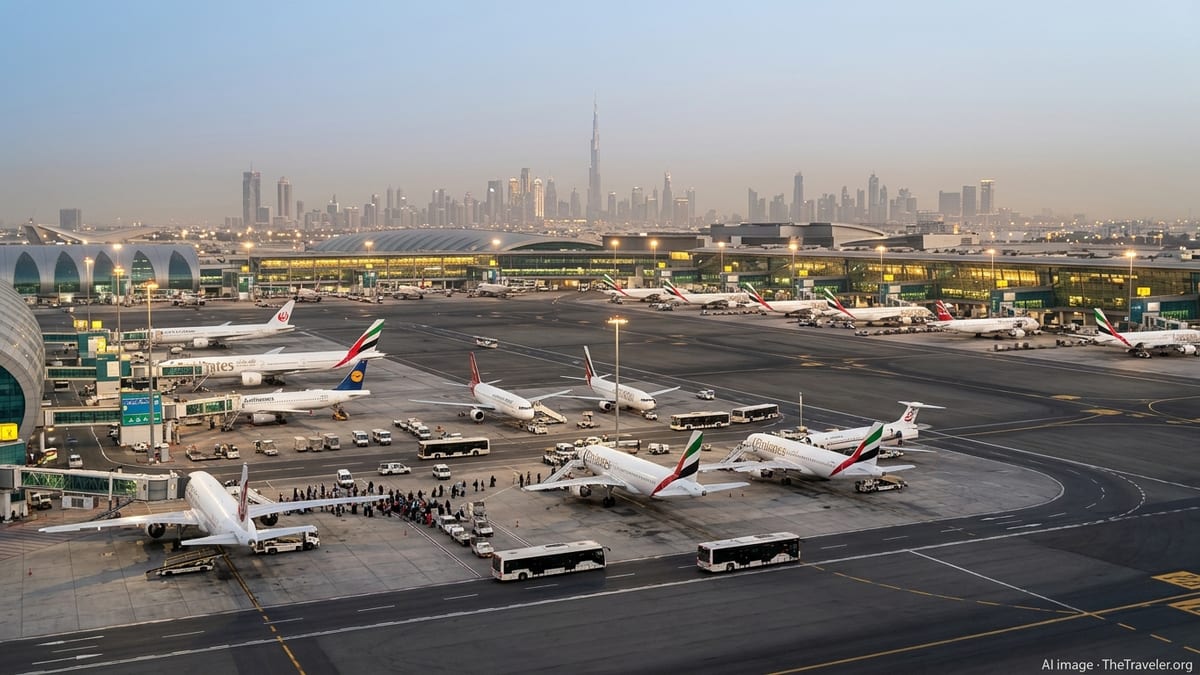
Gulf States Activate Crisis Cells as Strikes Expand
Publicly available government notices and regional media reports indicate that Gulf Cooperation Council members have moved to formalize emergency coordination structures as the conflict with Iran drags into a fourth week. In the UAE, coverage in Abu Dhabi based outlets shows the federal government activating crisis management and business continuity frameworks in early March, mirroring similar steps in neighboring Gulf capitals as Iranian missiles and drones targeted energy and infrastructure sites.
Across Bahrain, Oman, Saudi Arabia, Qatar and Kuwait, statements and advisories have emphasized continuity of essential services, protection of critical infrastructure and support for residents and visitors affected by airspace closures. The joint statement issued after an extraordinary GCC European Union ministerial meeting on 5 March highlighted shared concern over what it described as Iranian attacks on Gulf states and stressed the need for coordinated contingency planning across borders.
In parallel, Israel has maintained its own network of emergency coordination centers as part of an air defense posture shaped by repeated missile launches, including toward sensitive nuclear and industrial facilities. These crisis structures now intersect with Gulf level planning as governments on both sides of the Arabian Peninsula respond to the same cross border threat environment.
Regional analysts note that this layered approach to crisis management reflects lessons learned from earlier conflicts in the Gulf, but is being tested by the speed and geographic spread of current strikes, which have reached from Kharg Island and the Strait of Hormuz to targets in Bahrain, Saudi Arabia and the UAE.
US Travel Advisory Highlights Threats to Stranded Travelers
While regional governments have focused on internal crisis management, the United States has sharpened its outward facing travel guidance. A recent update to the State Department's worldwide caution and regional advisories warns that airspace closures linked to the Iran war can abruptly disrupt civilian travel and that locations associated with US interests may face elevated security risks.
According to published coverage of the latest alert, the government is urging US citizens to exercise increased caution across the Middle East, prepare for sudden changes to flight schedules and monitor commercial options as they evolve. The advisory underscores that diplomatic facilities and transportation hubs in and beyond the region have already experienced sporadic disruptions since hostilities intensified in late February.
Travel risk consultancies and port advisory bulletins from early March show that many travelers transiting via Dubai, Abu Dhabi, Doha and other major hubs found themselves unable to continue journeys when flights were suspended or rerouted away from core conflict zones. With Iran threatening to widen its targeting to include recreational and tourist sites worldwide, insurers and corporate travel managers have tightened their own risk thresholds, in some cases advising against non essential trips through affected corridors.
American travelers stranded in the region are being encouraged, through publicly accessible embassy notices, to register contact details, maintain flexible itineraries and consider alternative exit routes via still functioning airports in neighboring countries when security conditions allow.
Airspace Closures and Hub Disruption Reshape Routes
The immediate impact of the Iran related strikes has been felt most acutely in the skies. Flight tracking analyses and airline statements reviewed across multiple outlets show a sharp reduction in civilian traffic over Iran, Iraq and surrounding areas since coordinated United States and Israeli strikes on Iran began on 28 February. Many carriers have suspended services through key Gulf hubs or diverted long haul routes far to the north or south to avoid conflict zones.
Port and aviation advisories dated in the first week of March describe airspace as effectively closed or heavily restricted in parts of the Gulf, even where there has been no formal international declaration of closure. Saudi Arabia's national carrier, for example, temporarily halted flights to several regional destinations, including Dubai, Abu Dhabi, Doha and Manama, in line with tightening risk assessments. Operations at Dubai and Abu Dhabi airports, normally among the busiest transit points between Europe, Africa and Asia, have experienced rolling suspensions and limited resumptions as the situation evolves day by day.
The resulting disruption has stranded tens of thousands of travelers, from package tourists and cruise passengers to business travelers and migrant workers, across airports and seaports in Bahrain, Qatar, the UAE and beyond. Reports compiled by travel and aviation communities describe complex rebooking processes, multi day layovers and significant backlogs in hotel capacity near major hubs.
Industry observers note that the cascading effect of lost capacity through Dubai, Doha and Abu Dhabi is being felt far outside the region, with ripple effects on cargo flows, connection dependent itineraries and time sensitive shipments such as pharmaceuticals and high value electronics that typically rely on Gulf based carriers.
Local Crisis Management Measures in the UAE and Neighbors
Within the UAE, local media coverage suggests that crisis management measures have concentrated on three areas: maintaining essential services, protecting critical energy and transport infrastructure, and addressing the welfare of residents, expatriates and visitors. The strikes on or near key energy sites in Abu Dhabi and warnings of possible further Iranian retaliation have prompted visible increases in air defense activity and emergency preparedness drills.
Municipal level plans, as reported by regional outlets, include readiness to reroute traffic around affected zones, expand emergency shelter capacity and coordinate with private sector operators in aviation, hospitality and logistics. Business continuity frameworks activated in early March are designed to keep banks, supermarkets, medical facilities and key government services operational even under sustained security pressure.
Neighboring states have adopted comparable measures. Bahrain, which hosts a major US naval presence, has focused its crisis response on protecting both military adjacent districts and densely populated urban neighborhoods that have experienced previous missile and drone impacts. Qatar and Kuwait have emphasized contingency planning around ports and energy export terminals, while Oman has highlighted the need to secure shipping lanes near its coastline as commercial traffic avoids the Strait of Hormuz.
These national measures are increasingly coordinated through regional structures. The GCC ministerial statements in March point to information sharing on air defense, maritime security and civilian protection, suggesting a more integrated approach to crisis management than in earlier regional conflicts.
What Travelers in the Region Are Being Advised to Do
For travelers currently in the UAE, Bahrain, Oman, Saudi Arabia, Qatar, Kuwait, Israel and neighboring states, publicly available guidance from governments, airlines and security analysts converges around several key points. Visitors are encouraged to stay closely informed through official alert channels, maintain direct contact with airlines and tour operators, and be prepared for last minute changes to flights as air corridors open or close with little notice.
Travel risk advisories circulated in early and mid March recommend that individuals keep essential documents, medications and communication devices readily accessible in case rapid relocation within a city or to an alternative airport becomes necessary. Many governments advise their nationals to register with consular services so they can receive targeted updates, including information on possible assisted departure flights if commercial options remain constrained.
Travelers are also being urged to factor in longer connection times and the possibility of overnight stays when routing through still operating hubs in the Gulf and Eastern Mediterranean. In some cases, published embassy notices suggest considering indirect routings through airports in Europe, Africa or South Asia that are less directly exposed to the current wave of strikes, even when these journeys are longer or more expensive.
As the conflict continues, the combination of national crisis management measures in the UAE and its neighbors and the broader US travel advisory framework is shaping a new landscape for mobility in and out of the Middle East. The situation remains fluid, and the response of airlines, governments and travelers in the coming days will determine how long large scale disruption to one of the world's most important air corridors continues.