

More news on this day
Escalating conflict and rolling airspace closures across the Gulf are forcing Oman Air, the United Arab Emirates and several regional carriers in Qatar, Kuwait, Denmark and Iraq to cancel or curtail routes, deepening disruption for passengers and reshaping long-haul traffic flows through the Middle East.
Get the latest news straight to your inbox!
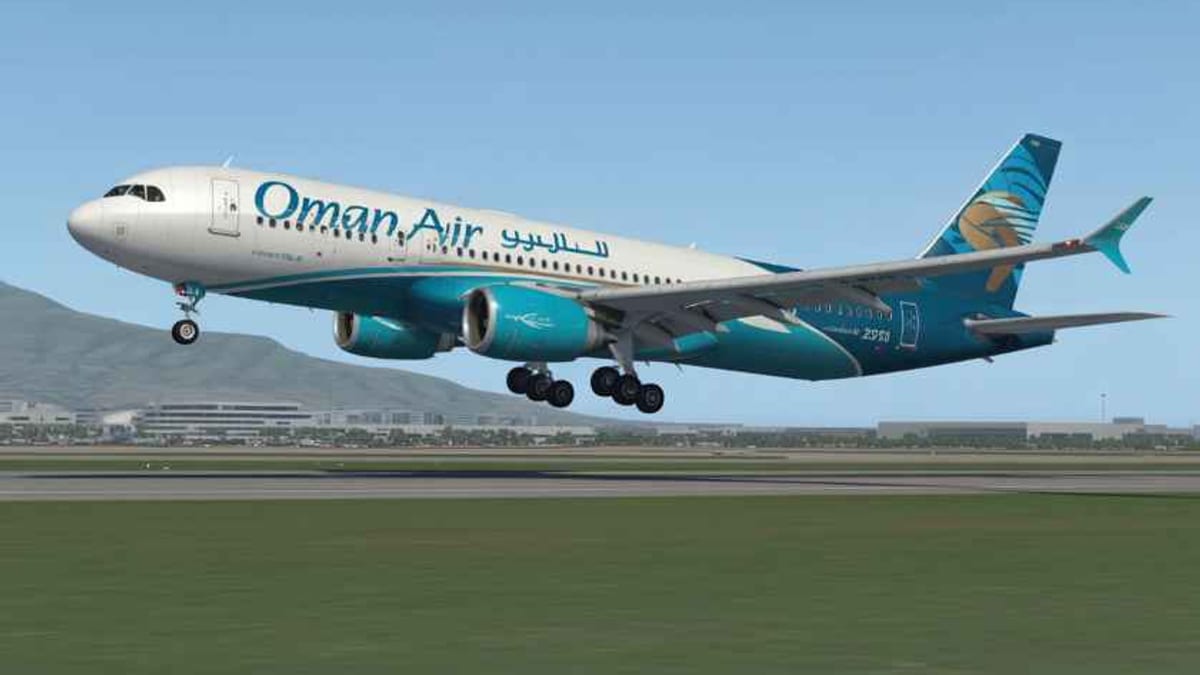
Image by Latest International / Global Travel News, Breaking World Travel News
Middle East Turmoil Triggers New Wave of Cancellations
Publicly available travel advisories and airline updates indicate that the latest phase of instability is tied to the widening 2026 Iran conflict and a series of missile and drone incidents affecting critical aviation hubs. Temporary shutdowns and capacity caps at airports in Dubai, Doha and other Gulf cities have led to repeated schedule overhauls and a sharp reduction in available seats across the region.
Industry briefings show that airspace over the United Arab Emirates, Qatar, Bahrain, Israel, Iran and Iraq has been subject to varying levels of restriction for much of March, with carriers required to use tightly controlled corridors or suspend services altogether on short notice. This has intensified pressure on airlines that previously relied on dense Gulf networks to feed Europe Asia traffic.
Specialist security and risk consultancies report that aviation schedules remain volatile, with airlines continuing to adjust operations in response to evolving military activity and airspace directives. The result has been a rolling pattern of cancellations, ad hoc relief flights and complex rerouting that has left many travelers facing extended delays or multi-stop journeys far from their original itineraries.
The broader impact reaches well beyond the Gulf. Travel advisories from governments outside the region now reference ongoing uncertainty over flights to and from a list of Middle Eastern states, warning that periodic closures and last-minute schedule changes remain likely as long as the security situation remains unresolved.
Oman Air Pulls Back Routes As Security Risks Rise
Within this fragile environment, Oman Air has moved to trim its network, cancelling multiple routes as part of a wider regional retrenchment. A security briefing dated mid-March notes that the carrier has suspended flights on several services through at least 28 March, citing elevated risks in affected airspace and the need to comply with operational guidance.
The cancellations mark a swift reversal for the Muscat-based airline, which had only recently been preparing a new wave of expansion to Europe, Asia and Africa. Earlier announcements highlighted plans for additional destinations and frequencies in 2026, but the conflict has now forced Oman Air to divert resources toward maintaining core connectivity and managing stranded passengers.
Reports from industry analysts suggest that Oman Air has focused on protecting strategic routes linking Muscat to major gateway cities while stepping back from more marginal or newly launched sectors. By consolidating operations, the carrier is attempting to preserve schedule reliability where possible, even as regional overflight options narrow and flight times increase due to detours around sensitive areas.
Travel experts indicate that Omani authorities, like their Gulf neighbours, are balancing the economic importance of aviation with heightened risk assessments around key infrastructure. Drone activity and missile threats against ports and airports in the wider region have sharpened concern over potential spillovers into Omani airspace, encouraging a more conservative stance on route planning.
UAE, Qatar and Kuwait Confront Ongoing Flight Challenges
In the United Arab Emirates, one of the world’s busiest aviation markets, publicly available information shows that Dubai International Airport has faced repeated operational interruptions in recent weeks. Temporary suspensions of flights following drone and missile incidents have been followed by a gradual resumption of limited services, with capacity still well below normal levels as of late March.
UAE-based airlines have been operating under these constraints while attempting to preserve long-haul links that depend on Dubai and Abu Dhabi as transfer hubs. Reports from aviation trackers indicate that carriers such as Emirates, Etihad, flydubai and Air Arabia have been forced to rework schedules, consolidate flights and route aircraft along longer, more circuitous paths to avoid restricted airspace.
Qatar has confronted similar turbulence. Following the closure of Qatari airspace at the onset of the latest escalation, Qatar Airways reduced operations to a skeletal network before gradually restoring a limited schedule. Recent public statements and timetables show the airline continuing to operate far fewer routes than prior to the conflict, while still serving dozens of destinations under constrained conditions.
Kuwait’s aviation sector has also come under pressure. News coverage in late March describes a drone attack that triggered a fire at Kuwait’s main airport fuel facilities, prompting safety checks and further scrutiny of flight operations. Kuwait Airways had already rerouted traffic via Saudi Arabian airports as a workaround for earlier airspace restrictions, illustrating the degree to which the conflict has upended traditional routing patterns across the Gulf.
Ripples Reach Iraq, Denmark and European Carriers
The turbulence in Gulf skies is being felt acutely in Iraq and along critical east west corridors linking Europe to Asia. Iraq, whose airspace sits astride many of the most direct routes between the continents, has seen airlines repeatedly reassess the safety of overflights. International carriers have periodically diverted around Iraqi territory during previous crises, and current risk assessments once again highlight the country as a focal point for planners.
European airlines and airports, including those in Denmark and other Nordic states, are adjusting to the knock-on effects of these route changes. When Gulf hubs operate at reduced capacity or specific Middle Eastern destinations become temporarily unreachable, long-haul services from Europe often see equipment changes, downgauging or outright cancellations as demand patterns shift.
Published analyses from aviation data firms indicate that airlines serving Copenhagen and other Scandinavian gateways have already modified schedules to the Middle East and South Asia, often substituting one-stop routings via alternative hubs in Europe or Central Asia for usual connections through Doha, Dubai or Abu Dhabi. This limits options for passengers accustomed to using Gulf carriers to reach destinations in India, Southeast Asia and Australasia.
The disruption also complicates cargo movements, with freight flows that normally transit the Gulf needing to be reallocated via European, Turkish or Central Asian hubs. For exporters and logistics companies in Denmark and elsewhere in Europe, heightened uncertainty over transit times and capacity has become a central planning challenge since the crisis began.
Global Airlines Reroute As Airspace Stays Volatile
Risk advisories issued throughout March underline that airspace closures and restrictions across several Gulf states remain subject to rapid change. Carriers have been told to expect further NOTAM updates on short notice, prompting global airlines to build contingency plans that include alternative routings over the eastern Mediterranean, the Caucasus and parts of Central Asia.
Some operators on Europe Asia sectors have shifted to more northerly tracks, accepting longer flight times and additional fuel burn in exchange for greater distance from active conflict zones. Others have temporarily cut certain city pairs that were heavily reliant on now constrained Gulf hubs, prioritizing network resilience over maximum geographic coverage.
Travel advisories from multiple governments emphasize that passengers should monitor airline communications closely and remain prepared for last-minute changes to routing, departure times or even departure airports. In many cases, travelers are being rebooked through secondary hubs that still offer stable operations, although seat availability is tight during peak periods.
Aviation analysts widely view the current disruption as a stress test for the hub-and-spoke model that has long centered global connectivity on Gulf super-connectors. With Oman Air cancelling routes, the UAE’s major airports operating under restrictions, and Qatar, Kuwait, Iraq and beyond confronting similar uncertainties, airlines and passengers are being forced to adapt to a more fragmented and unpredictable map of Middle Eastern air travel.