

More news on this day
The United Arab Emirates is on heightened security alert as the United States urges its citizens to leave the country “now via commercial means,” amid intensifying conflict with Iran, repeated missile and drone strikes across the Gulf, and a rapidly deteriorating security picture for travelers and expatriates in one of the world’s busiest transit hubs.
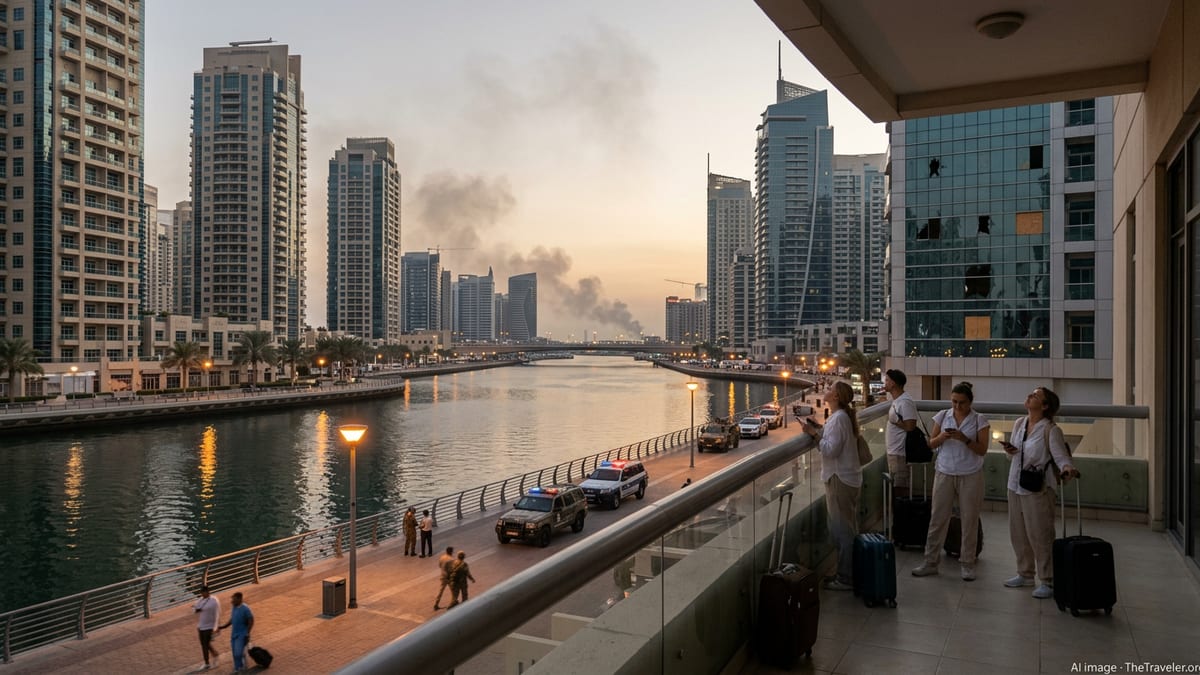
U.S. Issues Urgent Departure Guidance for Americans in the UAE
The U.S. State Department has warned Americans in the United Arab Emirates to depart immediately using any available commercial options, grouping the country with more than a dozen Middle Eastern states where “serious safety risks” have prompted unprecedented advisories. The updated guidance, circulated in early March, follows a wider regional escalation after joint U.S. and Israeli strikes on Iran triggered retaliatory attacks on Gulf states.
Security alerts issued in recent days reiterate that U.S. consular assistance on the ground may be limited, and that citizens should not rely on government-organized evacuations. Instead, they are being urged to monitor local media, stay in close contact with airlines and employers, and be prepared to move quickly if flight opportunities arise. The message marks a stark shift for a country that, until weeks ago, was marketed globally as a secure, seamless gateway between East and West.
American officials have also highlighted a global “worldwide caution” notice, underscoring concern that the conflict and associated terrorism threats could spill beyond the immediate war zone. For U.S. travelers in the UAE, this means not only a reassessment of personal risk tolerance but also the real prospect of rapidly changing rules at airports, ports and land borders.
Missile and Drone Threats Put UAE Security Apparatus to the Test
Since late February, the UAE has found itself on the front line of Iran’s retaliatory campaign, absorbing waves of ballistic missiles and drones aimed at strategic infrastructure and urban centers. Authorities report that most incoming projectiles have been intercepted by layered air defenses, sometimes in cooperation with allied forces, yet debris has fallen over populated areas and key logistics hubs.
In Dubai, residents have described concussive booms, bright streaks in the night sky and, in at least one upscale waterfront district, shattered glass and damaged facades after interceptions overhead. In a rare televised address on March 7, UAE President Mohammed bin Zayed Al Nahyan acknowledged that the country is “now in a time of war,” while insisting that defenses are successfully preventing a far greater catastrophe.
Officials have introduced rolling security measures, including temporary shelter-in-place advisories, alerts about potential missile threats pushed to residents’ phones, and increased patrols around commercial centers and tourist areas. While the government continues to stress its commitment to safety and stability, the visible signs of conflict are challenging the country’s long-cultivated image as an island of calm in a turbulent region.
Airspace Disruptions Leave Tourists and Residents Scrambling
The UAE’s status as a global aviation crossroads has made the impact of the crisis particularly acute for travelers. Partial airspace closures and security concerns across the Gulf have led to widespread cancellations and diversions, with long-haul flights rerouted around hotspots and many regional services suspended altogether. At Dubai International Airport, one of the world’s busiest, scenes of crowded departure halls and anxious passengers have become increasingly common.
Limited evacuation and repatriation flights have begun operating for various nationalities, but seats are scarce and often snapped up within minutes of being released. Travel agents in Dubai and Abu Dhabi report a surge in last-minute booking requests as foreign citizens heed their governments’ calls to leave, often cobbling together itineraries through less affected hubs in Europe or Asia.
Airlines are adjusting schedules day by day, warning that operations remain contingent on security assessments and government restrictions. Travelers are being urged to arrive early at airports, expect additional screening and documentation checks, and maintain flexible plans as routes continue to shift in response to military and diplomatic developments.
Regional Conflict and Terrorism Fears Cast Shadow Over Gulf Travel
The urgent U.S. advisory for the UAE is part of a broader recalibration of risk across the Middle East, where the 2026 war with Iran has reignited long-standing concerns about terrorism, proxy attacks and volatile flashpoints. Missile strikes have hit multiple Gulf countries, and foreign embassies have ordered nonessential staff and dependents to depart from several capitals, including in the UAE.
Security analysts note that while the UAE has a sophisticated intelligence and counterterrorism apparatus, its prominence as a logistics, finance and tourism hub makes it a symbolic and practical target for state and non-state actors alike. The convergence of high-profile Western businesses, expatriate communities and military-linked infrastructure heightens worries about opportunistic attacks or attempts to sow panic.
Neighboring states and traditional source markets for Gulf tourism have responded with their own advisories, with some governments upgrading warnings to “do not travel” for the UAE and surrounding region. Insurance providers are revisiting coverage terms, and corporate travel managers are reassessing duty-of-care obligations for staff transiting through Dubai and Abu Dhabi.
Americans in the UAE Weigh Difficult Choices Amid Uncertainty
For the sizeable American community in the UAE, the call to leave immediately presents a wrenching dilemma. Many U.S. citizens are long-term residents with families, mortgages and businesses deeply rooted in the Emirates. Others are short-stay visitors, from cruise passengers and business travelers to digital nomads and transit passengers who happened to be in the country when the crisis escalated.
Some Americans have already joined the rush to exit, securing seats on the limited outbound flights and accepting lengthy, multi-stop journeys home. Others, particularly those with strong local ties or limited financial means, are opting to stay for now, seeking shelter away from high-profile targets and closely monitoring official updates from both Emirati authorities and the U.S. government.
Travel experts advise that anyone remaining in the UAE should keep their documents and essential supplies ready, identify multiple exit routes, and register with consular services to receive timely alerts. With the security situation evolving daily and diplomatic efforts to de-escalate the conflict yielding uncertain results, the only constant for Americans in the Emirates is a climate of heightened vigilance and hard choices about when, and how, to leave a country that has long been marketed as one of the safest in the region.