

More news on this day
Unstable weather has returned to the United Arab Emirates, with heavy rain, thunderstorms and localized flooding disrupting travel across Dubai, Abu Dhabi, Sharjah, Ajman, Ras Al Khaimah and Al Ain, raising fresh questions for visitors about how safe and practical it is to move around the country this week.
Get the latest news straight to your inbox!
Rainstorms Return to a Region Still Mindful of 2024 Flooding
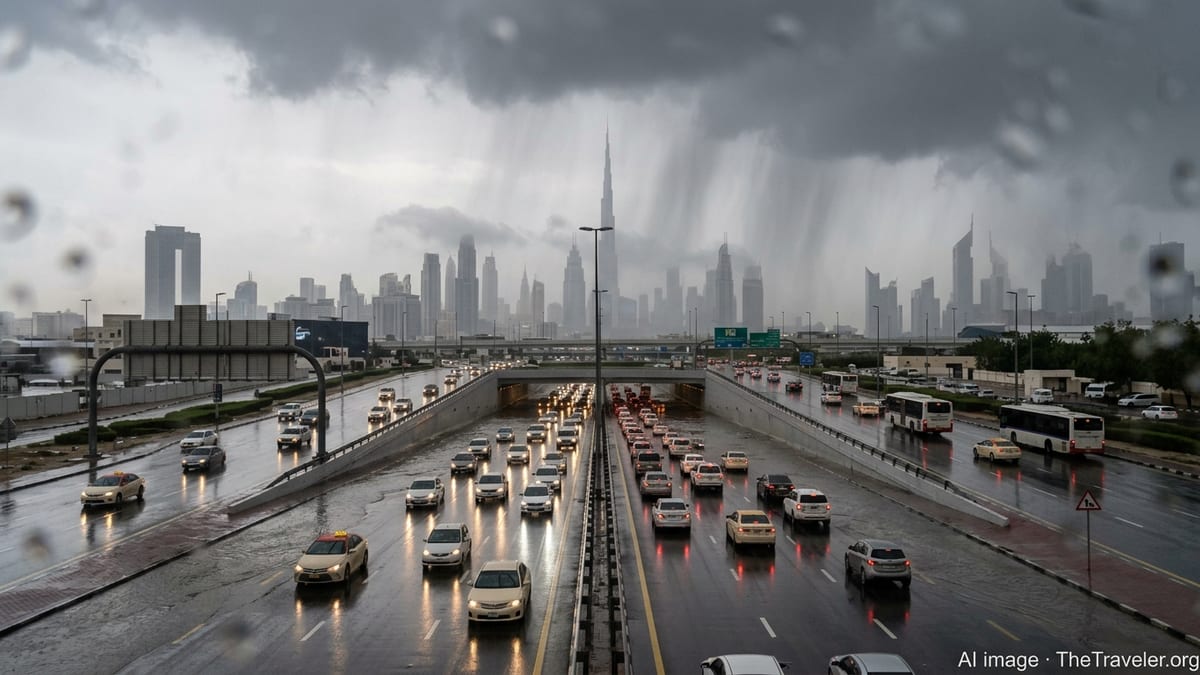
The latest round of storms is hitting the UAE during an already unsettled March pattern, with social media posts and community reports on March 23 and 24 describing intense downpours, waterlogged streets and fast-changing conditions between emirates. While not every district is seeing the same level of rainfall at the same time, travelers are encountering strong showers, gusty winds and short-notice warnings to avoid low-lying areas and wadis prone to flash flooding.
The wider region remains mindful of the April 2024 deluge, when exceptional rainfall triggered severe flooding that swamped sections of Dubai, Sharjah, Ajman and Ras Al Khaimah and caused prolonged disruption at Dubai International Airport. Publicly available summaries of that event note that infrastructure struggled to cope with the volume of water, with road underpasses, service lanes and some residential areas particularly affected.
Authorities have since highlighted investments in drainage and flood mitigation, but urban areas across the UAE still feature many roads, parking areas and construction zones that can quickly accumulate water in a downpour. The current storms are therefore being watched closely by residents and visitors who remember how rapidly conditions deteriorated in 2024 when heavy rain persisted for hours.
In the present spell, travelers are reporting highly localized effects. Parts of Abu Dhabi have seen intense rain and standing water, while districts of Dubai have, at times, remained relatively dry before new storm cells move inland from the coast. That patchwork pattern means visitors should not assume that calm weather in one part of an emirate reflects conditions on highways or at airports.
Flight Disruptions and What to Expect at UAE Airports
Air travel is under particular scrutiny, as the UAE is a major global hub and many passengers transit through Dubai and Abu Dhabi with tight connections. Published coverage and recent advisories from the region show that periods of adverse weather can combine with current regional security tensions to create a fragile operating environment in Gulf airspace, with short-notice changes to routings and schedules.
During severe storms in 2024, Dubai International Airport experienced extensive delays, diversions and long queues as rain and standing water affected aircraft movements and ground operations. In the current unsettled pattern, there have already been instances of travelers reporting being turned back from airport approaches because of congestion or temporary access restrictions, even when flights were still operating on a reduced or delayed schedule.
For visitors flying in or out over the coming days, the most likely impacts include delayed departure and arrival times, longer connection windows and occasional diversions to Dubai World Central or other regional airports if conditions deteriorate. Airline travel advisories issued earlier in March in response to broader regional risks have already encouraged passengers to monitor their booking status closely, and that advice remains relevant as weather adds another layer of uncertainty.
Travelers should be prepared for longer-than-usual processing times at check in and security if bad weather coincides with peak travel hours. It is also prudent to anticipate that ground transport between terminal buildings, remote stands and car parks may slow if heavy rain leads to temporary closures of exposed walkways or service roads.
On the Ground: Roads, Public Transport and Intercity Links
Road travel is where many visitors are noticing the most immediate impact. Posts from residents in Dubai and the wider UAE over March 23 and 24 highlight waterlogged highways, deep puddles on service roads and reduced visibility on major routes linking Dubai with Sharjah and the northern emirates. Community warnings have singled out desert and suburban roads, such as those skirting residential developments, where drifting sand and uneven surfaces can conceal large pools of water after a storm.
In the 2024 flooding, key corridors between Dubai, Sharjah and Ajman were choked by stalled vehicles and flooded underpasses, leaving commuters and tourists stranded for hours. While drainage upgrades and emergency planning have been strengthened since then, the current weather has already produced instances of partial lane closures and slow traffic near known bottlenecks and low-lying intersections.
Ras Al Khaimah and Al Ain, which rely heavily on intercity road connections, are also exposed to flash flooding in wadis and at the base of mountain slopes. Publicly available advisories urge drivers to avoid valley roads and underpasses when heavy rain is forecast, as water can rise quickly and unexpectedly. Visitors heading for desert resorts, mountain viewpoints or cross-emirate road trips should be aware that access routes can be temporarily blocked, even when the destination itself appears unaffected on weather radar.
Urban public transport, including the Dubai Metro and bus networks, has generally proven resilient during past storms, but surface-level feeder buses and tram services can be delayed if streets flood or traffic gridlocks. Travelers planning to rely on taxis and ride-hailing should factor in longer wait times and potential surge pricing during peak rainfall, especially around malls, business districts and airport terminals.
How the Rainstorms Could Affect Your Itinerary
For leisure travelers, the practical impacts of the storms often begin with simple inconvenience rather than outright danger. Beach days can be washed out by squally showers, rooftop pools and outdoor terraces may close temporarily, and desert safaris and dhow cruises are frequently postponed or rescheduled when thunder and strong winds are forecast. Theme parks with large outdoor components, such as waterparks and open-air attractions, may operate partial programs or suspend certain rides in wet or windy conditions.
City sightseeing can continue in many cases, but heavy rain complicates movement between attractions, especially in districts with limited covered walkways. Visitors walking between metro stations, malls, museums and souqs may encounter ankle-deep water at curb edges, slippery tiles and poor visibility in traffic. Photography-focused travelers should anticipate hazy skylines and low cloud around high-rise viewpoints during and shortly after storms.
Business travelers face a different set of challenges. Meetings and events are still proceeding across Dubai, Abu Dhabi and Sharjah, but attendees may struggle to reach venues on time if they underestimate the combined effect of rain and congestion. In 2024, several conferences and exhibitions saw lower in-person attendance and delayed starts because participants were physically unable to cross flooded arterial roads; there is a risk of similar localized disruption if the current storms intensify.
For those combining multiple emirates in a single trip, itinerary flexibility is particularly important. A plan that relies on early-morning check out, a long drive to another city and a same-day evening flight can easily unravel if a storm cell moves through at the wrong moment. Allowing more time between commitments and being willing to swap sightseeing days or adjust routes can make the difference between a stressful experience and a manageable one.
Practical Strategies to Beat the UAE’s Weather Chaos
Travel specialists and local commentators consistently recommend that visitors treat the UAE’s rainstorms as serious, short-term disruptions rather than routine showers. The country’s fast-growing cities and desert landscapes are not designed for long, soaking rainfall, which means that even moderate storms can have outsized effects on mobility and infrastructure when they coincide with rush hour or busy travel days.
Before departure, travelers can reduce risk by building slack into flight connections through Dubai or Abu Dhabi, avoiding itineraries that involve tight same-day links to onward long-haul services. Flexible or changeable tickets, as well as comprehensive travel insurance that covers weather-related disruption, can help absorb costs if flights or hotel stays need to be amended.
Once on the ground, the most effective strategy is to monitor conditions frequently through official weather updates and airport or airline channels, and to be prepared to modify plans at short notice. Choosing accommodation close to a metro station or in walkable districts around major malls can limit reliance on road transport during heavy downpours. Visitors planning excursions to Ras Al Khaimah, Al Ain or the wider interior should check road advisories on the day of travel and have a backup plan that keeps them within city limits if wadi flooding becomes a concern.
For many tourists, the storms will pass with only minor inconvenience, offering a rare glimpse of the UAE under dramatic clouds instead of relentless sun. However, the combination of recent extreme weather history and the current unstable pattern means that prudent planning is essential. By allowing extra time, staying informed and remaining flexible, travelers can significantly improve their chances of navigating the UAE’s latest bout of weather turbulence with their trips largely intact.