

More news on this day
The United Arab Emirates has reopened its airspace after a period of heightened restrictions, with publicly available information indicating that the General Civil Aviation Authority (GCAA) has lifted precautionary measures and commercial flight operations are returning to normal levels at Dubai, Abu Dhabi, and Sharjah airports.
Get the latest news straight to your inbox!
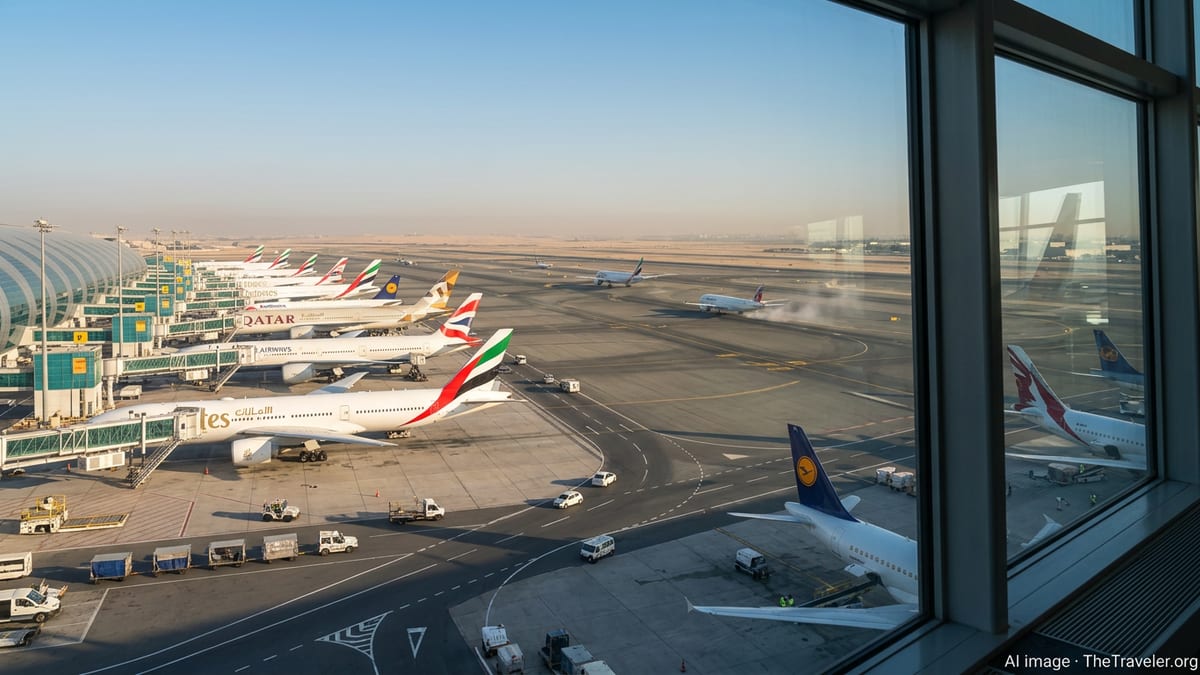
Airspace Restrictions Lifted After Regional Tensions
Recent regional security tensions led to widespread airspace restrictions across parts of the Middle East, including a temporary tightening of flight corridors over the United Arab Emirates. Over several days, airlines serving Dubai International, Abu Dhabi’s Zayed International, and Sharjah International reduced schedules, rerouted aircraft, or suspended operations altogether as flights were diverted away from sensitive airspace.
According to published coverage, the GCAA has now confirmed that air traffic operations across UAE airspace have returned to normal parameters, marking a significant shift from the earlier limited operating windows and constrained corridors that carriers had been using to maintain essential connectivity. Commercial overflights and scheduled passenger services are reported to be moving back onto standard routings as regional risk assessments improve.
This easing of restrictions follows a phased approach in which airports first operated only a small number of departures and arrivals, before gradually expanding capacity as safety assessments allowed. While some neighboring countries continue to manage varying degrees of airspace controls, current reporting suggests that the UAE’s controlled airspace is again open for routine civilian traffic under normal conditions.
Industry summaries note that the lifting of precautionary measures is expected to stabilize airline operations that had been heavily disrupted, particularly for long-haul carriers that rely on UAE hubs as key connecting points between Europe, Asia, Africa, and the Americas.
Dubai, Abu Dhabi, and Sharjah Hubs Move Back to Regular Schedules
Dubai International Airport, one of the world’s busiest international gateways, is reported to be restoring its full banked-wave schedule after days of reduced frequencies and rolling cancellations. Passenger volumes have been climbing as airlines reinstate flights that were previously suspended or rerouted, with more aircraft once again using Dubai World Central as a supporting facility where required.
In Abu Dhabi, operations at Zayed International Airport are also described as returning to regular patterns, following a period in which only limited departures and arrivals were permitted during specific time windows. Airlines based in the UAE capital have begun rebuilding their networks from Abu Dhabi, reconnecting core destinations as standard timetables are progressively restored.
Sharjah International Airport, an important base for regional and low cost carriers, is similarly transitioning from constrained operations back toward normal activity. Reports indicate that carriers using Sharjah have resumed a broader range of services, helping to reestablish links to South Asia, North Africa, and other nearby markets that depend on high-frequency flights.
Across all three hubs, airport operators are working through a large backlog of displaced passengers and repositioning aircraft that had been diverted or parked during the worst of the disruption. While terminal facilities and ground handling services are functioning normally, operational planners continue to manage the knock-on effects of earlier cancellations and schedule changes.
Airlines Accelerate Network Recovery and Rebooking Efforts
Major UAE-based airlines are now focused on accelerating network recovery and clearing the queues of affected travelers. Publicly available updates from carriers show that long haul and regional routes that were operating at sharply reduced capacity are being brought back into schedules, in some cases reaching a significant share of pre-disruption frequencies within days of the airspace reopening.
Airlines are prioritizing customers whose flights were cancelled or heavily delayed during the period of precautionary measures, with many carriers using larger aircraft or additional rotations to move passengers out of the UAE’s main hubs as quickly as possible. Travel industry analyses highlight that carriers based in Dubai, Abu Dhabi, and Sharjah are leveraging their wide body fleets and dense global networks to absorb the spike in rebooked passengers.
At the same time, airlines continue to advise travelers to monitor flight status closely, given that fine tuning of schedules is still under way as operations normalize. Some short notice aircraft swaps and departure time adjustments remain possible as airlines balance crew availability, maintenance requirements, and renewed demand across their networks.
Industry observers suggest that the speed of the recovery reflects lessons learned from previous regional disruptions, with airlines and airports now able to implement contingency plans, rerouting strategies, and rapid schedule rebuilds more efficiently than in earlier crises.
What Passengers Should Expect in the Coming Days
For travelers heading to or transiting through the UAE in the coming days, the overall picture is one of improving stability. With the GCAA indicating that air traffic operations have returned to normal across national airspace, most flights to and from Dubai, Abu Dhabi, and Sharjah are expected to operate as scheduled, particularly on major trunk routes to Europe, Asia, and the Indian subcontinent.
However, aviation industry reporting notes that residual delays and occasional disruptions are still possible as airlines finalize aircraft rotations and complete the process of reuniting passengers with their original travel plans. Longer check in and security queues may persist at peak times, as many travelers whose journeys were interrupted finally depart, adding to already strong seasonal traffic.
Passengers are encouraged by publicly available guidance to arrive at airports with ample time before departure and to verify their flight status through official airline channels before setting out. Those with tight onward connections may wish to consider slightly longer layovers while schedules settle, particularly on complex multi stop itineraries that rely on precise connection banks at UAE hubs.
Travel consultants and airport updates alike suggest that, despite the lingering effects of earlier cancellations, the overall trajectory is positive, with each day bringing schedules closer to standard pre disruption patterns and restoring the reliability for which the UAE’s major airports are known.
Impact on Tourism, Business Travel, and Regional Connectivity
The reopening of UAE airspace and the return to normal airport operations are expected to have a significant impact on tourism flows and business travel throughout the region. The UAE’s position as a major global connector means that disruptions at Dubai, Abu Dhabi, and Sharjah tend to ripple across multiple continents, affecting not only point to point travel but also long haul itineraries that rely on one stop connections.
With flights now normalizing, tour operators and hotels in the UAE anticipate a gradual rebound in arrivals, particularly from key source markets in Europe and Asia. Business travelers who had postponed or rerouted trips are also likely to return to using UAE hubs, given their extensive route networks and frequent services that facilitate short stays and rapid turnarounds.
Regionally, the reopening supports the wider aviation ecosystem across the Gulf and beyond. Airlines in neighboring countries that interline with UAE carriers or depend on feed traffic through Dubai and Abu Dhabi are expected to benefit as transfer volumes increase. Cargo operations, which also faced constraints during the period of restricted airspace, should see improved reliability on key trade lanes connecting Asia, the Middle East, and Europe.
While analysts caution that any future escalation in regional tensions could again affect airspace management, the current shift toward normal operations in the UAE offers a measure of reassurance to travelers and the industry. For now, the focus is on consolidating the recovery, restoring confidence in flight schedules, and ensuring that the country’s flagship airports continue to function as dependable gateways for global travel.