

More news on this day
The United Arab Emirates has reopened its airspace and lifted precautionary restrictions on civil aviation, with publicly available information indicating that normal flight operations are resuming at Dubai, Abu Dhabi and Sharjah airports following weeks of conflict-related disruption.
Get the latest news straight to your inbox!
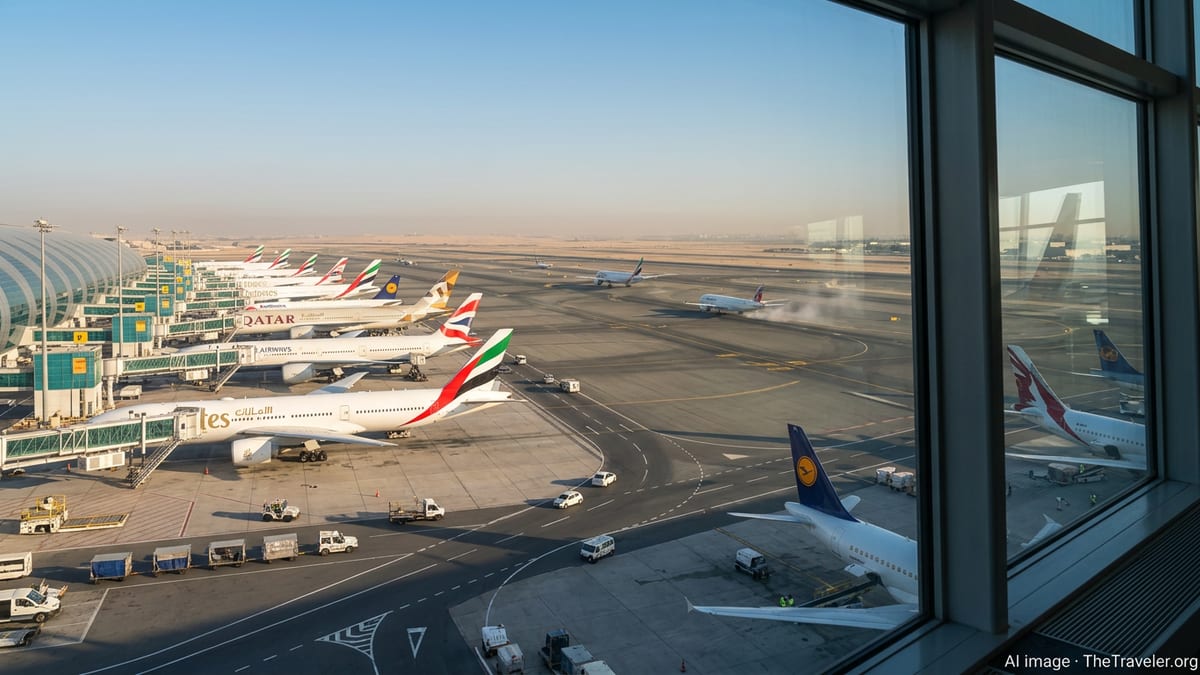
GCAA Lifts Precautionary Measures After Regional Escalation
The return to normal air traffic follows a period of unprecedented tension in Gulf skies, triggered by Iranian strikes on the UAE and broader regional airspace closures from late February 2026. In response to those attacks, the UAE’s General Civil Aviation Authority (GCAA) introduced a series of precautionary measures that significantly curtailed flight movements and restricted the use of national airspace.
Earlier regulatory documents and advisories showed that the GCAA temporarily suspended the operation of drones and light sport aircraft as part of a broader safety posture. Commercial passenger flights were also heavily reduced or halted at times as air defenses engaged incoming drones and missiles and as carriers navigated complex overflight restrictions across neighboring states.
Publicly available updates now indicate that those emergency curbs are being unwound as air defense risks ease and coordination with regional and international partners stabilizes flight corridors. The latest GCAA communications highlight that air traffic operations have returned to normal across UAE airspace, clearing the way for full schedules to be restored by home carriers and foreign airlines serving the country’s hubs.
Industry observers note that the move marks a significant milestone in the UAE’s recovery from the recent crisis, signaling confidence in the security environment above the country’s key population centers and transport nodes.
Dubai International Airport Ramps Back to Full Schedule
Dubai International Airport, consistently ranked among the world’s busiest international hubs, experienced some of the most visible disruptions during the height of the airspace restrictions. Earlier reports documented temporary suspensions of arrivals and departures, partial resumptions on limited routes, and fresh interruptions when incoming drone and missile attacks triggered renewed safety measures.
Recent travel advisories and operational summaries now describe a transition from reduced schedules back to standard operations at Dubai International and the city’s secondary Al Maktoum International Airport. Emirates and flydubai progressively rebuilt their networks through limited services and repatriation-style flights before moving toward a fuller timetable as more airspace corridors reopened.
Passenger-focused updates shared by aviation tracking platforms and travel management companies indicate that routine point-to-point flights, transit connections, and long-haul services are again operating broadly as scheduled from Dubai. Travelers are being encouraged to reconfirm bookings and expect lingering delays or aircraft swaps in the short term, but the direction of travel is toward a pre-crisis pattern of operations.
Airport access controls that were tightened during the emergency, including restrictions to ticketed passengers and enhanced security screening, are also gradually normalizing in parallel with the resumption of regular flight volumes.
Abu Dhabi and Sharjah Restore Network Connectivity
Abu Dhabi’s main gateway, Zayed International Airport, was another focal point during the disruption period, with departures suspended at various stages and only a small number of exceptional flights operating for several days. Etihad Airways initially focused on repositioning aircraft and moving stranded passengers before cautiously reintroducing a limited commercial schedule.
Updated advisory material now portrays Abu Dhabi as largely back to business as usual, with Zayed International handling a regular mix of regional and long-haul flights. Etihad has been rebuilding frequencies on key routes and reconnecting its global network, while other airlines that temporarily diverted or cancelled services to the UAE capital are progressively returning.
Sharjah International Airport, a major hub for low-cost and regional operations, followed a similar path. Air Arabia and other carriers initially paused most flights, then introduced a reduced timetable as conditions allowed. Current travel updates show that Sharjah is once again operating a broad schedule of departures and arrivals, supporting both point-to-point demand and connections across the wider Middle East, South Asia and North Africa.
With all three airports now reporting normal operations under the reopened airspace, the UAE’s aviation system appears to be regaining its usual role as a high-capacity connector between East and West.
Impact on Travelers and Airline Recovery Efforts
The reopening of UAE airspace brings relief to thousands of travelers who faced cancellations, extended layovers, and complex rebooking processes over recent weeks. Publicly shared accounts from passengers highlighted missed connections, diversions to alternative hubs, and extended stays in transit hotels as airlines grappled with rapidly changing safety assessments and regulatory instructions.
As operations normalize, carriers based in the UAE are prioritizing passengers whose earlier flights were disrupted while simultaneously relaunching regular services. Industry commentary suggests that airlines are staggering capacity increases to match available aircraft, crew resources, and demand, which means some routes may take additional days to fully stabilize even though airspace is formally open.
Travel consultants and aviation monitoring services continue to advise passengers to monitor airline communications closely, allow extra time at the airport, and remain flexible with travel plans as residual delays and occasional last-minute schedule adjustments work through the system. Nonetheless, the overall trend is toward steadily improving reliability, with fewer last-minute cancellations than during the peak of the crisis.
For corporate travel programs and tour operators that rely heavily on UAE hubs, the normalization of schedules provides the basis for reinstating previously paused itineraries, trade missions, and leisure packages that depend on seamless connections through Dubai, Abu Dhabi and Sharjah.
Regional Significance and Outlook for Gulf Aviation
The reopening of UAE airspace carries significance beyond the country’s borders, given its central role in regional and global connectivity. During the closures, rerouted flights placed additional pressure on alternative hubs in neighboring states, while some carriers opted to suspend services to parts of the Gulf altogether. The restoration of normal operations in the UAE eases those knock-on effects and helps rebalance traffic flows across the wider Middle East.
Aviation analysts point out that the rapid reactivation of complex hub operations underscores the resilience and preparedness of the UAE’s aviation ecosystem. From air traffic management to ground handling and passenger processing, multiple layers of infrastructure have had to ramp back up quickly while maintaining heightened safety and security standards shaped by the recent conflict.
Looking ahead, public commentary in industry circles suggests that airlines and regulators will continue to refine contingency planning, including diversified routings, flexible crew deployment, and improved communication channels with passengers during fast-moving crises. The recent experience is likely to inform future risk assessments and emergency procedures, not only in the UAE but across other aviation markets that depend on stable overflight corridors.
For travelers, the message from the latest publicly available information is that the UAE’s skies are open again and its flagship airports are once more functioning as major gateways for business and leisure journeys. While vigilance remains high and conditions could evolve, the lifting of precautionary measures by the GCAA marks a pivotal step toward restoring confidence in Gulf air travel.