

More news on this day
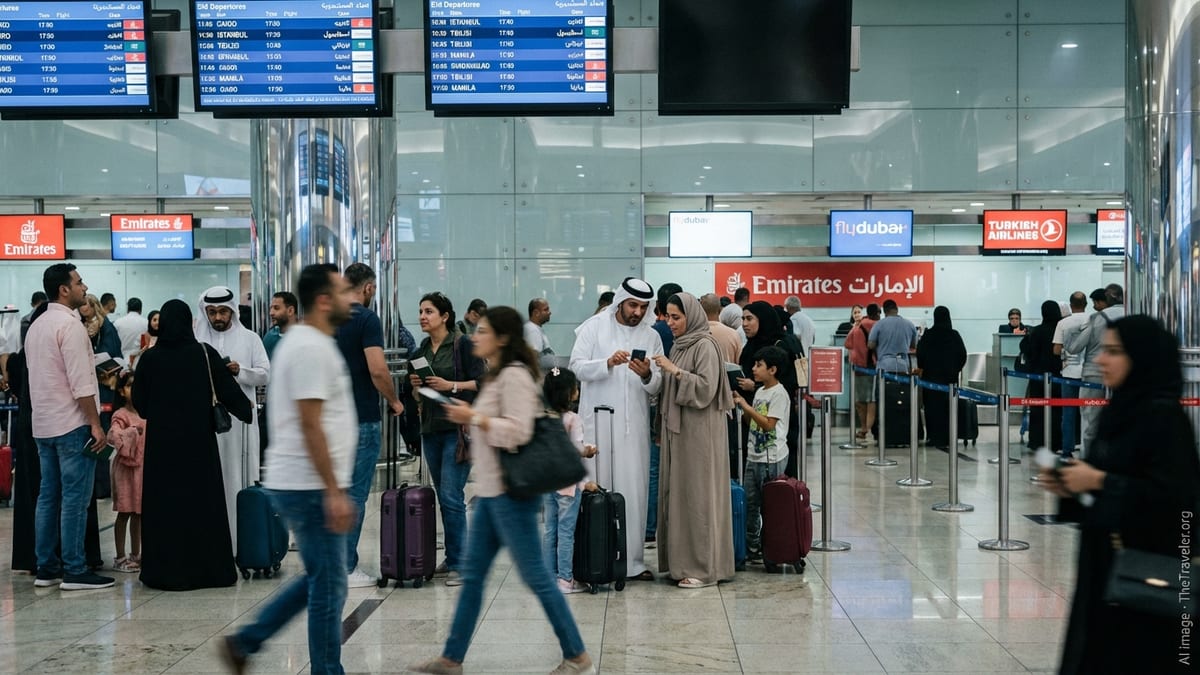
As Eid Al Fitr approaches in late March 2025, many UAE residents hoping to reunite with family or escape on a short break are being confronted with sharply higher airfares, with tickets to some of the most popular destinations now costing nearly double off-peak prices as demand surges and planes fill up weeks before the holiday.
Peak-Season Squeeze Sends Fares Soaring
Travel agents and airline executives say demand for seats out of the UAE in the weeks around Eid Al Fitr has surged far earlier than usual this year, tightening capacity and pushing prices steeply higher. Industry data show that fares on key routes to Arab and regional destinations have climbed by as much as 55 per cent compared with January and February levels, with further increases expected as the holiday draws closer.
Ticket prices are following a familiar pattern: low throughout much of January and early February, then rising sharply from mid-February as residents lock in travel plans for the long weekend. On some routes, particularly to near‑by Arab capitals and popular family destinations, travel consultants report that fares have already doubled versus low-season benchmarks, echoing previous holiday peaks when prices spiked by 100 to 300 per cent on heavily booked flights.
This year’s spike is being amplified by the timing of Eid Al Fitr, which is expected to fall around March 30 or 31, overlapping directly with spring school breaks and, in some cases, Easter holidays. With multiple demand drivers converging into the same two-week window, even basic economy seats on regional carriers are selling at levels that many residents say they have never seen before for an Eid break.
Top Destinations Under Pressure
The most pronounced fare hikes are being recorded on routes where demand is both seasonal and sentimental. Air travel to popular Arab destinations is seeing particularly strong pressure, as residents rush to spend Eid with family in cities such as Cairo, Amman, Beirut and Jeddah. Travel platforms tracking bookings from the UAE report that prices on some of these routes are up between 30 and 55 per cent compared with early-year averages, with peak-day flights close to full capacity.
At the same time, short-haul leisure favourites such as Georgia, Azerbaijan, Armenia and Turkey continue to attract UAE holidaymakers with relatively short flying times and relaxed visa regimes. Travel firms say that many of their package deals to these destinations are either sold out or priced significantly higher than last year, with the airfare component accounting for most of the jump.
Farther afield, Southeast Asian destinations including Thailand, Singapore and Malaysia are also feeling the squeeze. While base fares to these countries tend to be higher, agents note that Eid-period tickets are now commonly 20 to 40 per cent above shoulder-season levels, reflecting strong demand for multi-city itineraries that combine beach stays, shopping and cultural tourism. For many UAE residents, particularly larger families, that price differential is enough to tip the balance toward staying closer to home or opting for a domestic break.
Residents Face Tough Choices and Higher Budgets
For households spread across multiple countries, the rapid escalation in ticket prices is forcing painful trade-offs. Residents accustomed to flying home to South Asia, North Africa or the Levant for Eid now find that fares, once booked for a few hundred dirhams, can reach two or three times that amount on certain days. Some families are cutting trip durations, travelling without children, or postponing reunions to off-peak months when fares briefly normalize.
Middle-income residents, in particular, are feeling the strain as higher airfares collide with broader cost-of-living pressures. Even where employers offer a four or five-day Eid break, many workers say they cannot justify paying holiday-weekend prices for trips that may last only three or four nights once travel time is factored in. Several agents report a noticeable shift in booking behavior, with more customers requesting the cheapest possible combinations of indirect flights, late-night departures and budget carriers.
Others are deciding to sit this Eid out entirely, hoping that fares will ease later in the year. Travel consultants say it is increasingly common for residents to reserve their major family visits for the summer, when, despite higher hotel rates in some destinations, the airfares can be more manageable than during the compressed Eid window. The result is a widening gap between those able to absorb premium holiday pricing and those forced to rethink long-standing traditions of heading home every Eid.
Early Bookers Versus Last-Minute Travellers
Industry experts say the current fare shock is not hitting all travellers equally. Those who booked in January or early February were able to secure far lower prices, benefiting from airlines’ initial promotional fares ahead of the peak. On many routes, return tickets that were available for around 1,200 dirhams earlier in the year are now selling for closer to 2,000 dirhams or more as seat availability tightens.
By contrast, late planners are facing the full impact of dynamic pricing algorithms that ratchet fares higher as each aircraft fills. Travel agents note that in the final two weeks before Eid, prices can climb dramatically even from one day to the next, especially on popular departure dates such as the evening before the holiday or the first day of the official break. On some historically busy sectors, the last remaining economy seats are now priced at levels that rival business-class fares during the low season.
This growing divide is reinforcing a long-standing industry message: planning early is no longer just a smart option but a financial necessity for residents determined to travel at Eid. However, not all households can commit to early bookings, especially those waiting for final confirmation of work schedules, school exam timetables or official Eid dates. For them, the choice is increasingly between paying steep premiums or staying put.
Airlines Respond with Extra Capacity but Higher Yields
Airlines serving the UAE are keenly aware of the seasonal demand spike and are moving to capture as much of it as possible. Major Gulf carriers have announced additional flights on select routes over the Eid Al Fitr period, particularly to near‑by Gulf and Arab destinations, in an effort to relieve bottlenecks and accommodate late-booking passengers. For example, one Dubai-based airline has scheduled a series of extra services to regional cities between March 26 and April 6, anticipating hundreds of thousands of passengers over the holiday.
Yet even with extra capacity, operators are under no pressure to discount. With planes projected to fly close to full on many days, airlines are instead prioritizing higher yields, using granular booking data to adjust prices in real time. Executives say that where demand remains robust, they will continue to sell remaining seats at premium levels, particularly in economy cabins popular with families and migrant workers.
The strategy reflects wider trends in global aviation, where capacity growth has lagged behind the rapid rebound in travel demand following the pandemic. Aircraft delivery delays, staffing constraints and route rationalizations all contribute to a market where, during peak holidays such as Eid, supply cannot fully keep pace with demand. For UAE residents determined to travel in these windows, that imbalance translates directly into higher ticket prices.
Package Holidays and Hidden Cost Pressures
The surge in airfares is also reshaping the economics of Eid travel packages marketed by tour operators in the UAE. Firms selling combined deals that include flights, hotels and excursions say the cost of the airfare component has risen by around 30 per cent year-on-year in many cases, forcing them either to pass the increase onto consumers or trim inclusions to keep packages appealing.
Some agents report that overall package prices for popular Eid escapes are up by a similar margin compared with 2024, reflecting the double impact of higher ticket prices and firming hotel rates in high-demand destinations. Where packages to regional hotspots once attracted budget-conscious families with the promise of all-inclusive value, many now sit firmly in the premium bracket.
At the same time, dynamic pricing by both airlines and hotels is making it harder for consumers to compare deals or lock in predictable budgets. Packages advertised at one rate can change within days as suppliers update their pricing, leaving some residents with the impression that deals are disappearing as quickly as they appear. This volatility is encouraging a segment of travellers to bypass packaged options altogether, booking flights and accommodation separately in search of better value, though often with mixed results.
Staycations Surge as an Alternative
As outbound airfares climb, hotels across the UAE are reporting brisk interest in Eid staycations from residents recalibrating their holiday plans. Hospitality groups say booking levels for the Eid Al Fitr period are already significantly ahead of last year, with some operators forecasting occupancy of 90 per cent or more in key city and resort properties. For many families, the cost of a few nights at a beachfront hotel in Dubai, Abu Dhabi or the Northern Emirates now rivals, or even undercuts, the price of flying abroad for a similar-length trip.
To capture this demand, hotels are rolling out Eid promotions that include discounted room rates, complimentary stays or dining for children, and extended check-out times. Industry analysts say these offers are resonating particularly strongly with residents who feel priced out of international travel but still want a change of scene during the long weekend. While domestic breaks cannot replace the emotional pull of visiting relatives overseas, they are increasingly viewed as a pragmatic compromise.
This pivot toward local travel is also helping to cushion the blow for tourism operators within the UAE, who are benefiting from higher occupancy levels and increased spending on food, entertainment and attractions. For the broader economy, it means that some of the money that might once have gone toward overseas tickets and foreign hotels is instead circulating within the country, even as outbound carriers capitalize on those willing to pay for international flights.
Strategies Residents Are Using to Cope
Faced with stubbornly high fares, many UAE residents are becoming more strategic in how they plan Eid travel. Travel agents report growing interest in flying a day or two before or after the heaviest peaks to shave hundreds of dirhams off ticket costs. Others are choosing less obvious routes or secondary airports, accepting longer travel times or layovers in exchange for modest savings.
Another emerging trend is the reshaping of family trips around the school calendar, with some parents advancing or delaying holidays to mid-Ramadan or immediately after Eid, when prices can briefly retreat from their highest levels. Those able to work remotely are experimenting with longer stays overseas that span both peak and off-peak days, averaging out the cost of high-priced departure flights with cheaper returns.
Despite these tactics, however, the underlying reality remains that demand is outpacing supply in the short window around Eid Al Fitr. Unless residents are willing to book very early, adjust their dates significantly or switch to domestic breaks, they are likely to continue encountering airfares that feel more like high summer or New Year peak pricing than a traditional family holiday period.