

More news on this day
The United Arab Emirates has restored full air traffic after a short but highly disruptive suspension linked to regional security risks, a move that is easing global travel jitters and allowing international visitors to resume using Dubai and Abu Dhabi as key transit and holiday gateways.
Get the latest news straight to your inbox!
From Sudden Shutdown to Full Reopening
Published coverage shows that large sections of UAE airspace were temporarily closed from late February into early March 2026 following missile and drone activity tied to the wider regional conflict. Passenger operations at Dubai International, Abu Dhabi Zayed International and other airports were halted or sharply reduced while air defenses engaged incoming projectiles and authorities assessed the risk environment.
Airports in Dubai and Abu Dhabi initially moved to a limited-service model, handling restricted passenger flows and priority traffic while international airlines diverted or cancelled flights. Travel advisories noted cascading disruption across Asia and Europe as carriers re-routed around Gulf airspace, adding hours to long-haul itineraries and stranding travelers in hubs from Singapore to London.
Reports in regional and international outlets now indicate that the UAE has completed a phased return to normal operations, with full commercial arrivals, departures and overflights once again permitted. Dubai International and Abu Dhabi Zayed International are back to functioning as high-volume global hubs, although experts stress that the recent shutdown has prompted a more conservative approach to security planning.
The restoration of full air traffic is being framed as a signal of renewed confidence in the safety of UAE skies, even as the broader Middle East situation remains fluid. The move allows airlines to restore core schedules and gives travelers more predictable options when planning trips through the Emirates.
Enhanced Security Measures at Airports and in the Air
Publicly available information from aviation and travel advisories suggests that the return to full operations has come with tightened security protocols across UAE airports. Passengers can expect more visible screening procedures at terminal entrances, check-in halls and security checkpoints, including additional document checks and occasional secondary screening for both carry-on and checked baggage.
On the airside, air traffic management and routing over the Gulf have been adjusted to reflect updated risk assessments. Flight trackers and airline updates show that some routings have been subtly shifted, with higher cruising altitudes and minor changes to flight paths designed to keep commercial jets well clear of any areas considered sensitive.
Travel operations briefings also point to a sharpened focus on contingency planning. Airlines using Dubai and Abu Dhabi are building in extra buffers for aircraft rotations and crew duty times to account for any short-notice airspace advisories. While these measures are largely invisible to travelers, they may translate into slightly longer ground times at busy periods, especially during late-night and early-morning departure waves.
Despite the more intensive security posture, current reporting indicates that passenger processing remains relatively smooth, supported by extensive automation at immigration and smart-gates. The overall experience is expected to feel more controlled rather than overtly restrictive, with most adjustments happening behind the scenes.
What Tourists Should Expect During Their Journey
For tourists connecting through or visiting the Emirates in the coming weeks, the most immediate change is the return of a wider choice of flights and shorter routings. Schedules on major carriers such as Emirates and Etihad are moving back toward pre-disruption frequency, reconnecting key long-haul corridors between Europe, Asia, Africa and the Americas that rely on Dubai and Abu Dhabi as central transfer points.
Travelers should, however, be prepared for a more precautionary travel environment. Industry updates recommend arriving at the airport earlier than usual, allowing extra time for check-in and security. Some airlines are advising passengers to build in additional layover time when self-connecting between carriers, as last-minute gate changes and modest delays remain possible while operations fully stabilize.
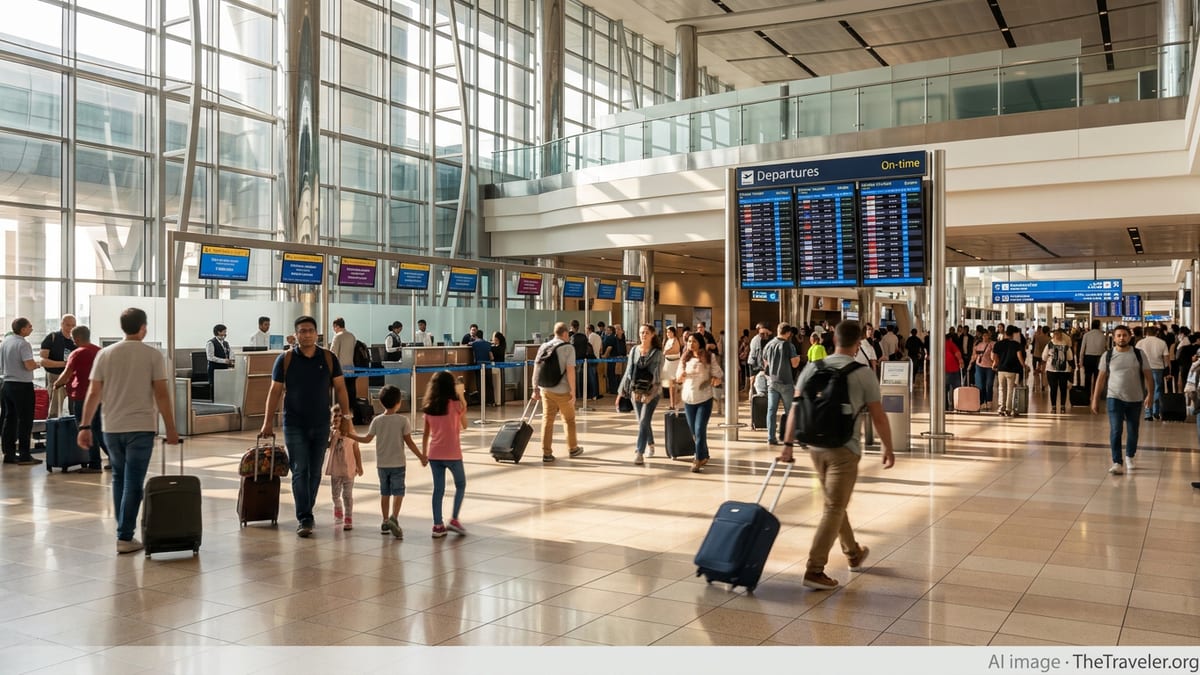
In terminals, visitors are likely to notice updated passenger information screens and frequent public announcements outlining security and operational guidance. Retail, dining and lounge facilities at the major hubs are largely open and trading normally, according to published coverage, but individual outlets may adjust opening hours to match evolving flight schedules.
For those staying in the UAE, city life in destinations such as Dubai, Abu Dhabi and Sharjah continues largely as usual, with hotels, attractions and public transport functioning. Travel advisories nonetheless encourage visitors to remain attentive to official notifications and to register with their home country’s travel alert systems when spending extended time in the region.
Impact on Airlines, Routes and Visitor Confidence
The brief closure of UAE airspace triggered significant knock-on effects for airlines, highlighting the Emirates’ central role in global aviation networks. Data collated by travel analytics groups shows hundreds of cancellations and widespread delays across Asia and Europe during the shutdown period, as carriers ranging from European legacies to Asian low-cost airlines altered routes or suspended Gulf services.
With full traffic now resumed, airlines are restoring previously suspended routes and reinstating frequencies that had been cut or consolidated. Some carriers are using larger aircraft or adding temporary extra services on high-demand sectors to clear backlogs and accommodate travelers who had postponed journeys during the period of uncertainty.
For the UAE’s tourism sector, the resumption of normal air operations is expected to underpin a recovery in visitor confidence. Industry observers note that Dubai and Abu Dhabi had already built reputations for rapid operational recovery after disruptive events, including severe weather and earlier regional tensions. The latest episode is likely to reinforce the perception that any interruptions, while abrupt, are typically short-lived and followed by swift normalization.
Travel trade reports suggest that tour operators and online agencies are again actively marketing stopover packages, desert excursions and city-break itineraries that route through the Emirates. Dynamic pricing tools show a gradual stabilization of fares on many long-haul routes touching UAE hubs, after a short spike driven by capacity constraints and detours around closed airspace.
Practical Advice for Travelers Planning UAE Itineraries
For travelers now planning routes through the Emirates, current advisories emphasize flexibility and information. Passengers are encouraged to keep flight notifications activated in airline apps, monitor airport status updates on the day of travel and ensure that contact details are up to date in booking records so that any schedule changes can be communicated quickly.
Booking fully changeable or refundable tickets, or at least fares with relaxed change penalties, remains advisable for trips scheduled in the near term. Reports from travel-management companies indicate that many corporate travelers are temporarily favoring itineraries that allow easy rebooking or rerouting if there is any renewed turbulence in regional conditions.
Travel insurance is also under closer scrutiny. Recent analyses of policy wording highlight that coverage for disruptions linked to conflict or airspace closures can vary widely. Tourists are being urged to review exclusions carefully and, where necessary, select products that explicitly address travel interruption or extended layovers caused by security-related airspace measures.
Despite the complex backdrop, the overarching message from aviation and tourism observers is that the UAE remains accessible and operational as a major transit and leisure destination. With full air traffic restored and reinforced safety layers in place, international visitors can once again rely on the Emirates as a central crossroads in their global journeys, while staying attuned to the evolving regional security landscape.