

More news on this day
The United Arab Emirates has taken a cautious step toward normalising air travel after days of unprecedented war-related airspace closures, with Virgin Atlantic resuming scheduled flights between Dubai and London Heathrow and passengers once again trickling out of the Gulf hub to destinations worldwide.
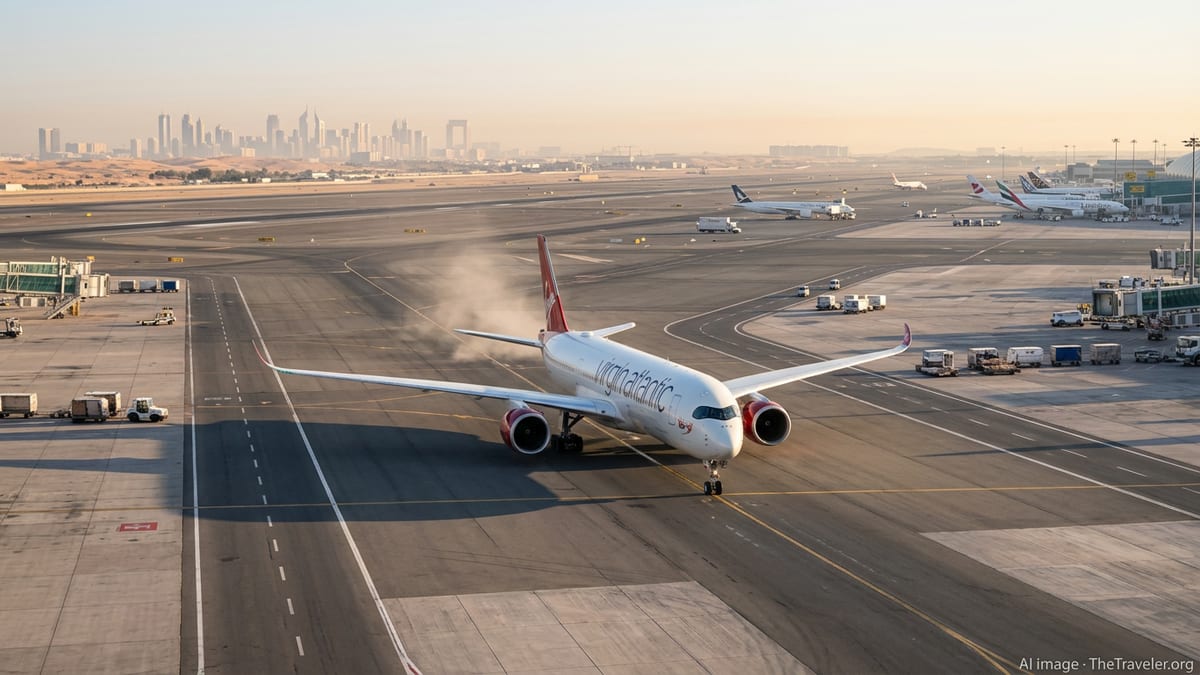
Virgin Atlantic Leads Return to Scheduled Passenger Services
Virgin Atlantic confirmed it restarted scheduled services between London Heathrow and Dubai on March 3, following the partial reopening of Middle East airspace after a sweeping shutdown triggered by the regional conflict involving the United States, Israel and Iran. The airline’s first outbound departure from Dubai International Airport since the closures took off on March 4, operating close to its planned late-morning slot and marking one of the earliest full-service commercial links back to Europe.
The carrier said flights on the high-demand Dubai–London corridor are now operating on a reduced but regular schedule, subject to ongoing security assessments. While initial services are prioritising stranded passengers who had seen previous flights cancelled, seats are gradually reopening for new bookings as capacity is added back into the system.
The move positions Virgin Atlantic at the forefront of the UAE’s phased aviation restart, at a time when several major European and Gulf airlines continue to suspend or heavily curtail operations in and out of the country. Aviation analysts say reconnecting Dubai and London, one of the world’s busiest long-haul city pairs, is a symbolic turning point for the region’s wider recovery.
Virgin Atlantic’s decision also reflects a degree of confidence in the safeguards now in place. The airline has stressed that it will keep its route network under constant review, with flight paths and schedules subject to change if the security situation deteriorates again.
From Near-Total Shutdown to Gradual Reopening
The resumption comes after almost three days in which large sections of Gulf airspace were effectively closed and most commercial flights grounded. The shutdown followed a rapid escalation in hostilities, with missile and drone activity prompting aviation authorities to suspend operations across key corridors used by long-haul carriers transiting between Europe, Asia and Africa.
Dubai International, typically one of the world’s busiest airports, became a holding point for thousands of passengers unable to depart as airlines cancelled services en masse. Local carriers Emirates, flydubai, Etihad Airways and Air Arabia cut back to a handful of special repatriation and essential flights, while many foreign airlines halted operations entirely.
As risk assessments improved, the UAE moved to reopen limited sectors of its airspace, allowing a small number of scheduled services to return from March 2 onward. Virgin Atlantic began by reintroducing flights that avoided the most sensitive air routes, relying on revised routings that include carefully controlled segments of Saudi and Gulf airspace cleared by regulators.
Authorities and airlines have stressed that the reopening is partial and contingent. Schedules remain trimmed, connections are less frequent than before the crisis, and air traffic controllers are managing flows conservatively as the region tests the resilience of its skies after the disruption.
Passenger Experience: Relief, Backlogs and Ongoing Uncertainty
For passengers, the return of the Dubai–London service has brought a mix of relief and frustration. Travellers who finally managed to board early Virgin Atlantic departures reported quieter-than-normal cabins and pockets of empty seats, even as thousands of people remain stranded across the UAE and neighbouring countries awaiting new itineraries.
Many customers have spent days rebooking, fielding notifications of rolling cancellations and waiting on airline hotlines as carriers prioritise those whose trips were interrupted at the height of the shutdown. At Dubai International, reports of long queues at ticket desks and check-in counters have given way to more orderly but still subdued terminals, with airport authorities advising people to arrive only with a confirmed booking and recent flight status checks.
There is also lingering uncertainty about future travel. Governments including the United Kingdom and the United States have updated their advisories, urging citizens to carefully consider non-essential trips to parts of the region. Some travellers with upcoming holidays or business trips via the UAE are opting to postpone journeys or reroute via alternative hubs until flight patterns stabilise.
Nevertheless, for those who were stuck in Dubai or using it as a transit point, the sight of Virgin Atlantic aircraft once again departing for London has become a tangible sign that the system is beginning to move again, even if full normality remains some way off.
Safety Protocols and Operational Adjustments in the Skies
The safe resumption of Virgin Atlantic’s Dubai–London route hinges on a complex set of operational adjustments behind the scenes. Airlines now flying in and out of the UAE are using modified routings that steer clear of active conflict zones, with flight paths being dynamically updated as new intelligence arrives from military and civil aviation channels.
Pilots and dispatch teams are working with longer flight times and additional fuel margins in anticipation of potential diversions, while air traffic control units across the Gulf are coordinating closely to manage constrained airspace corridors. Some flights are operating with higher cruising altitudes and offset tracks to maintain safe separation from any military activity.
On board, passengers may notice few visible changes beyond potential extended flight durations and altered departure times. However, airlines are maintaining elevated security measures across crew briefings, contingency planning and in-flight protocols. Industry experts note that the sector has extensive experience adjusting to regional conflicts, but the scale and speed of the latest closures were unusual, leading to an especially cautious phased restart.
Virgin Atlantic has indicated that any additional frequencies or aircraft upgrades on the Dubai route will be introduced gradually and only once its risk assessments, and those of regulators, support higher traffic volumes.
Economic and Tourism Stakes for the UAE
The reopening of the Dubai–London corridor carries high economic and tourism stakes for the United Arab Emirates, whose status as a global aviation crossroads is central to its growth strategy. The country’s airlines and airports serve as vital connectors linking Europe with Asia, Africa and Australasia, and multi-day airspace closures ripple far beyond local borders.
Travel industry figures say the temporary shutdown has already led to significant revenue losses for airlines, hotels and tour operators dependent on the steady inflow and outflow of visitors. Business travellers have delayed meetings and deal-making trips, while leisure travellers face rebooking costs, extended stays or disrupted itineraries at the tail end of the Northern Hemisphere winter peak.
Virgin Atlantic’s return is being watched closely as a barometer of confidence. If the airline can operate consistently over the coming days, it may encourage other foreign carriers to accelerate their own resumptions, reinforcing Dubai’s role as a reliable hub even amid geopolitical volatility. Conversely, any renewed escalation in the conflict or further airspace restrictions could slow the rebound and push recovery further into the year.
For now, UAE officials and airline executives are emphasising resilience. They insist that the rapid coordination that enabled the partial reopening of skies, and the careful steps to get flights like Virgin Atlantic’s Dubai–London service airborne again, demonstrate the strength of the country’s aviation ecosystem even after one of the most challenging disruptions it has faced in years.