

More news on this day
As the UAE braces for a new spell of unstable weather, with forecasts pointing to rain, thunderstorms, possible hail and strong winds across several emirates, travelers heading to Dubai, Abu Dhabi, Sharjah and beyond are being urged by publicly available guidance to treat the coming days as a period of heightened caution on the roads and around flood-prone areas.
Get the latest news straight to your inbox!
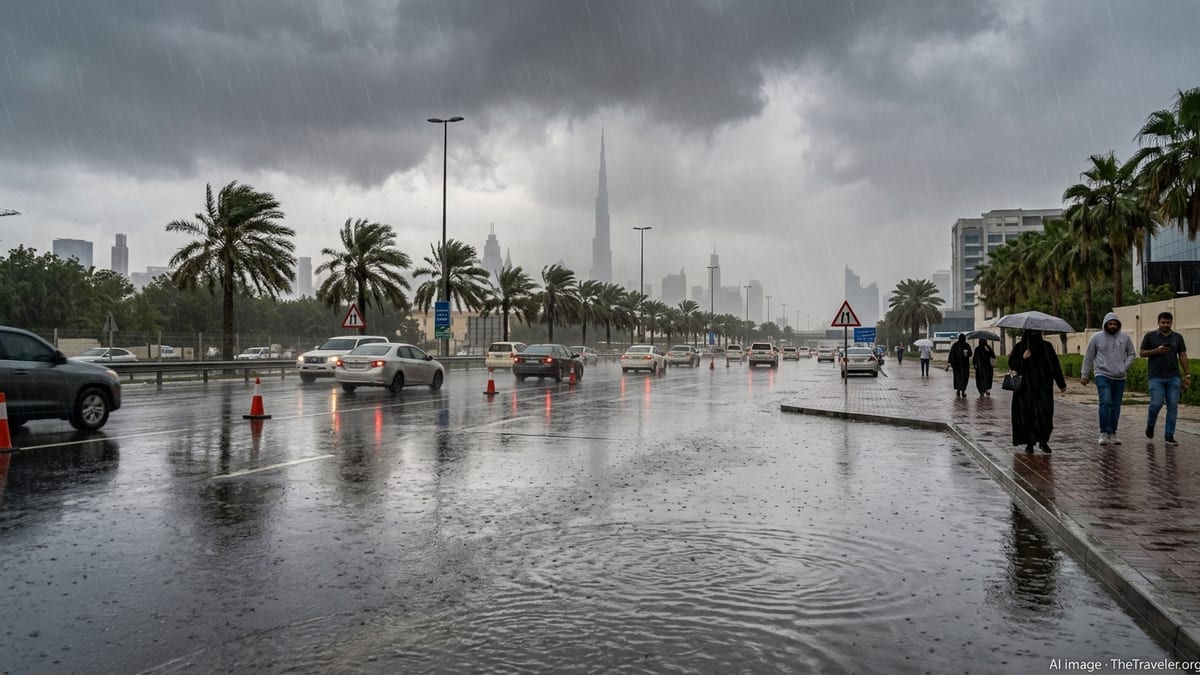
Stormy Forecast Across Dubai, Abu Dhabi, Sharjah and the Emirates
Recent bulletins from the UAE’s National Center of Meteorology indicate repeated periods of cloud cover and rainfall potential over parts of the country, including Dubai and Abu Dhabi, with fresh northwesterly winds at times and rough sea conditions offshore. While not every day brings heavy downpours, the pattern described in official forecasts points to unsettled conditions where showers can intensify quickly, especially in coastal and eastern areas.
Reports circulating among residents and travelers in Dubai, Sharjah and Fujairah suggest that this week’s system could bring bursts of heavy rain, localised thunderstorms and brief hail in some districts, particularly around the mountains and the east coast. Discussion on local forums also highlights expectations of a multi day event, with rainfall arriving in waves rather than as a single storm, raising the risk of standing water and short term disruption even if hourly rain rates vary.
Travelers who experienced the historic April 2024 floods will recall that the country can shift from dry skies to severe waterlogging in a matter of hours when a strong system stalls over urban areas. Although current projections generally show lower daily rainfall totals than that record breaking episode, the combination of already saturated ground in some neighbourhoods, new intense downpours and gusty winds is enough to create hazardous driving conditions and pockets of flash flooding.
Publicly available security briefings on the UAE note that heavy rain remains relatively infrequent but can be torrential in the cool season from October to March and occasionally into early April. During these events, reduced visibility, ponding on major highways and fast rising water in underpasses, wadis and low lying streets can rapidly complicate travel plans, particularly for visitors unfamiliar with the local road network.
How Rain, Hail and Strong Winds Affect Travel Plans
For visitors arriving in Dubai, Abu Dhabi or Sharjah over the coming days, the main practical impact of the stormy outlook will be on surface transport. Even when airports continue operating, heavy rain and strong crosswinds can lead to delays on inbound and outbound flights, extended taxi queues and slower journeys between terminals, hotels and city centres. Travelers with tight connections or time sensitive plans are likely to feel these knock on effects first.
On the roads, local accounts from previous rain events describe rapid water accumulation on key routes such as E311 and E611, together with lane closures, congestion and occasional vehicle breakdowns in deeper water. Strong gusts and blowing dust ahead of the main rain bands can further reduce visibility, especially on open desert stretches. Visitors who are used to driving in wet climates may underestimate how quickly conditions in the UAE can deteriorate when drainage systems are overwhelmed.
In urban neighbourhoods, rain combined with wind can cause leaks in older buildings, minor damage to outdoor structures and slippery surfaces on promenades and around shopping malls. Hail, when it occurs, tends to be patchy and short lived but may damage exposed vehicles and make some side streets temporarily hazardous. Beach days and desert excursions are also at risk of cancellation when lightning, rough seas or strong winds are in the forecast.
Travelers planning day trips to mountainous areas or the east coast, including Fujairah and Ras Al Khaimah, should pay particular attention to advisories about wadis and valleys. Past storms have shown that these areas can transform quickly from dry streambeds into fast flowing channels, catching visitors off guard. Tour operators often adjust or cancel itineraries at short notice when rainfall projections increase, so flexible scheduling and real time checks are advisable.
Key Safety Rules and Rain Related Fines Travelers Should Know
In recent years, the UAE has introduced a series of traffic violations specifically linked to emergencies and unstable weather, with publicly available information showing fines of up to 2,000 dirhams in serious cases. These penalties are designed to discourage risky behaviour during heavy rain and flooding, particularly on and around major roads where emergency responders and road crews may be operating.
Among the offences highlighted in published coverage are gathering near valleys, flooded areas and dams during rainy weather, which can attract a fine in the region of 1,000 dirhams along with black points on a driver’s licence. Parking or stopping in a way that obstructs rescue work, ignoring road closure signs around waterlogged sections, or attempting to cross flooded wadis can also fall under higher penalty categories, depending on the emirate and the circumstances.
For visitors in rental cars, these fines are not theoretical. Contract terms typically allow rental companies to pass on traffic penalties, along with administrative fees, to the customer. This means that an impulsive decision to drive through a flooded underpass or to stop and photograph dramatic floodwater near a wadi can have financial as well as safety consequences after the trip has ended.
Pedestrian behaviour is also under scrutiny in bad weather. Publicly reported rule changes in the wider traffic code describe stricter treatment of jaywalking and unsafe road crossings, especially when visibility is reduced and road surfaces are slick. Tourists crossing multi lane roads outside marked areas, or stepping into traffic from between parked cars to avoid puddles, may face on the spot fines that could easily exceed the cost of a day’s excursion.
Practical Advice for Tourists Navigating the Storm
For travelers, the safest approach is to treat the current storm window as a period requiring conservative decisions. Before setting out each day, checking the latest forecast from the National Center of Meteorology and monitoring local news and municipal social media feeds can provide early indications of school closures, traffic diversions or temporary restrictions on outdoor activities. Hotels in Dubai, Abu Dhabi and Sharjah often relay these updates to guests, but it is wise to confirm details independently.
When heavy rain or hail is expected in a particular area, moving vehicles to higher, covered parking and avoiding basement levels reduces the risk of flood damage. Drivers should plan routes that minimise underpasses and low lying streets, leave extra time for journeys and be prepared to turn around if water starts to cover lane markings. In strong winds and blowing dust, reducing speed and increasing following distances is critical, particularly on highways where sudden braking is common.
Travelers on foot should avoid walking through standing water, which can conceal open manholes or sharp debris, and should keep clear of wadis, culverts and drainage channels even if they appear only partially full. During thunderstorms, rooftop pools, open beaches and elevated viewpoints are best avoided until lightning has passed. Indoor attractions such as museums, malls and galleries are likely to be less affected and may be preferable options on the wettest days.
Travel insurance policies that include coverage for weather related disruption can provide an extra layer of reassurance, although terms vary widely. Visitors are advised to review their policy wording in advance to understand what is covered if flights are delayed, roads are closed or pre booked excursions are cancelled because of severe rain or flooding. Keeping receipts and written confirmations of any changes can help support later claims.
What This Means for Upcoming Trips to the UAE
Despite the unsettled conditions, the UAE remains operational, and many trips proceed with only minor adjustments when storms pass through. The key difference for travelers during this period is the need for real time flexibility and close attention to safety rules, including the risk of significant fines for behaviour that might be treated more leniently in other destinations. Being prepared to shift a desert safari to a drier day, to swap a coastal drive for an indoor cultural itinerary, or to build longer transfer windows into flight plans can mitigate much of the stress.
For those already in Dubai, Abu Dhabi, Sharjah or other emirates, the coming days are a reminder that the country’s dramatic skies can be as much a feature of the landscape as its sunshine. Watching storms roll over the Gulf or the mountains can be a memorable experience, provided it is done from a safe, legal vantage point well away from floodwaters and slippery roads. With basic precautions and awareness of the traffic rules that apply in rainy conditions, visitors can navigate the UAE’s stormy spell while keeping both safety and travel budgets intact.