

More news on this day
Travelers eyeing spring trips to Dubai or Abu Dhabi face a volatile mix of renewed storm warnings and ongoing regional tensions, prompting fresh questions about safety, flight disruption and whether to proceed with UAE travel plans now.
Get the latest news straight to your inbox!
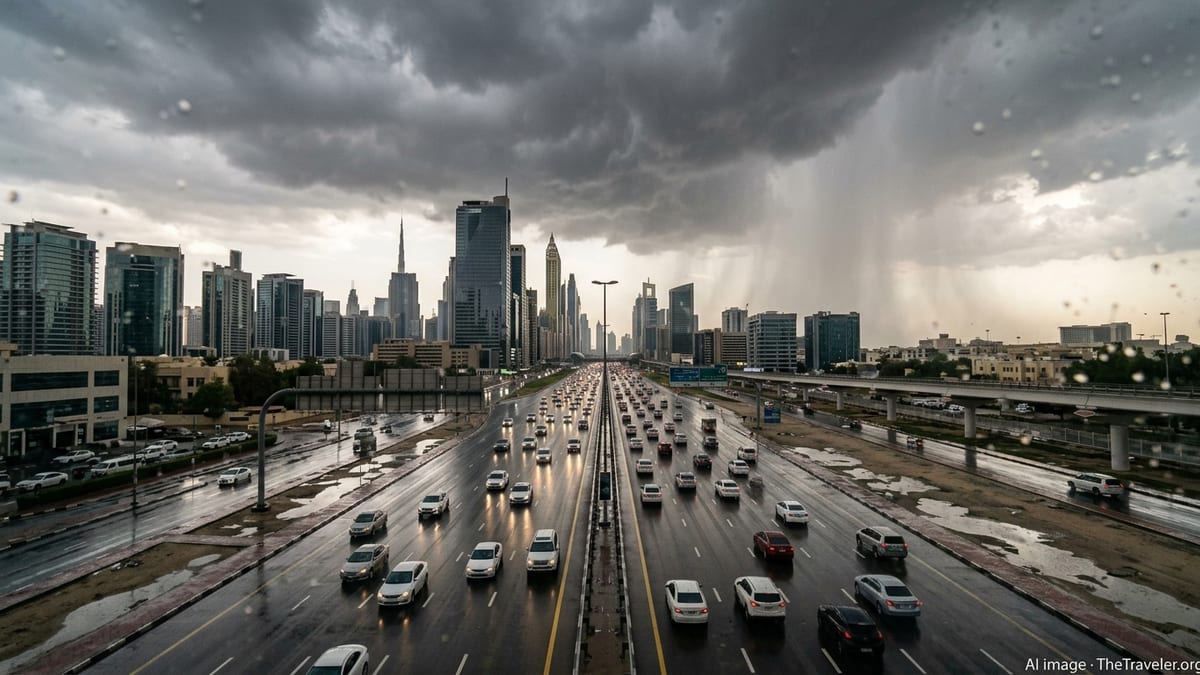
New Unstable Weather Warning Across the UAE
Weather bulletins and local community reports indicate that the United Arab Emirates is bracing for another round of unsettled conditions, with the National Center of Meteorology highlighting a period of instability from around March 23 to 27 across much of the country. Publicly shared summaries describe a risk of scattered rain, thunderstorms and gusty winds, particularly along the coast and in major urban areas including Dubai and Abu Dhabi.
Residents’ forums in Dubai have circulated details of an earlier rain system that began affecting parts of the country from March 21 to 24, with showers and localized downpours disrupting some road travel. The new alert suggests that the atmosphere will remain changeable rather than returning immediately to the typically dry and predictable late‑March pattern that many visitors expect.
For travelers, this does not currently resemble a classic tropical cyclone scenario but rather a sequence of strong convective systems that can produce intense, short‑lived bursts of rain. In recent years, similar set‑ups have led to flash flooding on key highways, waterlogged streets near Dubai Marina and Deira, and temporary closures of some underpasses.
Forecast language continues to emphasize variability from one district to another. That means one neighborhood may see only light showers while another, just a few kilometers away, experiences thunder, lightning and minor flooding. Visitors planning airport transfers or excursions on affected days should factor in extra time and be prepared for sudden changes in visibility and road conditions.
Air Travel: Storms Layered on Top of Regional Disruption
The weather warning arrives on top of an already strained aviation picture. Since late February, regional airspace has been subject to restrictions following a series of Iranian missile and drone strikes directed at targets in the United Arab Emirates. Open‑source summaries of the conflict describe interceptions over Dubai and Abu Dhabi, with debris reported near key infrastructure, including the approaches to Dubai International Airport.
Travel‑risk advisories published in early March describe airspace closures and operational suspensions affecting major Gulf carriers, with Emirates, Etihad Airways and others at times limiting or pausing flights to and from their hubs. A corporate advisory dated March 2 details temporary suspension of all Emirates operations to and from Dubai until March 3, and notes that Etihad departures from Abu Dhabi remained on hold pending aviation regulator decisions. More recent updates and community flight trackers signal a gradual restart of limited services, including repatriation flights and carefully controlled commercial operations.
Against this backdrop, fresh storm activity poses a secondary but real complication. Heavy rain and low cloud can force approach diversions, slow ground handling and extend turnaround times even when airspace is open. During past UAE rain events, passengers have experienced go‑arounds, diversions to regional airports and lengthy tarmac waits while lightning passed over ramp areas.
Travelers with imminent departures into Dubai or Abu Dhabi are being urged in public advisories and airline guidance to check flight status repeatedly in the 24 hours before travel. Some carriers have introduced temporary change and refund flexibility for tickets covering the early‑March disruption window, and several travel‑management firms recommend that corporate travelers avoid tight connections through UAE hubs until schedules stabilize.
Security Climate: Conflict Risk and Travel Advisories
The aviation turmoil is closely tied to the broader security backdrop. Publicly available chronologies of the 2026 Iranian strikes on the United Arab Emirates describe waves of ballistic missiles and drones since February 28, with most intercepted but some debris landing in populated areas of Dubai and Abu Dhabi and causing fires and localized damage. These events have prompted multiple foreign governments to reassess the risk profile of travel to the country.
Independent travel advisories compiled in early March refer to an elevated overall risk level in parts of the Middle East, citing the potential for further missile and drone incidents. One widely circulated briefing notes that smoke and debris were observed near Dubai International Airport after air defenses neutralized multiple drones, and that some airports in the region were operating with delays because of sudden airspace restrictions and interception activity.
Some national foreign ministries have upgraded their guidance on Dubai travel, with at least one English‑language FAQ explaining how a Level 3 “reconsider travel” notice applies to trips to the emirate. The document links this warning to the threat of armed conflict and notes that, as of early March, Dubai International Airport was operating on a very limited basis, with a restricted number of departures and arrivals.
While there have been no recent reports of widespread damage inside the main tourist districts, risk analysts point out that the combination of intermittent missile alerts, airspace changes and now a new phase of unstable weather increases the chance of short‑notice disruption. Travelers are encouraged to monitor not only airline updates but also official safety app notifications and trusted local media for any changes affecting airport access roads, coastal areas or public transport.
On the Ground: What Visitors May Experience in Dubai and Abu Dhabi
Within Dubai and Abu Dhabi, visitors are likely to notice a more vigilant atmosphere than during the peak tourism seasons of previous years. Online community threads describe periodic warning messages received by residents in Abu Dhabi, along with audible air defense activity and loud booms attributed to interceptions. Although life in most neighborhoods continues close to normal, travelers may encounter intermittent road closures near key installations and a visible security presence around airports and major landmarks.
When heavy rain coincides with these heightened security conditions, everyday logistics can quickly become more complicated. Past storm events have tested the drainage capacity of fast‑growing districts, with surface water pooling along sections of Sheikh Zayed Road and around some suburban interchanges. Ride‑hailing services can see sudden surges in demand as metro users look for alternatives if minor flooding affects station access or feeder buses.
Hotel operators have historically responded to similar periods of disruption by adjusting prices and promoting staycation offers to residents, particularly when international arrivals dip. Recent commentary on hospitality trends in Dubai mentions discounted packages and value‑added promotions designed to offset the downturn caused by regional travel chaos. For tourists already in the country, that can translate into competitive rates at high‑end properties, even if the external environment feels more unsettled.
For day‑to‑day sightseeing, the main weather implication is likely to be reduced visibility during passing storms, slippery pavements around waterfront promenades and potential temporary closures of outdoor attractions, rooftop pools or beach clubs. Indoor venues such as malls, museums and aquariums typically remain open, providing weather‑proof alternatives while conditions outside fluctuate.
Practical Advice for Travelers With Upcoming Trips
For travelers deciding whether their Dubai or Abu Dhabi trip is “in danger,” the picture as of March 24 is one of elevated but managed risk, shaped by both the security situation and the latest storm alerts. Commercial aviation into the UAE is functioning on a more limited and fluid basis than usual, and a fresh spell of unstable weather between March 23 and 27 introduces additional uncertainty around specific flight times and transit plans.
Public travel guidance stresses that conditions can change rapidly and that airspace decisions may be taken at short notice, independent of local weather at the airport. Prospective visitors are therefore advised to review the latest government travel advisories issued by their home country, paying attention to any level upgrades, registration mechanisms for citizens abroad and recommendations regarding nonessential travel.
Travel‑management companies and airline statements consistently underline the importance of direct communication with carriers before heading to the airport. Checking the operational status of both outbound and return flights, confirming minimum connection times and ensuring up‑to‑date contact details in airline profiles can reduce the risk of being stranded mid‑journey. Where flexible booking options are available, some travelers may prefer to postpone nonessential trips until after the current advisory window and storm period.
For those who do proceed, standard precautions take on increased significance: allow extra time for airport transfers, keep digital and printed copies of tickets and identification readily accessible, and remain attentive to local alerts regarding severe weather or security‑related road closures. Industry observers note that Dubai and Abu Dhabi infrastructure is designed to recover quickly from short bursts of disruption, but emphasize that over the coming days, a cautious and well‑informed approach will be essential for smooth travel.